
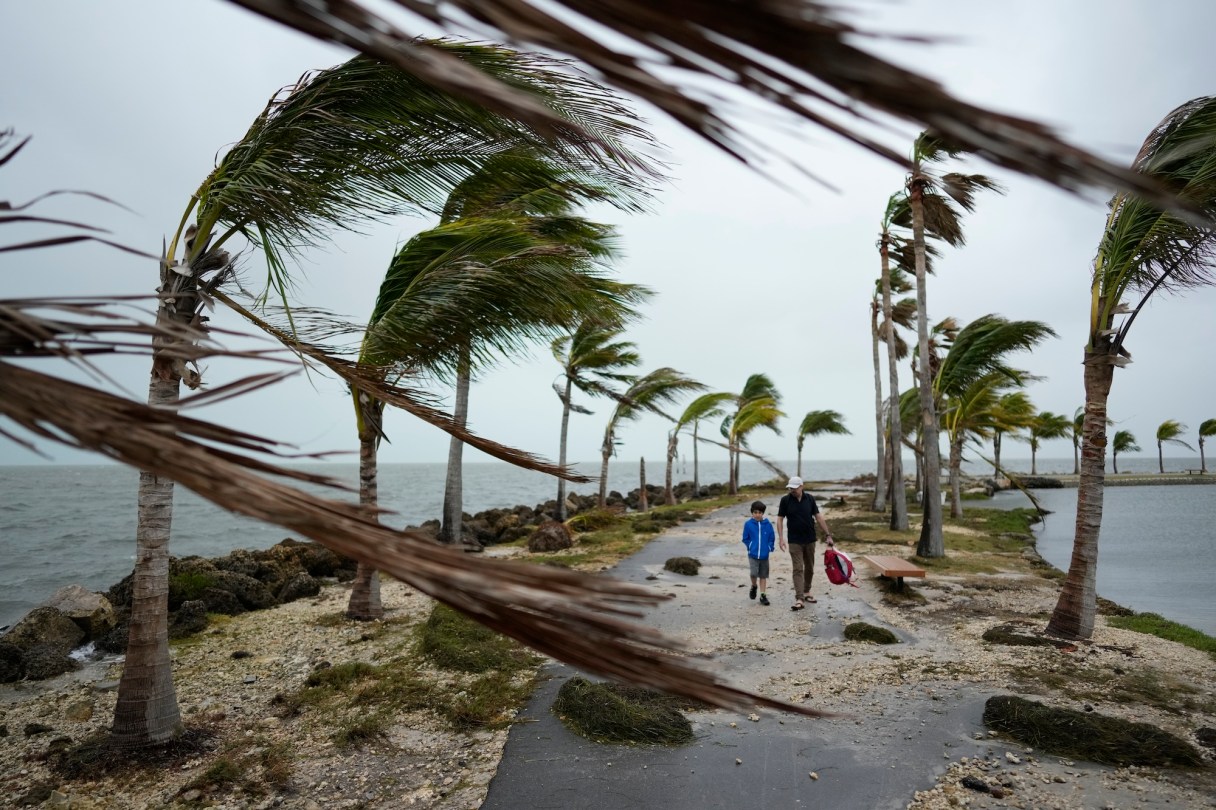
The record-smashing global heat of the past year has been driven partly by an El Niño weather pattern in the Pacific Ocean. The good news is that El Niño is rapidly giving way to his cooler sister, La Niña. The bad news is that she won’t necessarily be any kinder to humanity.
El Niño and La Niña are two phases of a local climate phenomenon, the El Niño — Southern Oscillation (ENSO), which influences conditions around the world. A strong El Niño in 2015-16 produced record high global temperatures, deadly droughts and floods, a spate of Pacific cyclones and the worst coral-reef bleaching event in history, to name just a few outcomes.
Though the now-dying El Niño of 2023-24 was one of the strongest on record, it was still notably weaker than that of 2015-16. But its global effects were even more alarming: 12 consecutive months and counting of global heat records, ocean water temperatures going to places where there are no charts, even more severe coral bleaching and more deadly droughts and floods. Why was this El Niño period so much more devastating, despite having less oomph? You get one guess, and the answer rhymes with “shlimate shange.”
Most simplistically, El Niño tends to make the world hotter, while La Niña tends to cool it. But the background temperature of the planet is now 1.3 degrees Celsius warmer than in preindustrial times, thanks to our enthusiasm for burning fossil fuels. That gives any El Niño a higher platform from which to wreak havoc.
Persistent global heating also makes it less likely that La Niña’s imminent arrival will bring much relief, if any. There is still a strong chance that 2024 will be the hottest year on record, even if half of it is spent under cooler La Niña conditions.