
Monday, November 16, 2026Nov 16

Maryland Gov. Wes Moore signs order for more than 175,000 pardons for marijuana convictions

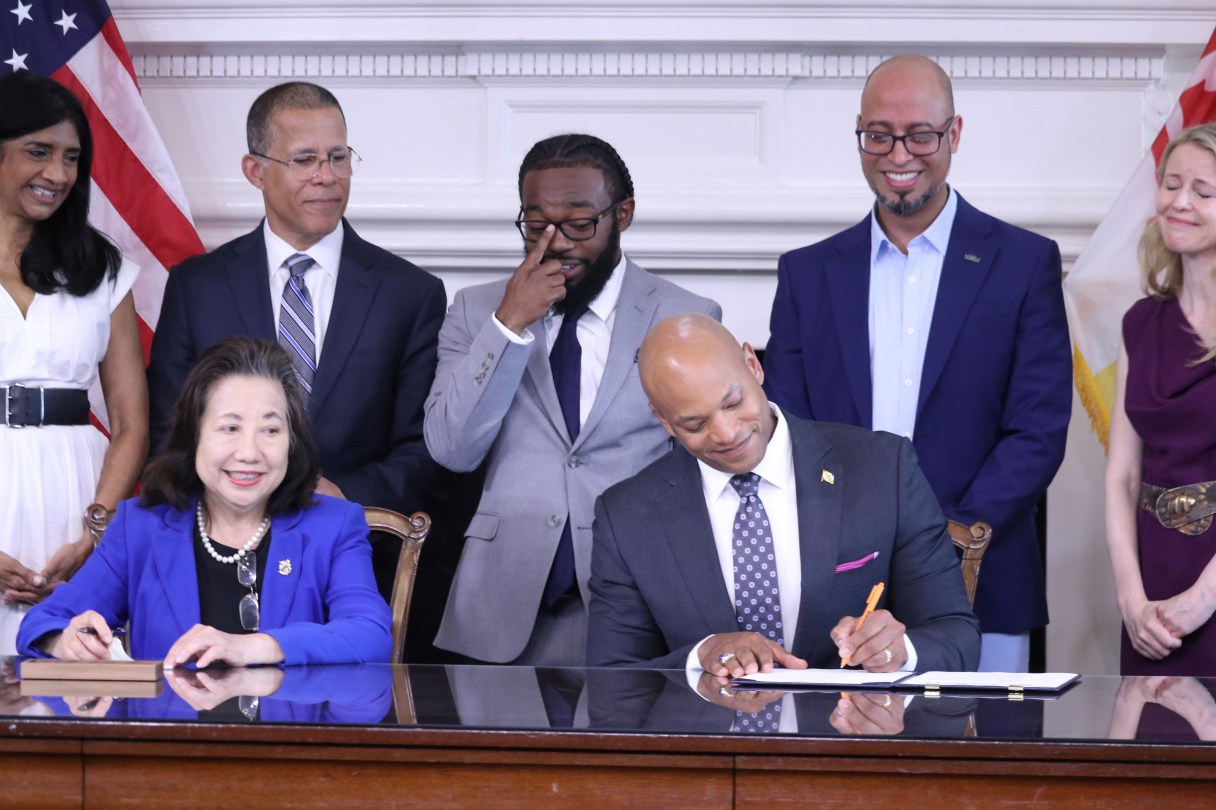
Maryland Gov. Wes Moore signs an executive order to issue more than 175,000 pardons for marijuana convictions on Monday, June 17, 2024 in Annapolis, Md. Maryland Secretary of State Susan Lee is seated left. Standing left to right are Lt. Gov. Aruna Miller, Maryland Attorney General Anthony Brown, Shiloh Jordan, Jason Ortiz, director of strategic initiatives for Last Prisoner Project and Heather Warnken, executive director of the University of Baltimore School of Law Center for Criminal Justice. (AP Phopto/Brian Witte)


ANNAPOLIS, Md. (AP) — Maryland Gov. Wes Moore ordered more than 175,000 pardons for marijuana convictions on Monday, saying the “most sweeping state-level pardon in any state” will help reverse harms from the past caused by the war on drugs.

During a news conference, Moore said the executive order will affect “tens of thousands of Marylanders” convicted of misdemeanors. Some may have had more than one conviction pardoned through the process.

“We are taking actions that are intentional, that are sweeping and unapologetic, and this is the largest such action in our nation’s history,” Moore, a Democrat, said.

Though the pardons will not result in anyone being released from incarceration — and nor will they result in having past convictions automatically expunged from a person’s background check — advocates praised the move as a way of removing barriers to housing, employment, or educational opportunities based on convictions for conduct that is no longer illegal.