
Monday, November 16, 2026Nov 16

How to navigate the end of your pet’s life

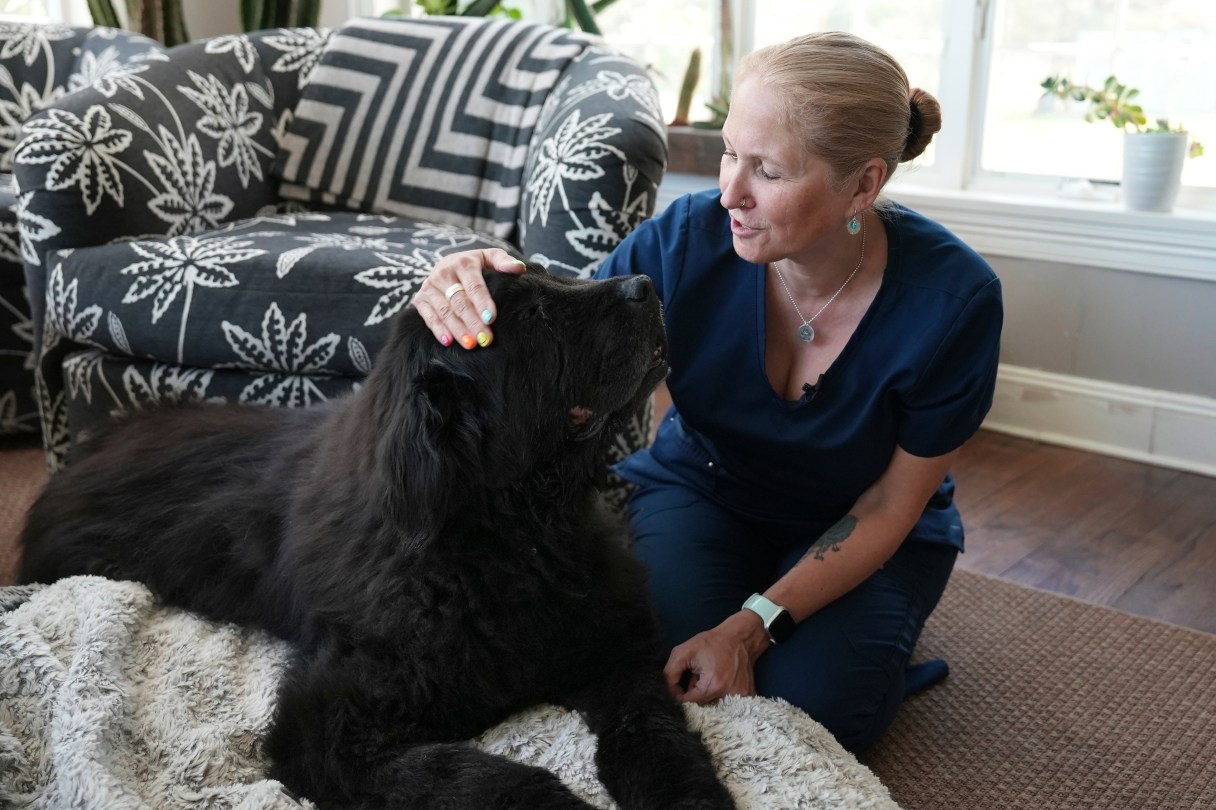
Dr. Lisa Walling greets her 13-year-old hospice patient, Rugby, a Newfoundland, in the dog's home in Bedford, N.Y., on Tuesday, May 7, 2024. As an end-of-life care veterinarian, Walling considers both pet and owner to be her patients. She’s there to make sure animals are as comfortable as possible in their final days, and help humans through the difficult decision of knowing when it’s time to say good-bye. At a later visit, after Rugby had deteriorated further, she euthanized her surrounded by her family. (AP Photo/Mary Conlon)


NEW YORK (AP) — Dr. Lisa Walling’s first house call of the day was with a particularly fluffy hospice patient — a 13-year-old Newfoundland named Rugby.

Rugby happily licked a plate of peanut butter as Walling inserted needles along her back; acupuncture and a ketamine injection to help with pain and mobility problems.

As an end-of-life care veterinarian, Walling considers both pet and owner to be her patients. She’s there to make sure animals are as comfortable as possible in their final days, and help humans through the difficult decision of knowing when it’s time to say goodbye.

“I find a lot of the time, the biggest part of my job is helping the owners,” said Walling. When it came time to euthanize Rugby at a later visit, the whole family was there.