
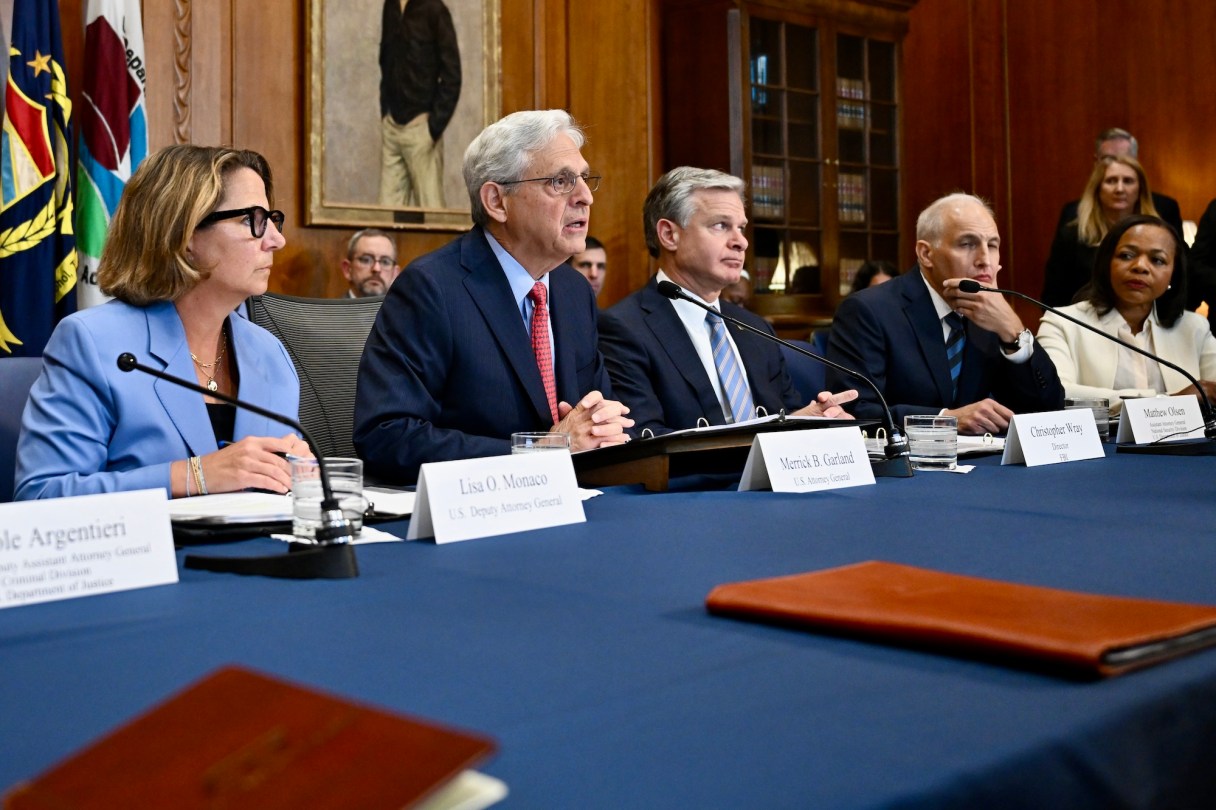
When it comes to disinformation warfare, Russian President Vladimir Putin is, of course, a pro. As a career KGB agent, it’s what he knows and what he does. That point was again underscored by the recent U.S. Department of Justice case alleging a systematic Russian effort to interfere in November’s presidential election.
That did happen in 2016, but it’s 2024. By now, you have to ask why Putin bothers — given the industrial quantities of homegrown disinformation we’re producing ourselves — and just how much attention we should be paying to his so-called active measures.
The DoJ’s 277-page affidavit alleges that Russia has been running a broad, covert election interference project called Doppelganger, and as a result has shut down dozens of websites traced back to the country. All of this was being organized in meetings at the presidential administration in Moscow, better known as the Kremlin. According to notes taken during these meetings, at least some were presided over by Putin’s first deputy chief of staff, Sergey Kiriyenko.
It’s hard to overstate Kiriyenko’s centrality to the Kremlin. A one-time liberal, he’s now the point man for Putin’s domestic political strategy, including the recent presidential elections, as well as for digital media and for administration of the four Ukrainian regions that Putin unilaterally annexed to Russia on Sept. 30, 2022. He’s deeply loyal and is a close ally of Yury Kovalchuk, the billionaire often described as “Putin’s banker.”
And just for the avoidance of doubt, the meeting notes that the U.S. somehow got hold of — and which I assume to be genuine — confirm that a report on Doppleganger’s progress was sent to Putin himself. The Kremlin denies the existence of Doppleganger.