
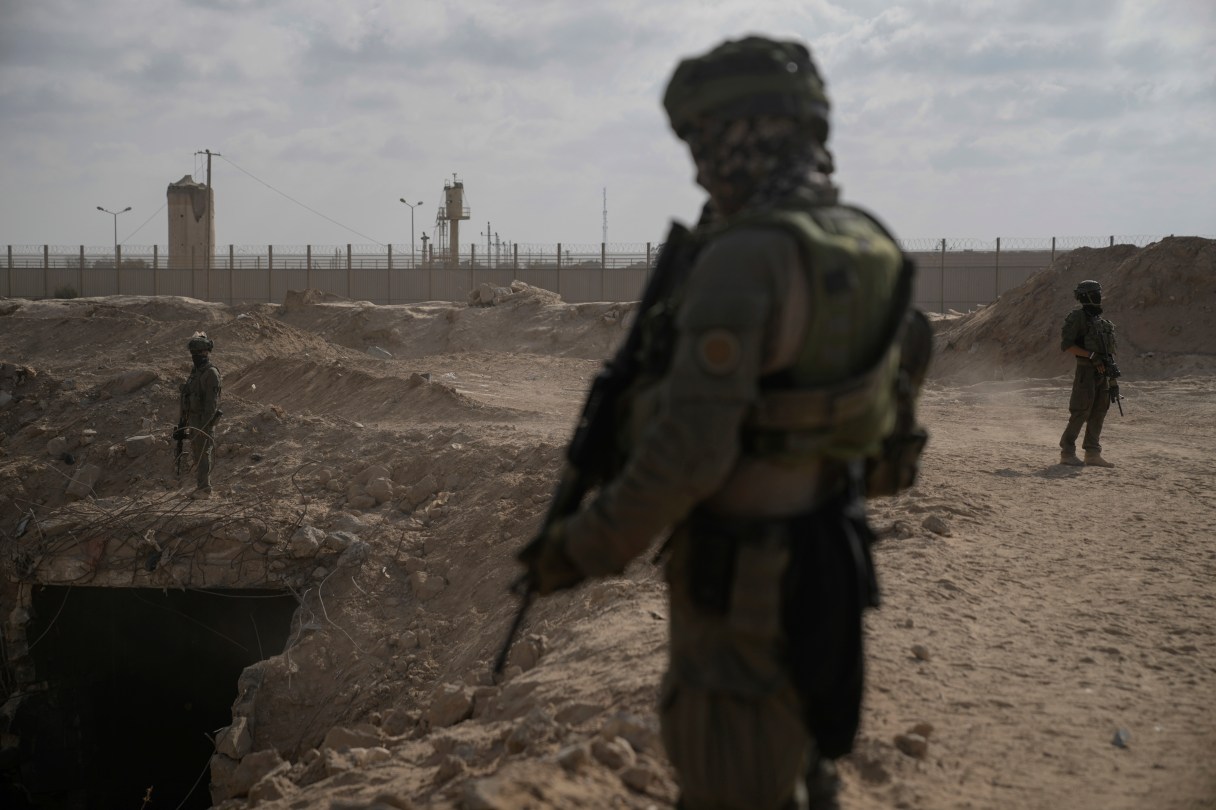
A narrow strip of scrubland and sand dunes on the Gaza side of the border with Egypt has emerged as a major obstacle in talks aimed at halting the Israel-Hamas war and freeing scores of hostages.
Israeli Prime Minister Benjamin Netanyahu says Israel must maintain control over the so-called Philadelphi corridor to prevent Hamas from replenishing its arsenal through smuggling tunnels under the border. He says that’s necessary to ensure the group can never again launch an attack into Israel like the one on Oct. 7 that ignited the war.
However, Israeli media have cited military officials saying any tunnels into neighboring Egypt had been sealed from the Egyptian side for years before the war, making smuggling through them unlikely.
Many Israelis, including the defense minister, say Israel should relinquish the corridor, at least for a short period of time, in order to secure an agreement to bring back around 100 hostages still held in Gaza, about a third of whom are believed to be dead.
The debate reached a fever pitch at the beginning of September after Israel recovered the bodies of six hostages the military says Hamas killed as troops closed in. Critics say they could have been returned alive in a cease-fire deal and accuse Netanyahu of sabotaging the talks for his own political interests.