
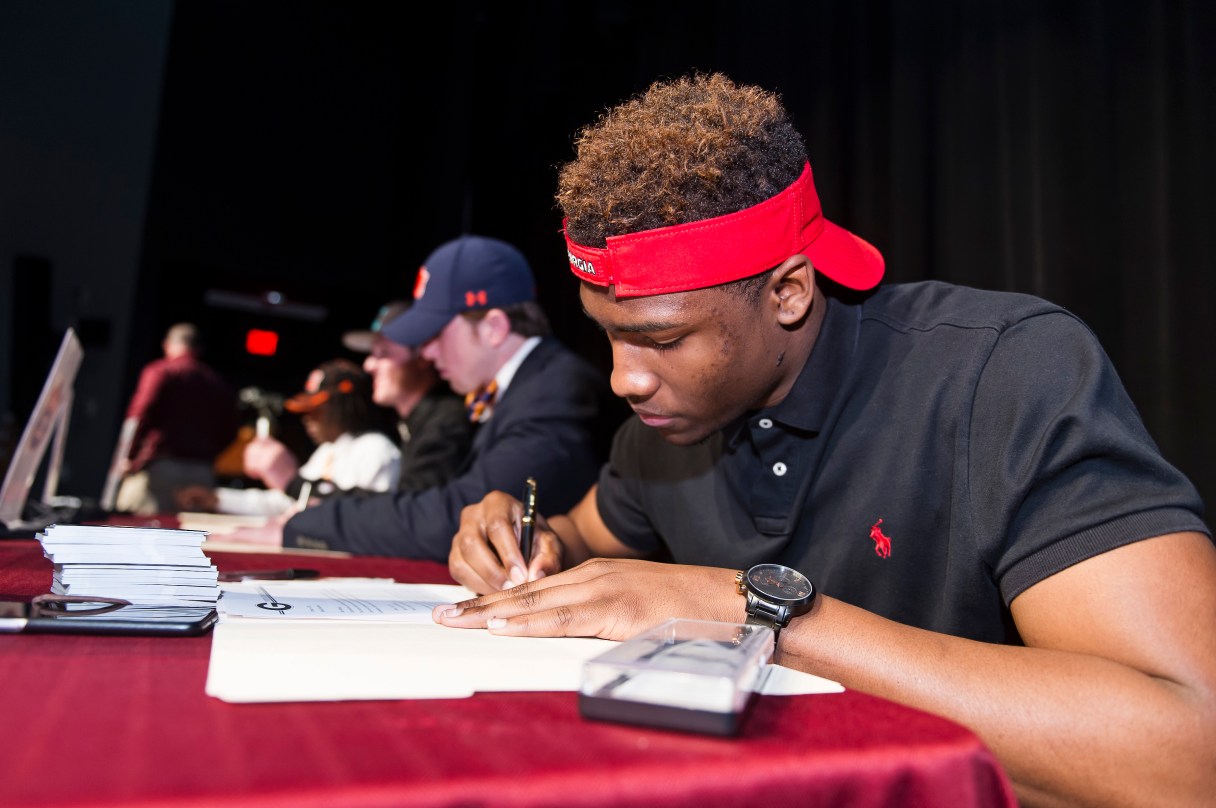
The time-honored tradition of high school athletes proudly sitting behind a table and signing a national letter of intent is suddenly a thing of the past.
In its place, starting in a matter of weeks, athletes will ink their names to something different: a financial aid package that will likely be tied to a revenue-sharing contract.
Coaches reacted with a mix of shock and confusion to the latest end of business as usual in college sports. The NCAA announced the death of the letter of intent last week on the same day it introduced a newly condensed schedule for signing players out of the transfer portal, often referred to as windows.
“There’s been so much going on, so many moving pieces in the middle of our season, that quite honestly, myself and a bunch of our colleagues, we have no idea what the heck is going on,” Kentucky football coach Mark Stoops said after hearing about the latest changes.
All the changes are, in some way, related to the antitrust settlement a federal judge conditionally approved last week that will result in universities paying their athletes directly through a revenue-sharing program. And that stems from a series of legal and legislative rulings that have allowed college athletes to make money on the use of their name, image and likeness since July 2021.