
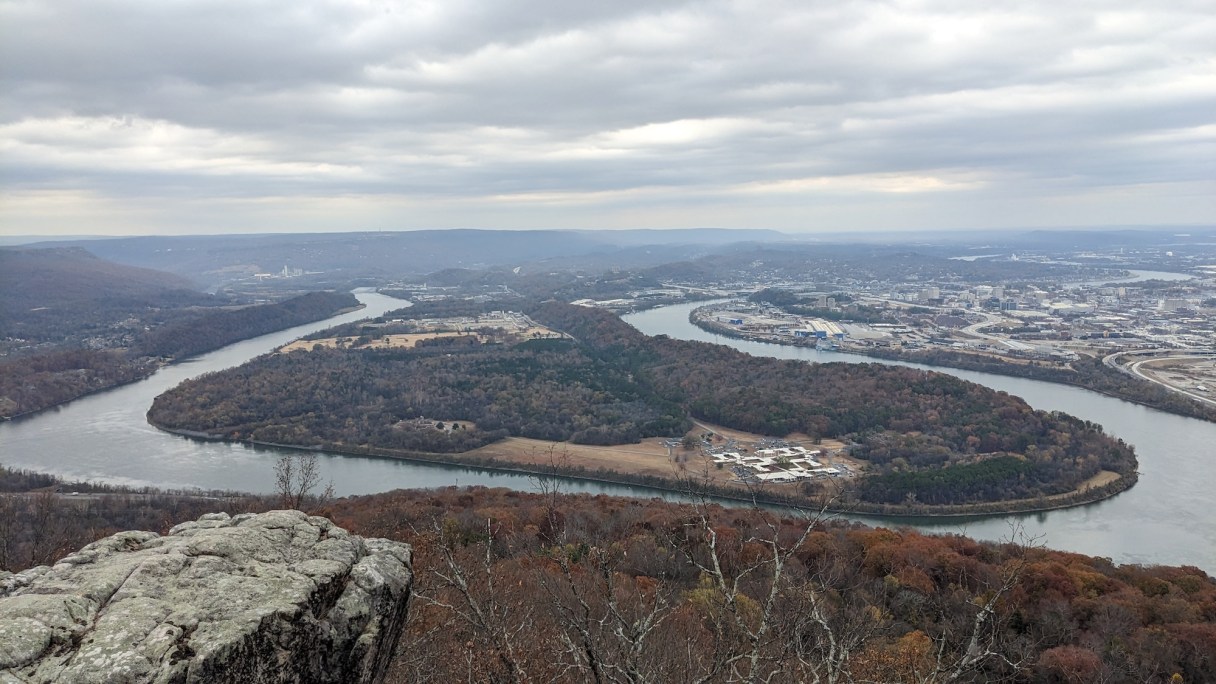
On Thursday, Gov. Bill Lee announced a new site for the Moccasin Bend Mental Health Institute won’t be on the peninsula, a decision the Chattanooga Times applauds, but relocation there should have never been considered. To have the best possible treatment for patients and to respect the wishes of Native American tribes, a new mental health institute must be placed closer to the city and off of historic indigenous sites.
The state’s decision came after an archeological study found sensitive artifacts – and likely even ancient human remains – buried on the peninsula dating back through thousands of years of human history. It’s the first such archeological review done on Moccasin Bend since the health institute was founded there in 1961.
Former U.S. Rep. Zach Wamp spearheaded efforts to designate Moccasin Bend as a national archeological district in 2004. According to the National Park Service, it’s one of the most unique lands in the national park system, as humans have inhabited the peninsula for 12,000 years.
For a vast majority of that time – long before Chattanooga was settled by Europeans and founded in 1839 – indigenous people lived and thrived on Moccasin Bend.
The city has a fraught history, to put it mildly, with its treatment of Native Americans. The infamous Trail of Tears – the forced removal of indigenous people from the area – treks through Chattanooga, with markers of the trail placed throughout the city.