
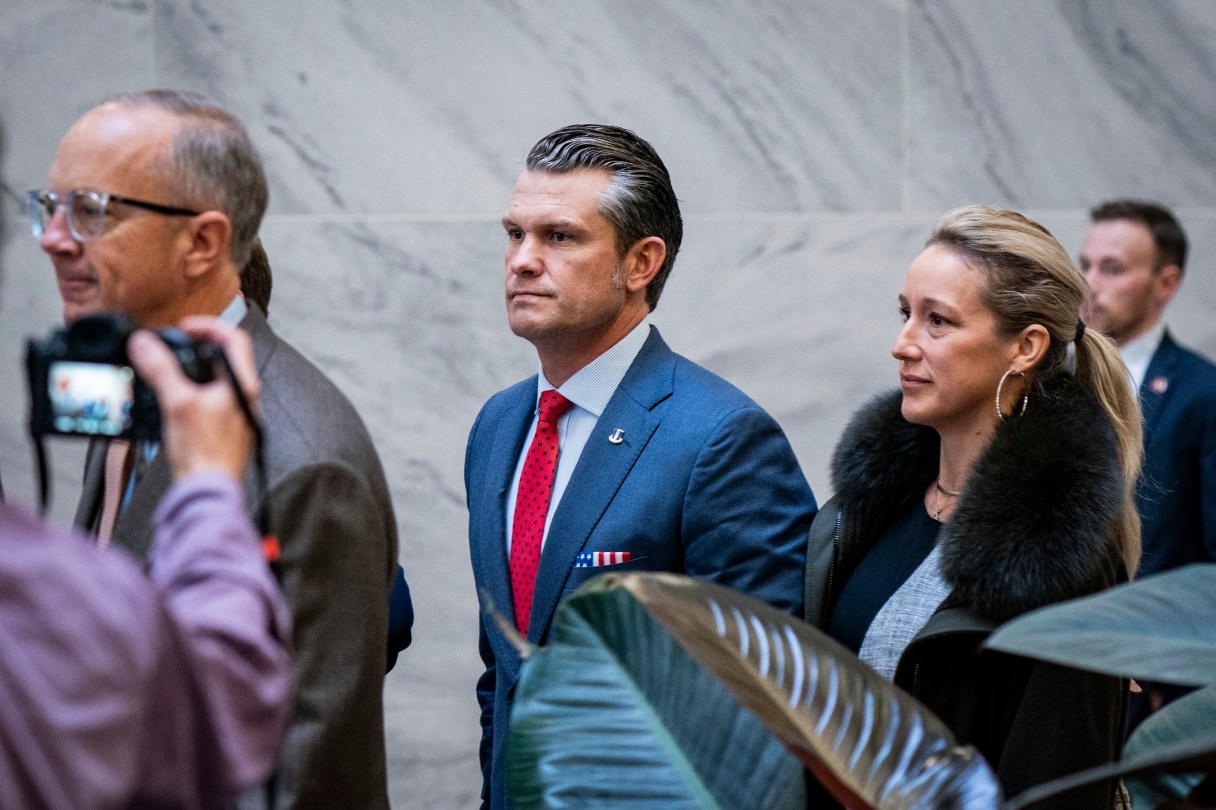
Before Donald Trump picked him to lead the Department of Defense, Pete Hegseth spoke often about a medieval military campaign that he saw as a model for today: the crusades, in which Christian warriors from Western Europe embarked on ruthless missions to wrest control of Jerusalem and other areas under Muslim rule.
As he embraced a combative brand of Christianity in recent years, he wrote that people who enjoy the benefits of Western civilization should “thank a crusader.” On his arm, he has a tattoo with the words “Deus Vult,” which he has described as a “battle cry” of the crusades.
“Voting is a weapon, but it’s not enough,” he wrote in a book, “American Crusade,” published in May 2020. “We don’t want to fight, but, like our fellow Christians 1,000 years ago, we must.”
Trump has so far stuck by Hegseth as his nominee for secretary of defense despite a growing series of disclosures about his past, including allegations of sexual impropriety, alcohol abuse and financial mismanagement. Hegseth has vigorously denied the allegations, calling them an attempt to disrupt Trump’s agenda.
The issue of Hegseth’s religious expressions has come up in the past. He has said he was barred from participating in the military security detail for President Joe Biden’s inauguration in 2021 because of a tattoo on his chest depicting a Jerusalem Cross, a religious emblem that was also a symbol used by crusaders. (Reuters and others reported that his tattoos, including the Deus Vult motto that has been used by white supremacists, prompted a fellow service member to flag Hegseth as a potential “insider threat.”)