
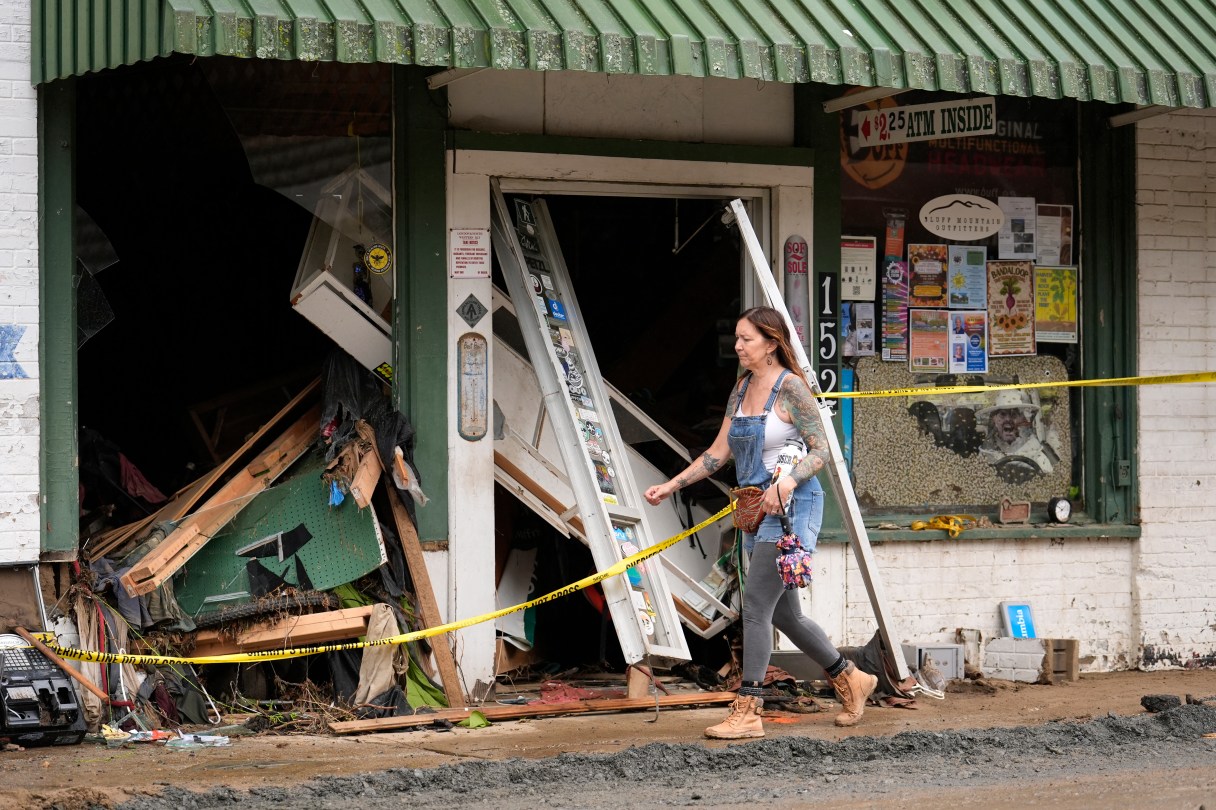
ASHEVILLE, N.C. (AP) — North Carolina election officials say they will do everything in their power to ensure that voters in the crucial presidential swing state will be able to cast their ballots despite the devastation of Hurricane Helene and the destruction of basic infrastructure only about a month before the November election.
Karen Brinson Bell, the executive director of the state’s election board, said Tuesday that 12 county election offices in the hard-hit western part of the state remain closed after the storm unleashed “unprecedented” damage. Absentee ballots, some of which already have been mailed to voters who requested them, also face obstacles, from U.S. Postal Service delays to road and residential damage that could render them undeliverable. The viability of early and Election Day voting sites remains unknown, she said.
She described the storm as causing a “daunting” level of uncertainty, with early in-person voting scheduled to start in just over two weeks on Oct. 17. Still, she said the state is prepared to help voters navigate the emergency.
“We’ve battled through hurricanes and tropical storms and still held safe and secure elections, and we will do everything in our power to do so again,” Brinson Bell told reporters during a media call. “Mountain people are strong, and the election people who serve them are resilient and tough, too.”
Helene, which battered large swaths of the Southeast late last week with torrential rain and strong winds and massive storm surges along the Gulf Coast, caused devastation “beyond belief” in the popular mountain city of Asheville and other parts of western North Carolina, Gov. Roy Cooper said during a media briefing Tuesday.