
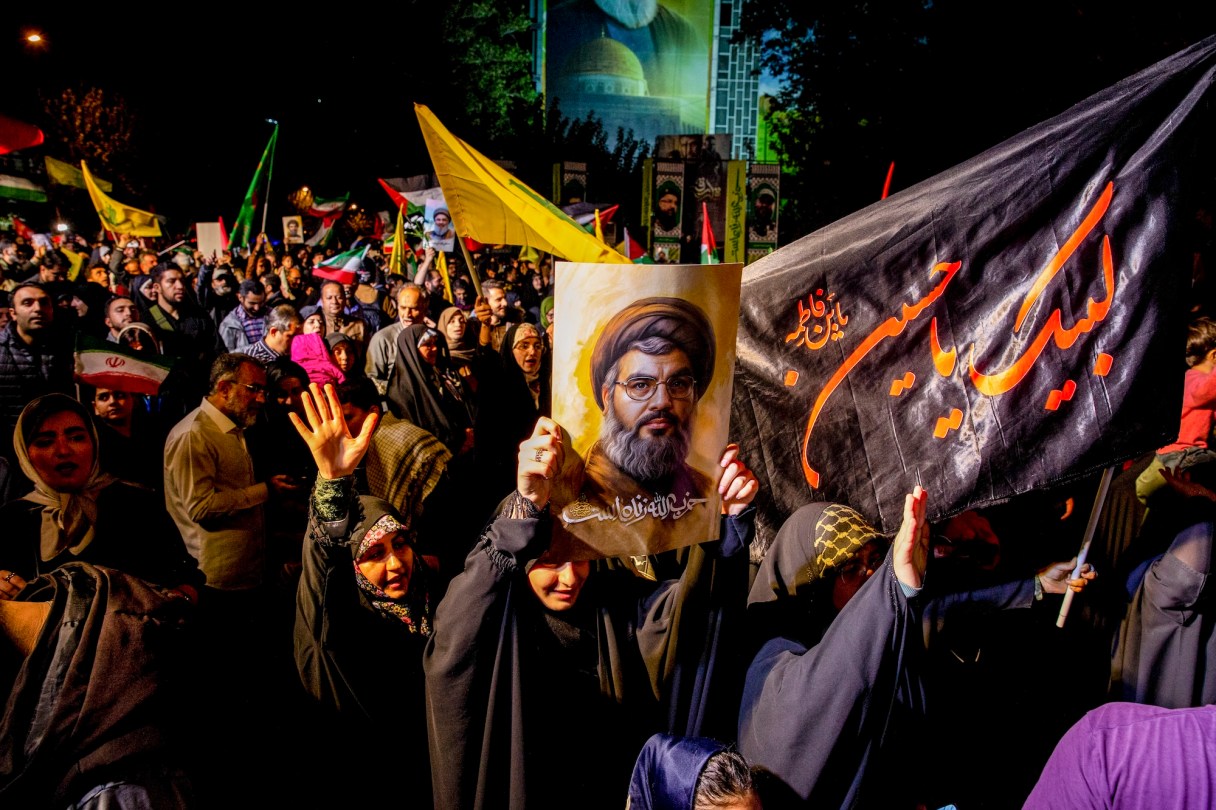
Iran fired at least 180 ballistic missiles at Israel on Oct. 1, 2024, amplifying tensions in the Middle East that are increasingly marked by “escalation after escalation,” as United Nations Secretary General Antonio Guterres put it.
Iran’s attacks – which Israel largely deterred with its Iron Dome missile defense system, along with help from nearby U.S. naval destroyers – followed Israel’s killing of Hassan Nasrallah, the longtime leader of the Tehran-backed Lebanese militant group Hezbollah, on Sept. 27.
Hezbollah has been sending rockets into northern Israel since the start of the Gaza war, which began after Hamas and other militants invaded Israel on Oct. 7, 2023, and killed nearly 1,200 people. Hezbollah’s rocket attacks have displaced around 70,000 people from their homes in northern Israel.
Amy Lieberman, a politics and society editor at the Conversation U.S., spoke with counterterrorism expert Javed Ali to better understand the complex history and dynamics that are fueling the intensifying conflict in the Middle East.
› How much more dangerous has the Middle East become in recent weeks?