
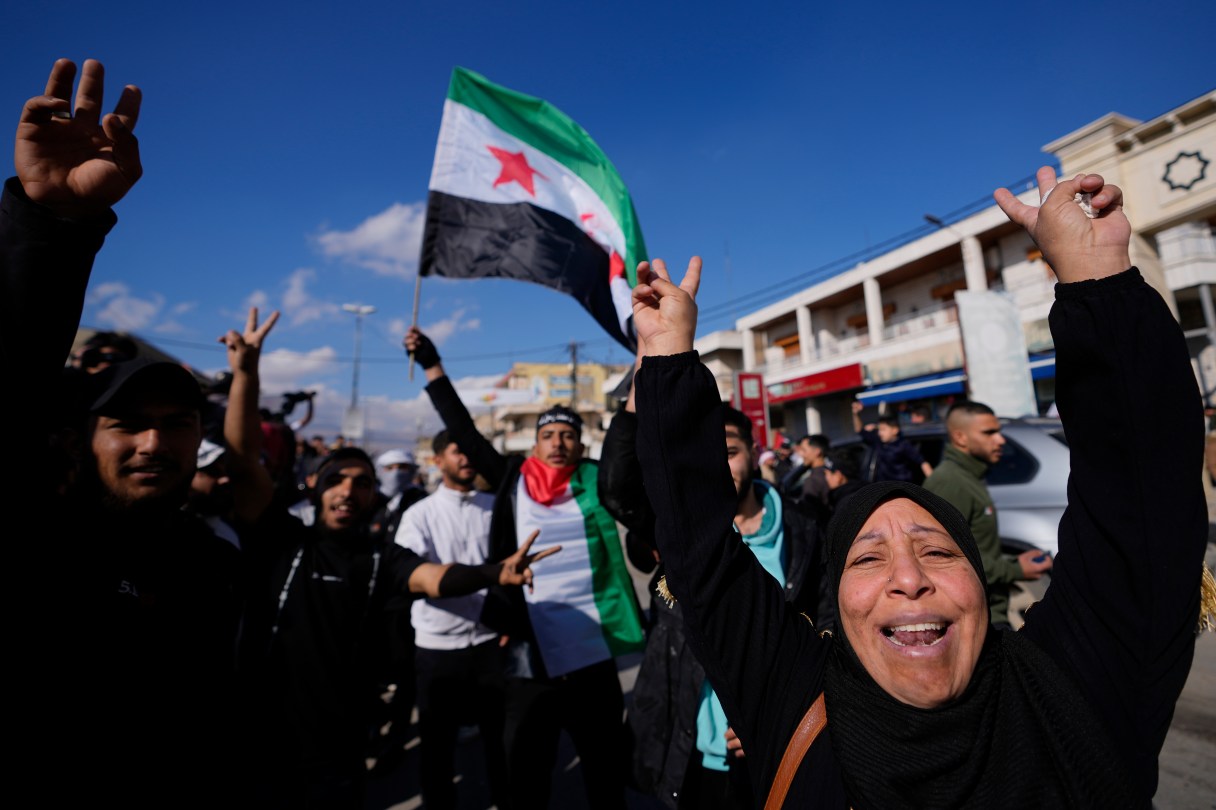
Things could still go badly for Syria following the abrupt downfall of Bashar Assad on Saturday and the end of 54 years of ruinous Assad family rule.
The Islamist militia that led the revolt, Hayat Tahrir al-Sham (Organization for the Liberation of the Levant), has old ties to al-Qaida and remains on the U.S. list of designated terrorist organizations, though its leader now disavows terrorism. The experience of post-revolutionary Arab states — whether in Yemen, Libya, Tunisia or Egypt — has not been a happy one.
Foreign powers, particularly Turkey, may seek to replace Iran’s former dominance in the country with their own. And Syria’s ethnic and sectarian divisions among Alawites, Sunnis, Kurds and Arabs could still prove explosive, with spillover effects in Jordan, Lebanon and other neighbors.
Yet this is also a moment of opportunity for a country that has mainly known dictatorship since it became independent in the 1940s. Political prisoners — including one former pilot who spent 43 years in prison for refusing to bomb the regime’s domestic opponents — are being freed. Millions of Syrians driven from their homes by 13 years of civil war and repression have a chance to return.
The country can also put an end to the quasi-occupation by the foreign military powers that propped up Assad’s rule: Lebanon’s Hezbollah, Iran’s Revolutionary Guard and the Russian military. The sight of Syrians ransacking Iran’s embassy in Damascus, Syria — with portraits of Hezbollah’s Hassan Nasrallah and the Revolutionary Guard’s Qassem Soleimani torn to shreds — is evidence of just what Syrians think of the “Axis of Resistance” led by Iran.