
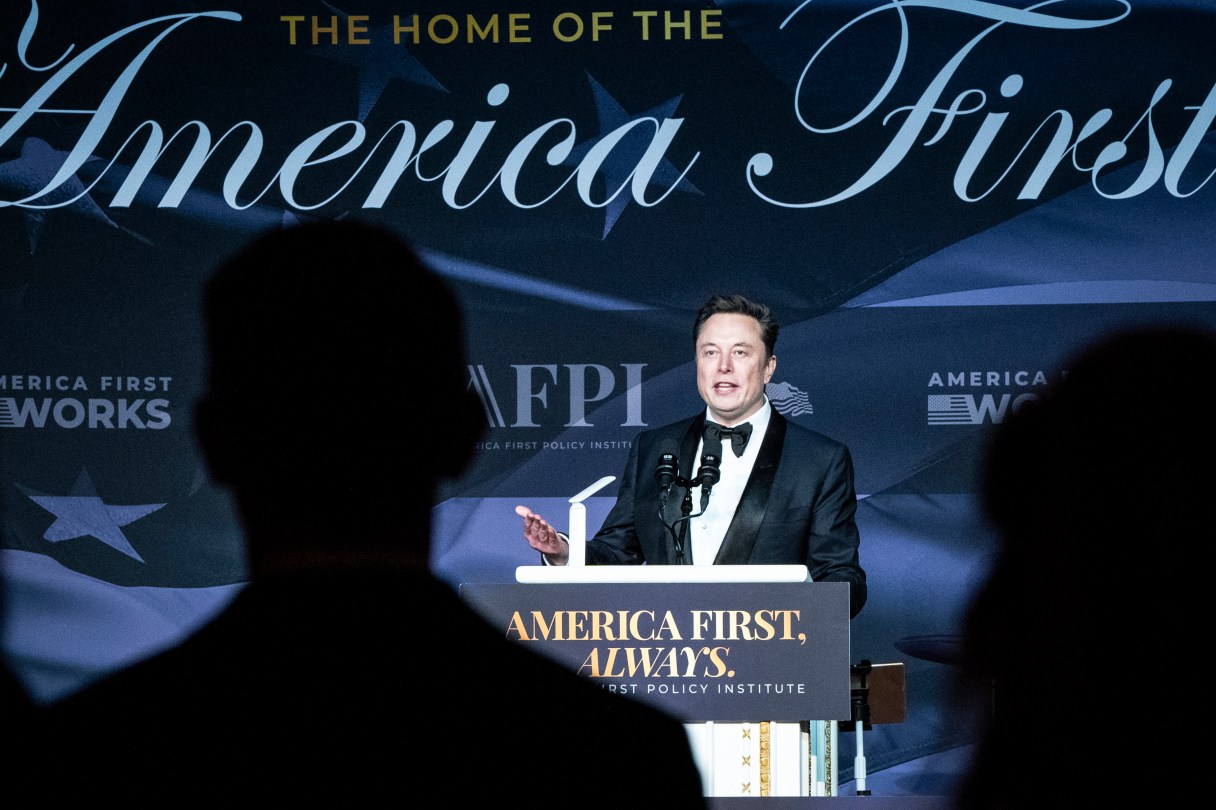
After spending $118 million of his personal wealth on the campaign to re-elect Donald Trump as president, billionaire Elon Musk has been tapped to lead a new Department of Government Efficiency in the new administration with Vivek Ramaswamy, the chief executive officer of a pharmaceutical company and (very) brief Republican presidential candidate. It’s no coincidence that the acronym for this new department is DOGE, which happens to be the name of a cryptocurrency hawked by Musk.
Musk might find this amusing, but for the rest of us it can be downright Orwellian, the notion that the path to efficiency is through additional administrative bureaucracy, especially when that bureaucracy that will have tenuous, if any, authority. You see, Congress controls spending, not an executive agency, and actions it tries to implement will likely be met with significant legal challenges. If anything, DOGE shows how blustering campaign promises are built on fiction, reflecting a lack of knowledge of how government works. (Spoiler alert: It’s not a company.)
Let’s start from scratch. Say you are concerned the federal government is prone to waste, fraud and abuse and needs to be kept under close watch. You assume that because it’s the government and not a private company with a profit motive, there’s less efficiency. What do you do? Your primary constraint, the one that supersedes all others with no exceptions, is the U.S. Constitution, which gives the power of the purse to Congress. Congress creates every federal agency, mandates their tasks and approves their funding. If you want efficiency, it must start with Congress.
Although keeping a careful eye on spending is the purview of Congress, it’s a lot to put on members or its committees, as both are constantly churning through elections and majority status. Better to create a congressional agency instead. Unlike executive agencies, which report to the president, these agencies report to Congress, just like the Congressional Budget Office. This new agency would have the power to audit every other government agency and its recommendations would ideally have the power of Congress, unlike the flimsiness of DOGE, which has no legal authority (even to exist, since it’s not being created by Congress!).
What’s stopping Trump from asking for Congress to create this efficiency agency? For one, it (largely) already exists, having just celebrated its 100th birthday. Say hello – again – to the Government Accountability Office, the hawkish auditor of the federal government that clawed back $70 billion from agencies in fiscal 2023 as part of hundreds of actions to properly steward federal funds. The GAO staff is comprised of experts in the areas they oversee, and these quiet technocrats punch well above their weight. The agency calculates that it gives back $133 to the government for every $1 it spends.