
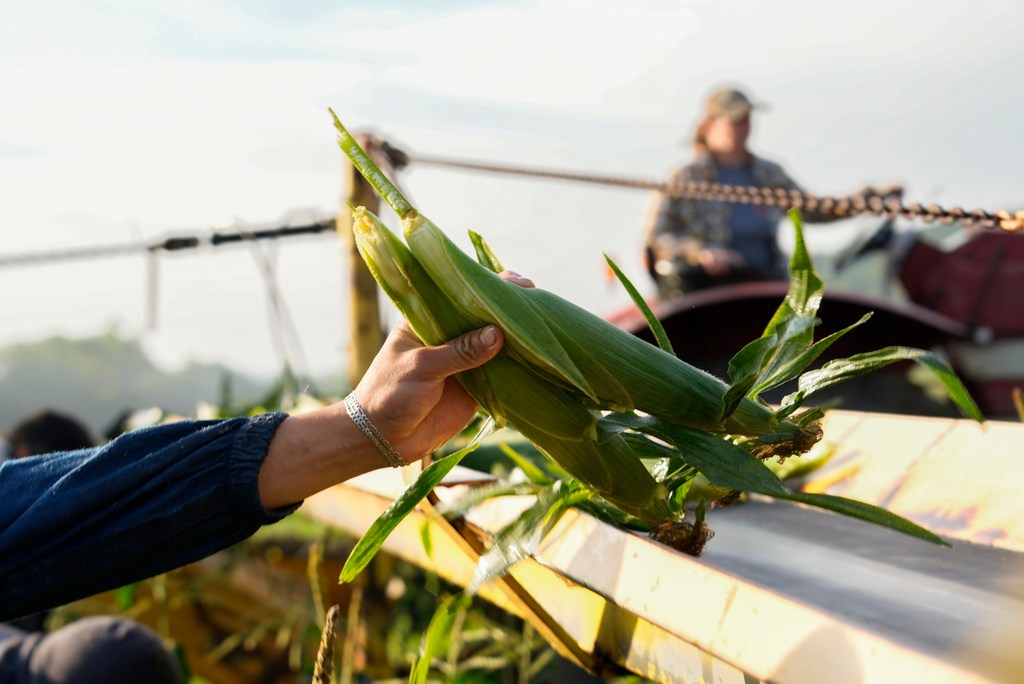
If President-elect Donald Trump follows through on his pledge to deport millions of immigrants, it could upend the economies of states where farming and other food-related industries are crucial — and where labor shortages abound.
Immigrants make up about two-thirds of the nation’s crop farmworkers, according to the U.S. Department of Labor, and roughly 2 in 5 of them are not legally authorized to work in the United States.
Agricultural industries such as meatpacking, dairy farms and poultry and livestock farms also rely heavily on immigrants.
“We have five to six employees that do the work that nobody else will do. We wouldn’t survive without them,” said Bruce Lampman, who owns Lampman Dairy Farm, in Bruneau, Idaho. His farm, which has been in the family three decades, has 350 cows producing some 26,000 pounds of milk a day.
“My business and every agriculture business in the U.S. will be crippled if they want to get rid of everybody who does the work,” Lampman said, adding that his workers are worried about what’s to come.