
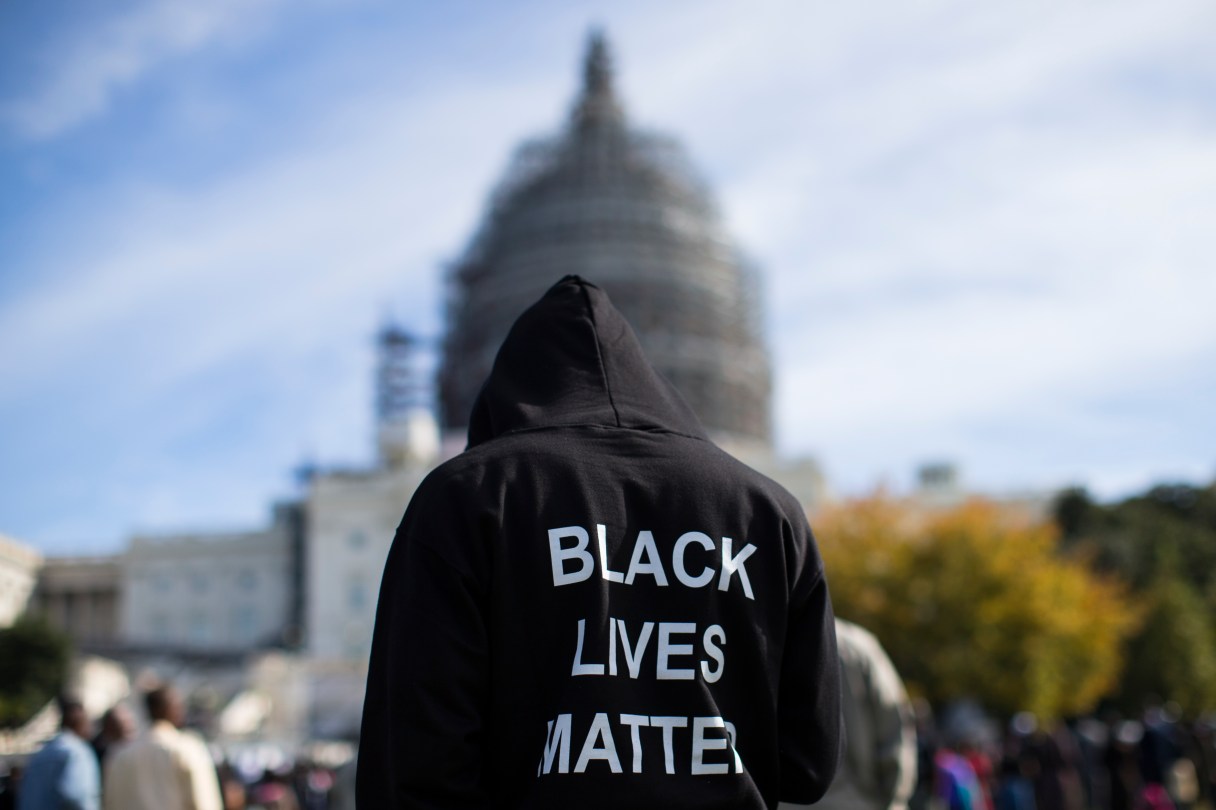
WASHINGTON (AP) — Cori Bush went from helping to lead an informal movement for racial justice to winning two terms as a congresswoman from Missouri, with an office decorated with photographs of families who lost loved ones to police violence. One is of Michael Brown.
Brown’s death 10 years ago in Ferguson, Missouri, was a defining moment for America’s racial justice movement. It cast a global spotlight on longtime demands for reforms to systems subjecting millions of people to everything from economic discrimination to murder.
Activists like Bush went from proclaiming “Black Lives Matter” to running for seats in statehouses, city halls, prosecutors’ offices and Congress — and winning. Local legislation has been passed to do everything from dismantling prisons and jails and reforming schools to eliminating hair discrimination.
At least 30 states and Washington, D.C., have enacted laws meant to curb abusive conduct since 2020, according to the Brennan Center for Justice. While the last decade of racial justice activism transformed politics, landmark reforms remain elusive, more than three dozen activists, elected officials and political operatives told The Associated Press.