
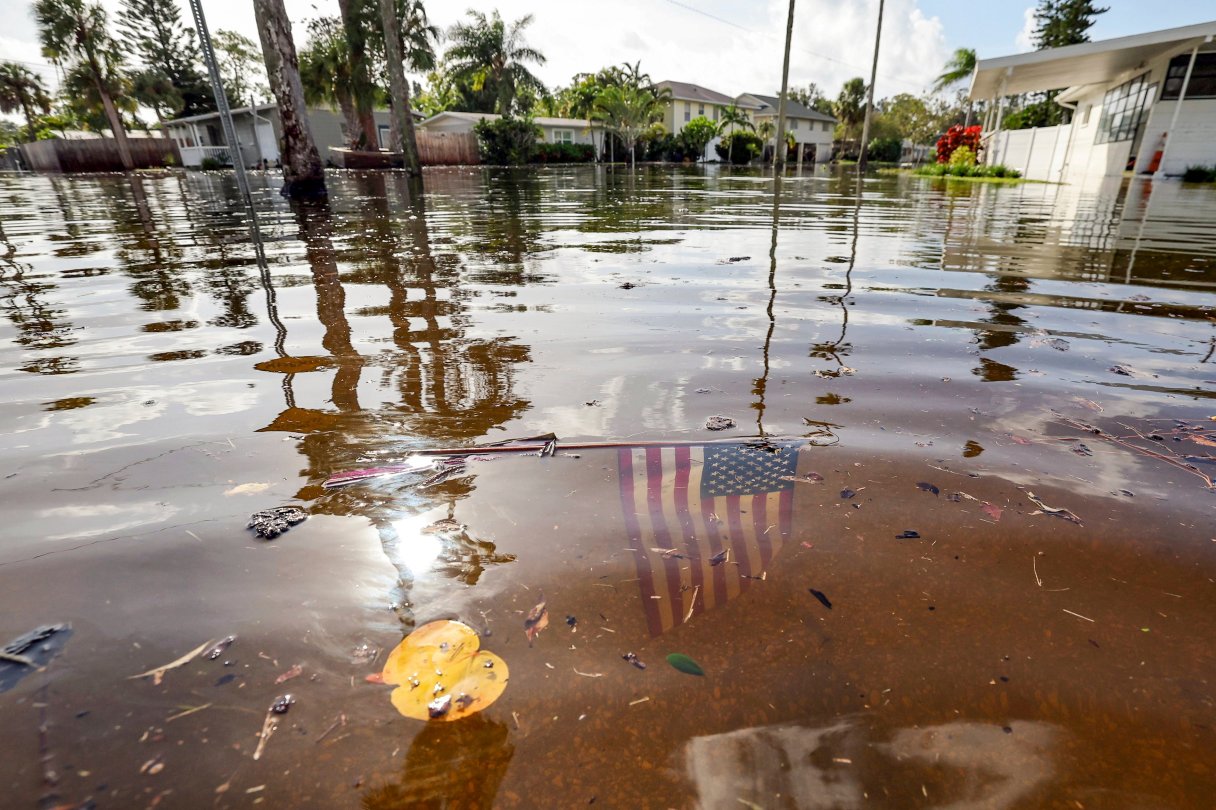
In the days and weeks after two massive hurricanes hit the United States in two weeks’ time, extremes from both ends of the ideological spectrum proclaimed the events as unnatural disasters. Many political, media and activist voices reported these storms as unprecedented and as undeniable evidence of human-caused climate change. In truth, these storms were not “unprecedented.” As Gov. Ron DeSantis noted, many hurricanes in the last two centuries have slammed into Florida with equal or greater force. In fact, a majority of the Southeast’s worst hurricanes happened in the late 1800s and early 1900s.
Not to be outdone by these climate activists, U.S. Rep. Majorie Taylor Greene, R-Northwest Georgia, joined a few others to blame Helene and Milton on nefarious forces within the Deep State. The claim that these storms were manufactured and aimed at Republican voters in Appalachia and Florida is not worthy of a direct response. Still, the claim reveals that conspiracies, even from those on opposite ends of the political spectrum, have at least one thing in common.
Most conspiracy theories are often based on an exaggerated idea of humanity’s power. In this case, it is the power to control and direct nature. The illusion of control is a feature of modernism and a reason that so many conspiracy theories proliferate today.
In his remarkable book, now decades old, “The Way of the Modern World,” Craig Gay of Regent College in Vancouver described how secularization envisions humanity as being more in control than it really is. After all, if the world is a creation, and a good one at that, it’s likely that the Creator did not make it, nor has he left it, teetering on the verge of disaster.
However, in the 20th century, influential secular thinkers like Stephen Jay Gould and Richard Dawkins concluded just the opposite. From a naturalistic, neo-Darwinian point of view, the odds that humans would ever come into existence are ridiculously slim. Even the slightest divergence of factors along the way would have led to our extinction. Therefore, the slightest change we cause in the climate may end the whole accidental, meaningless situation humans currently enjoy.