
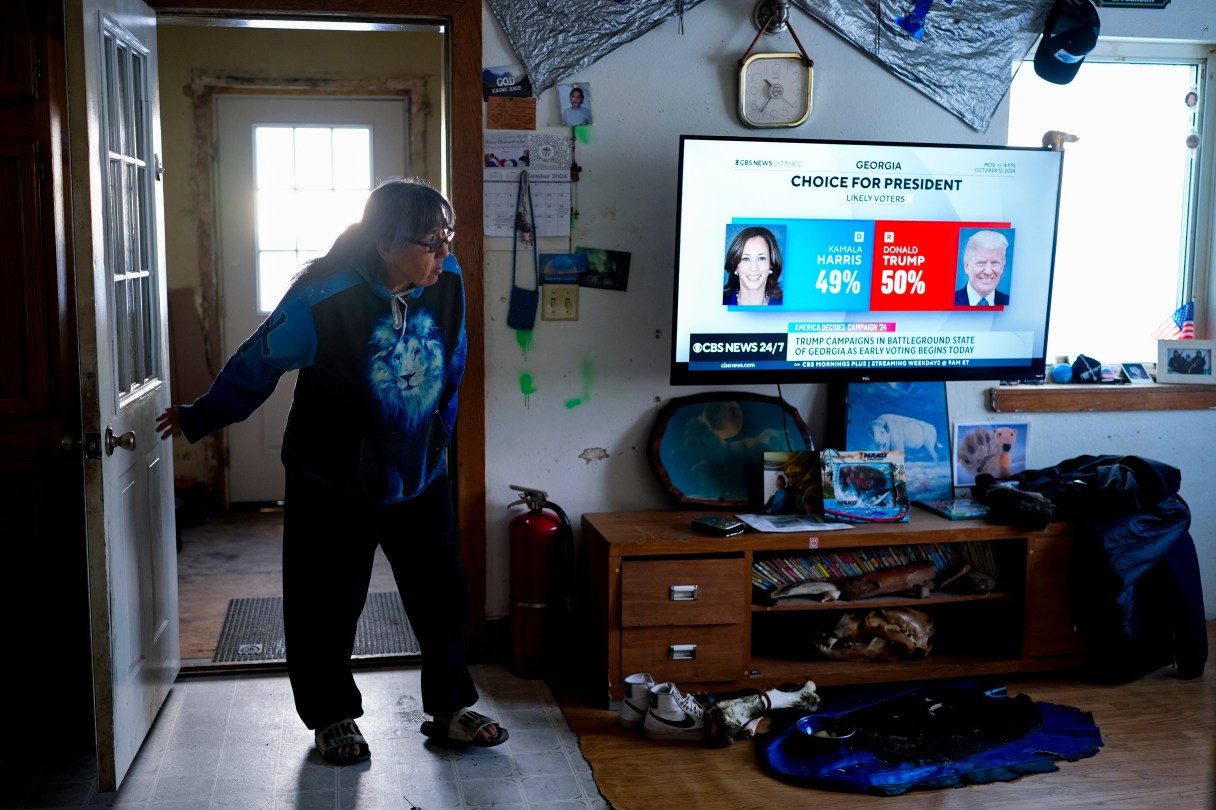
KAKTOVIK, Alaska (AP) — Early last summer, George Kaleak, a whaling captain in the tiny Alaska Native village of Kaktovik, on an island in the Arctic Ocean just off the state’s northern coast, pinned a flyer to the blue, ribbon-lined bulletin board in the community center.
“Attention residents,” it read. “In search of elections chairperson to conduct the August and November elections. … If interested please contact the State of Alaska Nome Elections.”
No one was interested, Kaleak said, and the state failed to provide an elections supervisor or poll workers.
When the primary arrived on Aug. 20, Kaktovik’s polling station didn’t open. There was nowhere for the village’s 189 registered voters to cast a ballot. Kaleak, who also is an adviser to the regional government, didn’t even try.
“I knew there was nobody to open it,” he said during an interview in Kaktovik earlier this month.