
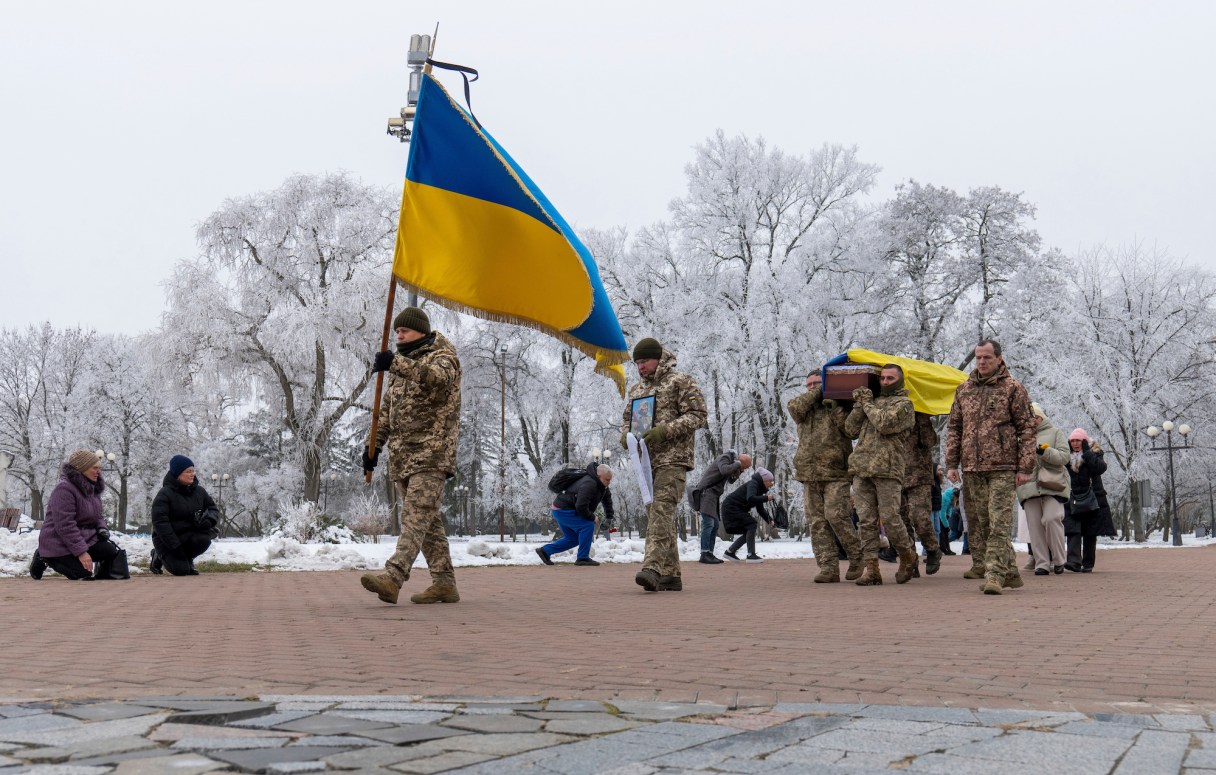
When was the last time you heard someone mention Ukraine in casual conversation? Back in February 2022, when Russia invaded, there were vigils in our streets. Now, more than 1,000 days later, after Congress has approved $175 billion in aid, it’s likely to fade into distant memory. President-elect Donald Trump, who has repeatedly questioned funding Ukraine, has vowed to end the war quickly.
While the average American probably hadn’t thought much about Ukraine before the 2022 invasion, Russian President Vladimir Putin has been thinking about the country for more than 30 years.
“The breakup of the Soviet Union was the collapse of a historic Russia,” he said in a documentary that aired on Russia’s airwaves. Putin has also referred to his country’s 1991 fall as “the greatest geopolitical catastrophe of the 20th century.” For those keeping score at home, he’s ranking the end of the U.S.S.R. as worse than both world wars and the 20 years in Vietnam. “We lost 40% of the territory, production capacities and population. We became a different country. What had been built over a millennium was lost to a large extent.”
Make Russia Great Again may not lend itself to a pronounceable acronym, but it does clearly define Putin’s foreign policy agenda. It’s one predicated on a worldview that sees Ukraine as a rebellious commonwealth and not an independent democracy.
“Throwing off oppression” is a story we know well in this country. It’s a story we teach our children and base our exceptionalism on. It’s a story of freedom. But as we all know, freedom isn’t free.