

“THE NIGHT THE RAIN HAD NOWHERE TO GO” by William Woolfitt (Belle Point Press, 76 pages, $16).
William Woolfitt’s new poetry collection, “The Night the Rain Had Nowhere To Go,” pays homage to generations of his people in mine-riddled West Virginia. I’ve known and admired Woolfitt’s work for some years, meeting him at a writing conference over a decade ago. I’ve watched him grow not only as a master poet, but also soaring in multiple genres, including fiction and creative nonfiction. He is associate professor of English at Lee University in Cleveland, Tennessee, where he lives with his family on part of an old farm. He answered questions for Chapter 16 via email.
Q: Describe how your writing honors your family history while holding a mirror to the hardships mining and the chemical industry have imposed on West Virginia’s environment and people.
A: The family history I’m drawn to again and again is that of my maternal grandparents. It doesn’t feel like an exaggeration to say that they poured themselves out, broke their bodies, even gave their lives for their farm and their children and their grandchildren. And it also feels important to “hold a mirror,” as you say, to the parts of their story I would rather not see, to not sentimentalize or flatten them as I tend to do if I’m not careful, to acknowledge their frailties and mistakes, their connections to coal. My grandfather had worked at strip mines and driven a coal truck, and my grandmother was a mine boss’s daughter and had trained as a cadet nurse during World War II. In the 1950s, they bought a cattle farm an hour away, near the Allegheny Mountains — and it too had been mined and logged by its previous owners. Again and again, I dream myself back to their farm; I imagine my grandfather and grandmother sweated for it, greened it, made it beautiful again.
Q: You grew up on land literally fractured by mining. In that sense, I see your work as a kind of kintsugi, or “golden repair,” the Japanese art of repairing broken pottery and porcelain with liquid gold or silver. How do you infuse such artistry in your work that’s largely about destruction and brokenness?
A: I love your suggestion that poetry can do the work of kintsugi, golden repair, pouring beauty into the cracks and ruined places. As I’ve said, I learned from my grandparents that you can work on a piece of broken land and make it beautiful again. My first chapbook was titled “The Salvager’s Arts,” and I’ve long been interested in self-taught artists like Bessie Harvey, who made sculptures from broken sticks that had been shaped by wind and beetles and worms, and Howard Finster, who made Paradise Garden on land that had been used as a trash dump. In my new book, I’m still thinking about all kinds of salvaging, making and transforming.
Q: You draw portraits and personas from a variety of sources for this book. How did you first conceive of this collection?
A: I wanted many poems in the book to be akin to portrait essays, which Jessie van Eerden describes as “acts of attention.” Perhaps my portrait poems can invite the reader to join me in paying attention to, regarding, keeping company with, even being changed or spoken to by those who make gardens and songs and hope and resistance — those who gather and give witness in the book.
Q: You wisely intersperse poems of the past with those of your life with your young sons, which feels like the completion of a cycle. These are some of my favorite poems and bring a lightness and joy to fairly dark material. How do you see poems like “Turquoise Circles” and “Benediction” working with/against the others?
A: I confess that sometimes I love to revise or even remake an older poem. “Turquoise Circles” is a remake of “Ring of Earth” that I wrote after the last time my son and I saw my grandmother on her farm, after windmills were installed on Laurel Mountain, after the coyote population increased and threatened her neighbors’ livestock, after I started writing about global warming and climate change. The circles in the poem were drawn by my son with a crayon; he called them “dream ponds.”
In “Benediction,” I remember picking ditch weeds with my other son; he called them “pink flowers” and talked about them with everyone he met, even strangers. In both “Turquoise Circles” and “Benediction,” I document my experiences with my sons as they imaginatively respond to the natural world, I include quotes from them, and I hope I’ve portrayed them as makers of beauty, as witnesses to stories that ripple on and on beyond me, beyond my own small and fleeting life that I’m making, remaking, sometimes writing about.
To read an uncut version of this interview — and more local book coverage — visit Chapter16.org, an online publication of Humanities Tennessee.
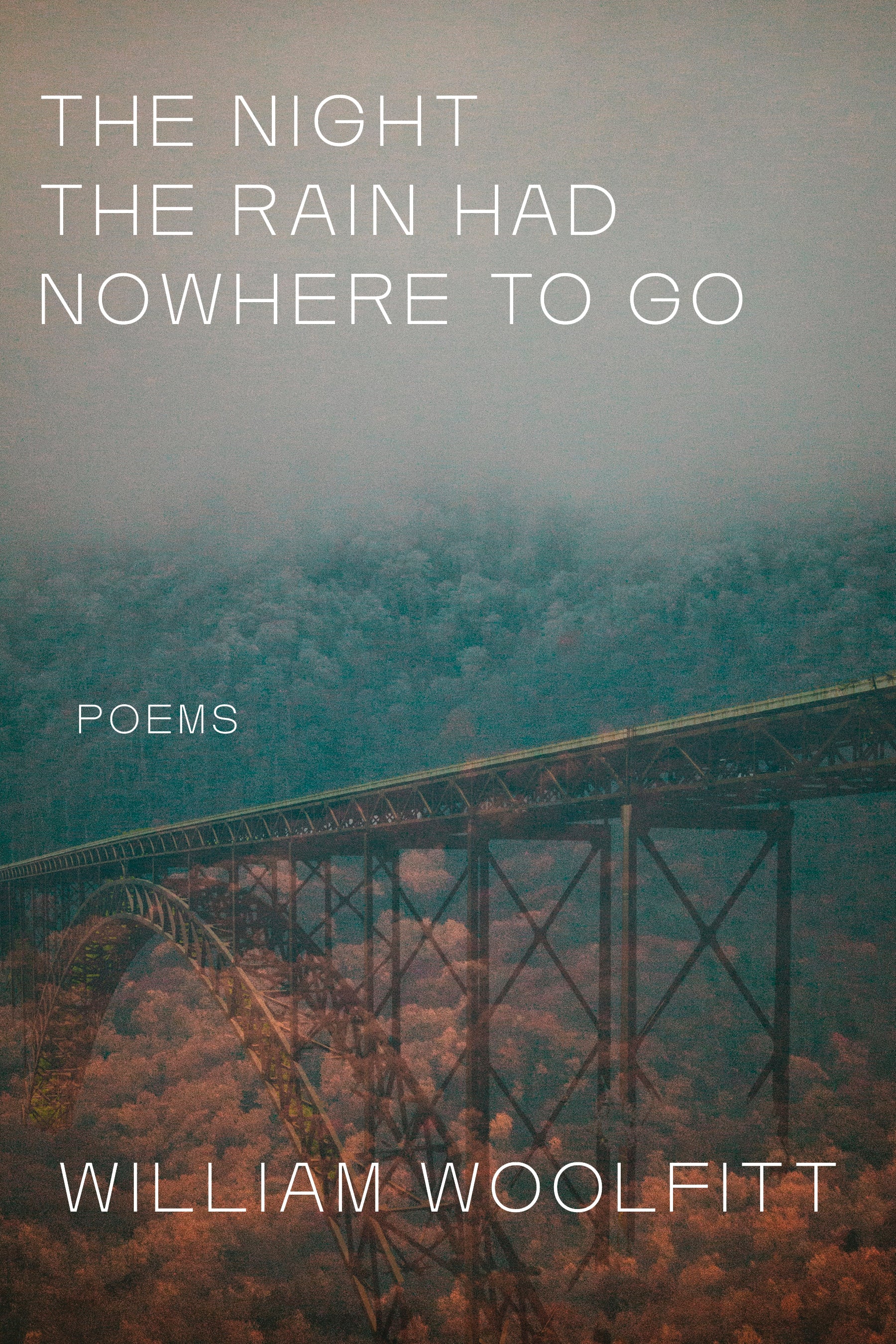 Belle Point Press / “The Night the Rain Had Nowhere To Go”