
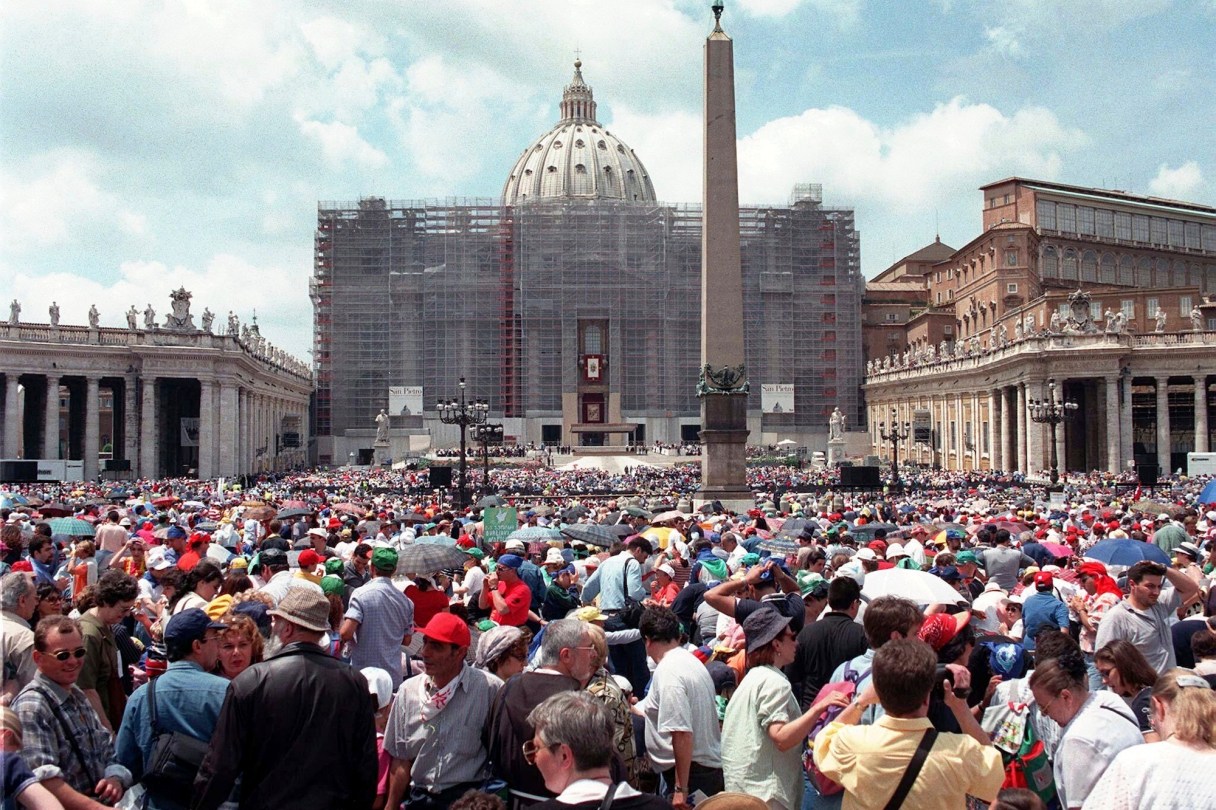
When Pope Francis left the Vatican earlier this month for his traditional Christmastime outing downtown, he acknowledged what many Romans have been complaining about for months: That his big plans for a Holy Year had turned their city into a giant construction pit, with traffic-clogging roadworks tearing up major thoroughfares, scaffolding covering prized monuments and short-term rentals gobbling up apartment blocks.
Francis urged Romans to pray for their mayor — “He has a lot to do” — but to nevertheless welcome the upcoming Jubilee as a time of spiritual repair and renewal. “These worksites are fine, but beware: Don’t forget the worksites of the soul!” Francis said.
When he formally opens the Holy Year next week, Francis will launch a dizzying 12-month calendar of events that include special Jubilee Masses for the faithful from all walks of life: artists, adolescents, migrants, teachers and prisoners.
And while the Jubilee’s official start means the worst of the construction headache is ending, the arrival of a projected 32 million pilgrims in 2025 is set to only increase congestion in the Eternal City and intensify a housing crunch that has been driving residents away.
Like many European art capitals, Rome has been suffering from overtourism as the Italian travel sector rebounds from COVID-19: Last year, a record high number of people visited Italy, 133.6 million, with foreign tourists pushing Italy over the EU average in growth of the travel sector, national statistics bureau ISTAT reported.