
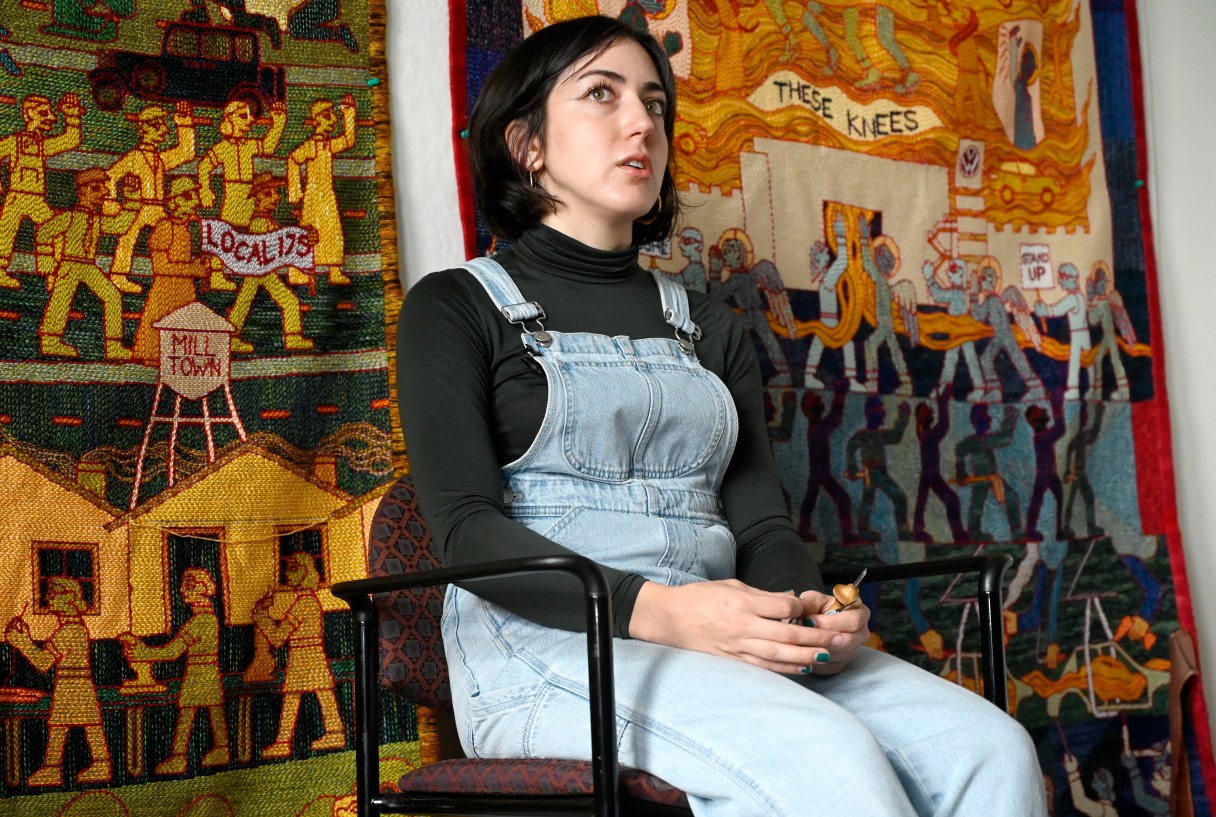
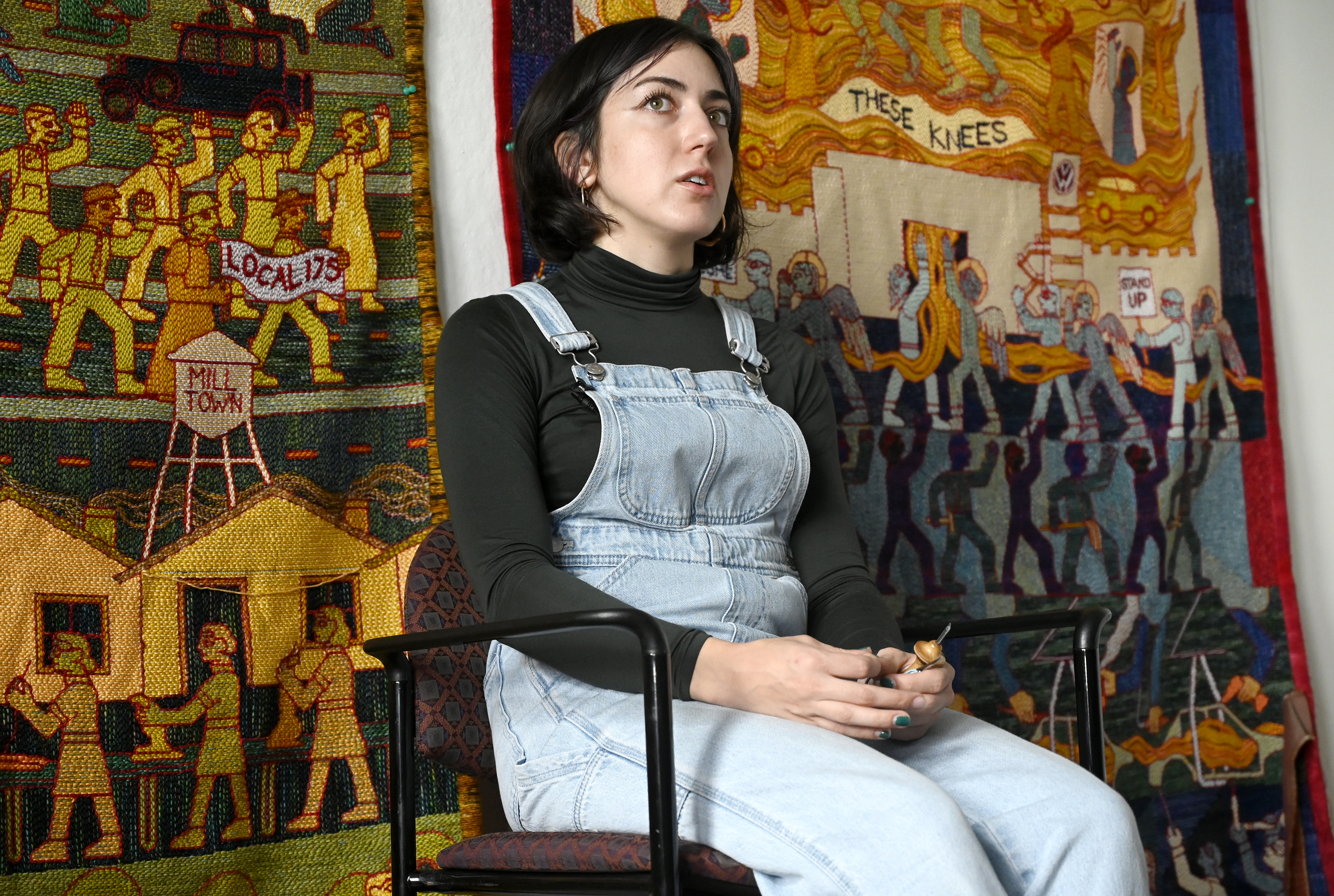
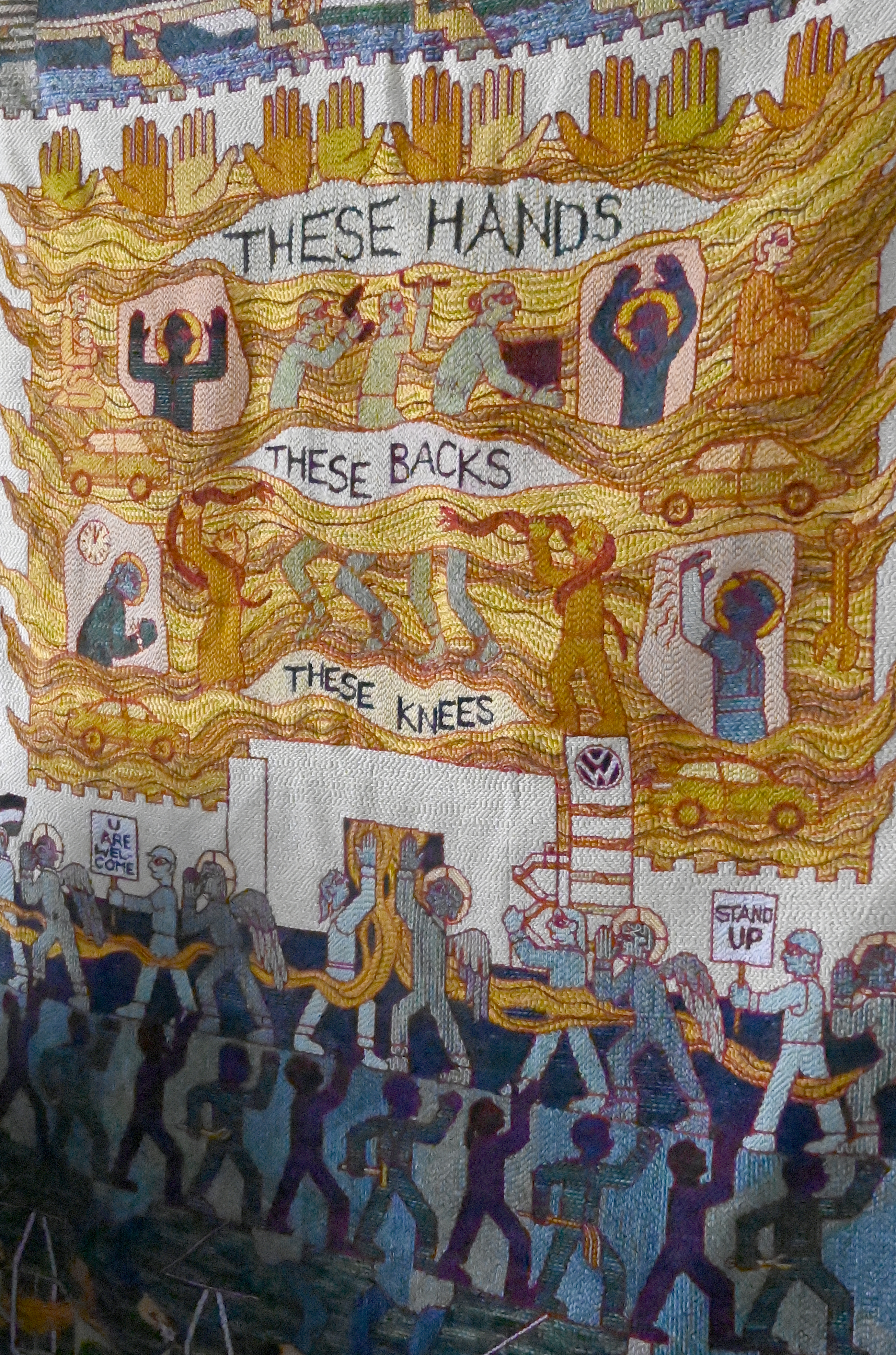
As Volkswagen workers sought to unionize the Chattanooga assembly plant, ultimately voting in favor of the union, local artist Tabitha Arnold sought to document the historic effort.
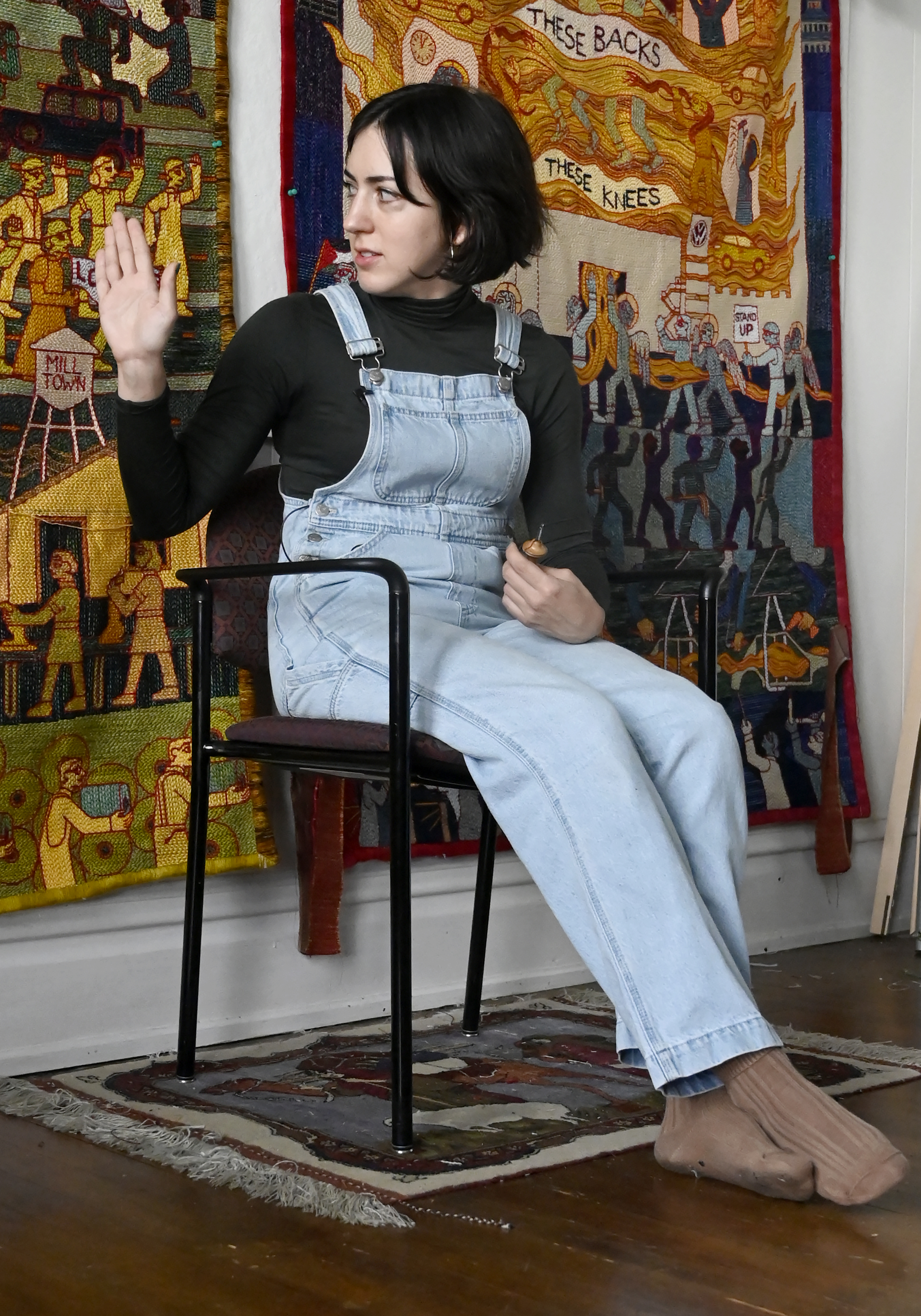
The result? A large tapestry, entitled “These Hands,” that combines labor and religious imagery to depict the work and spirit of unionizing Volkswagen employees. Arnold had the opportunity to display the tapestry at the last union rally before the vote, and the piece was well received by the workers, she said in an interview.
“I think tapestry especially is exciting for people to see themselves in because it feels historic, it feels ancient,” Arnold said about her chosen medium. “So, I think it affirms to people that they’re part of history, and they’re doing something really monumental.”
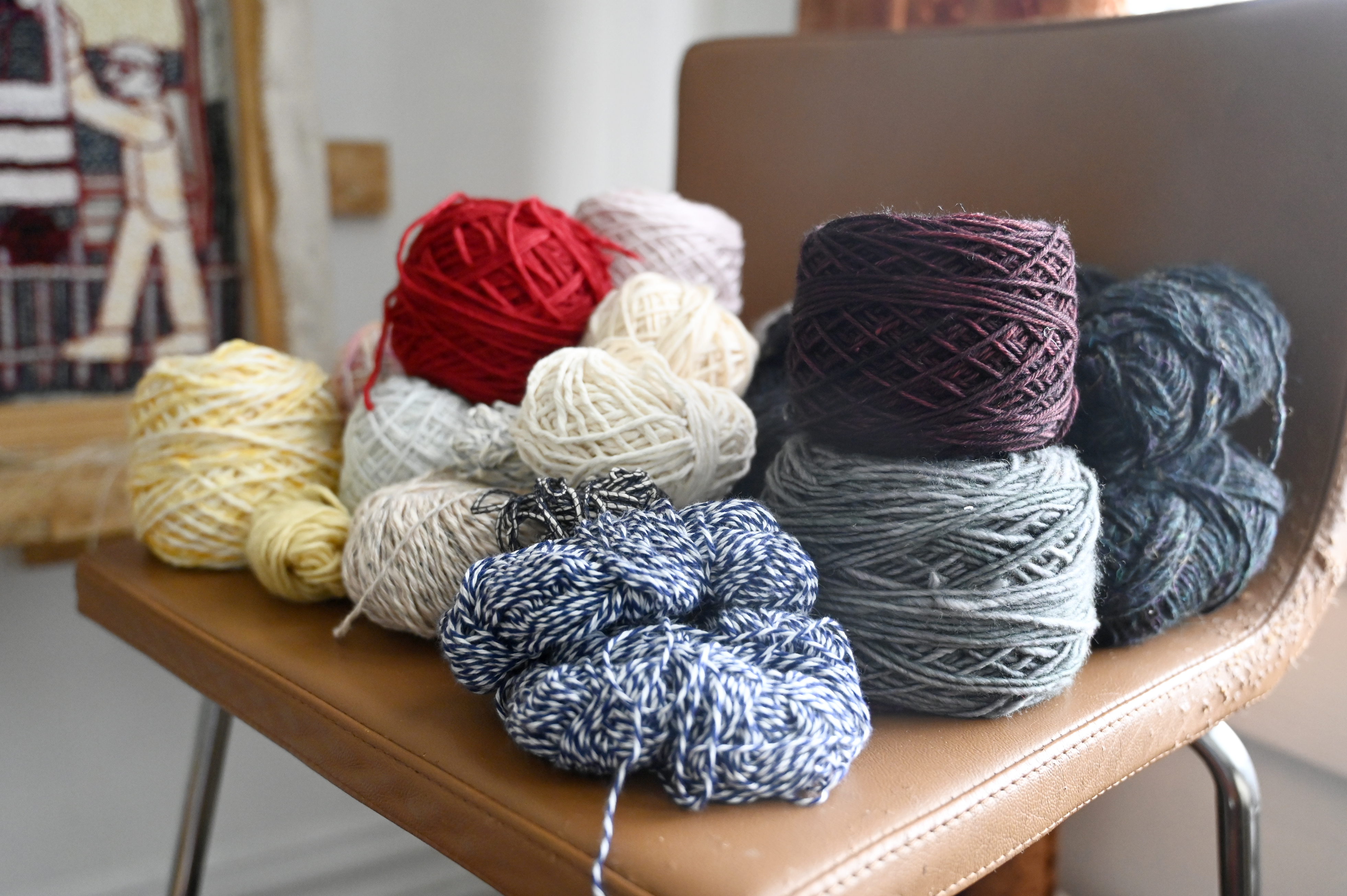
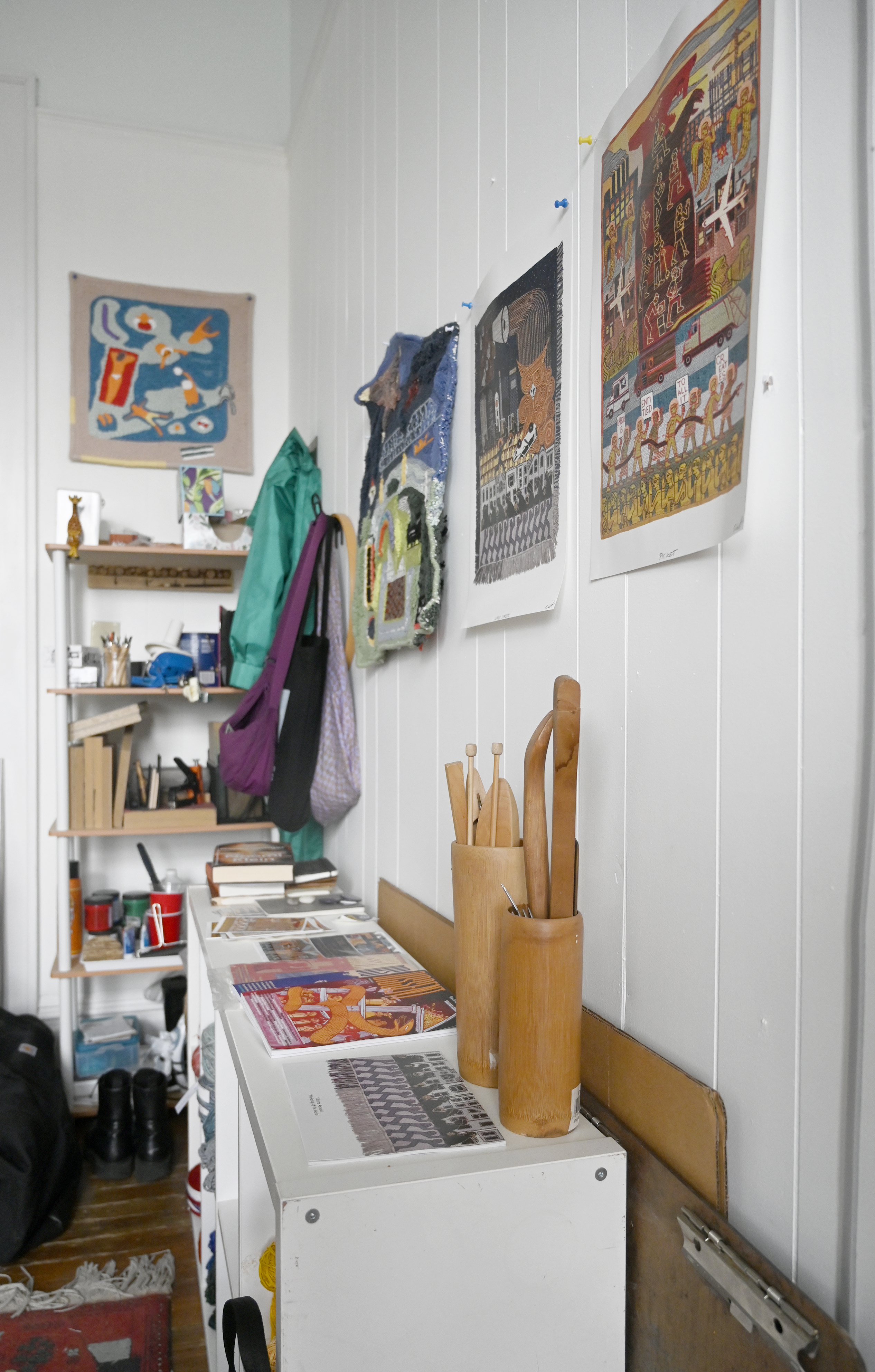
Part of the positive reception to the piece came from the shared language of labor, Arnold said. Volkswagen workers understand what it means to put in hours of work, and so they could recognize and appreciate the time it took to craft the tapestry by hand with yarn and a punch needle. It takes hundreds of hours over a span of months, working row by row from the bottom to the top of a large frame, to make just one tapestry, Arnold said.
Arnold, born in Chattanooga, attended college in Philadelphia, studying painting. The medium did not suit her, and, at that time in 2016, there was a resurgence in textile art, she said. So she started tapestry weaving, and then she moved on to her current process, with the punch needle, in 2018.
Around the time that Arnold was diving into a new artistic medium, the political climate was shifting — Bernie Sanders was running for president in the Democratic primary, while Donald Trump went on to win the presidential election — and she wanted to make work that people would respond to more. Inspiration for politically conscious textile art came from war rugs, a movement by Afghan weavers in the ’70s that saw the infusion of war-related imagery in their works, Arnold said.
When Arnold began using political imagery in her own work, it was more passive, “looking at what was happening around me and putting it in the piece,” she said. A turn came when she was working at a cafe (“As you do when you have an art degree,” she deadpanned) as there were broader conversations about unionizing among cafe workers. Arnold decided she wanted to have a union campaign at her job, because while it might not have been a career for most, she felt that the workers still deserved a job that could support them, she said.
If you go:
— What: “Gospel of the Working Class,” an art exhibition featuring tapestries focused on labor history in Chattanooga created by local artist Tabitha Arnold
— When: Jan. 17-March 8, with an artist talk at noon Jan. 24
— Where: Institute of Contemporary Art, 752 Vine St.
— More info: icachatt.org.
The unionizing effort was difficult, perhaps the most difficult thing Arnold has ever done, she said. It challenged her socially and emotionally, and thus her art served as an outlet to vent her feelings. As she infused her perspective on labor, validating her experience unionizing into her art, that’s when her work began to resonate with more people, she said.
Arnold would hear from others that they saw themselves and their own labor efforts in her art, she said. That response, coupled with the desire to make new labor imagery in the vein of social realism artist and Mexican muralist Diego Rivera, encouraged Arnold to keep making labor-focused art, she said.
“We have that labor art of 100 years ago, but I felt like the new labor movement — this resurgence among young people and normally not organized types of jobs — I thought that that needed to be represented somewhere,” Arnold said.
(READ MORE: Tapestry from Hitler’s alpine retreat returning to Germany)
In 2022, Arnold returned to Chattanooga. Among her reasons for coming back to her hometown, she said, was that she felt politically redundant in Philadelphia, as there are plenty of labor organizers there. As she learned more about the labor movement and its history, she realized the importance of the South to that history, she said.
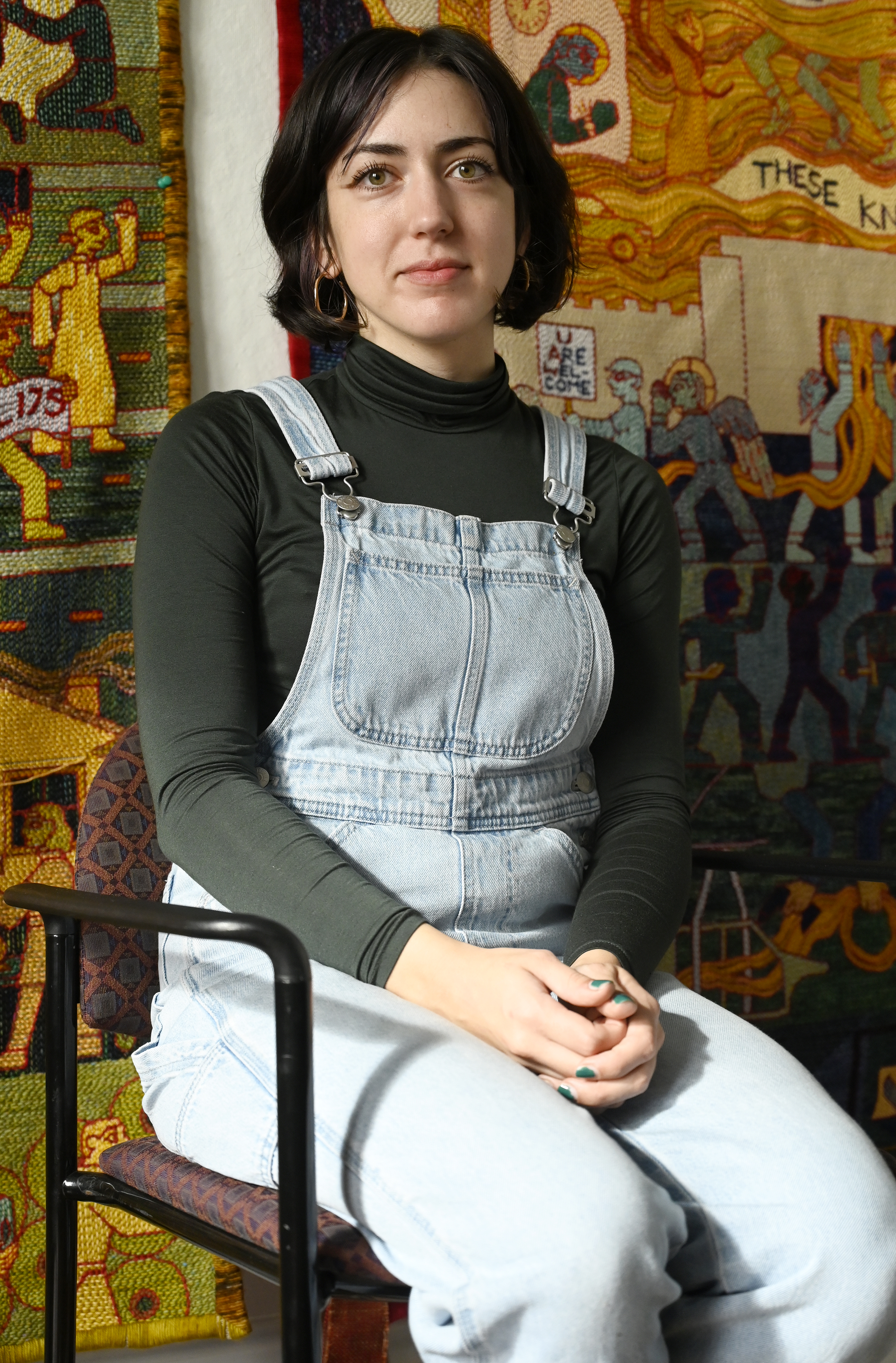
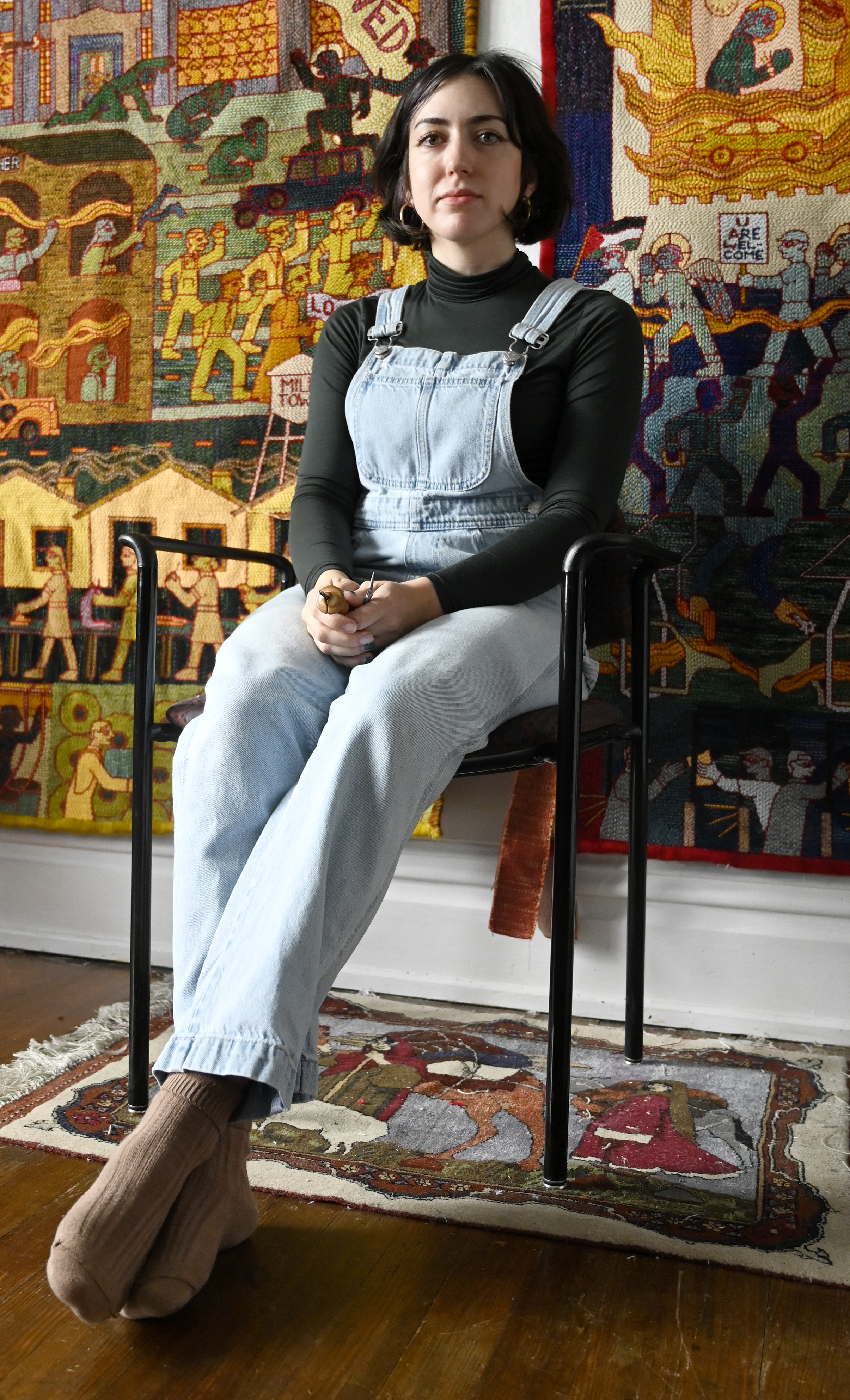
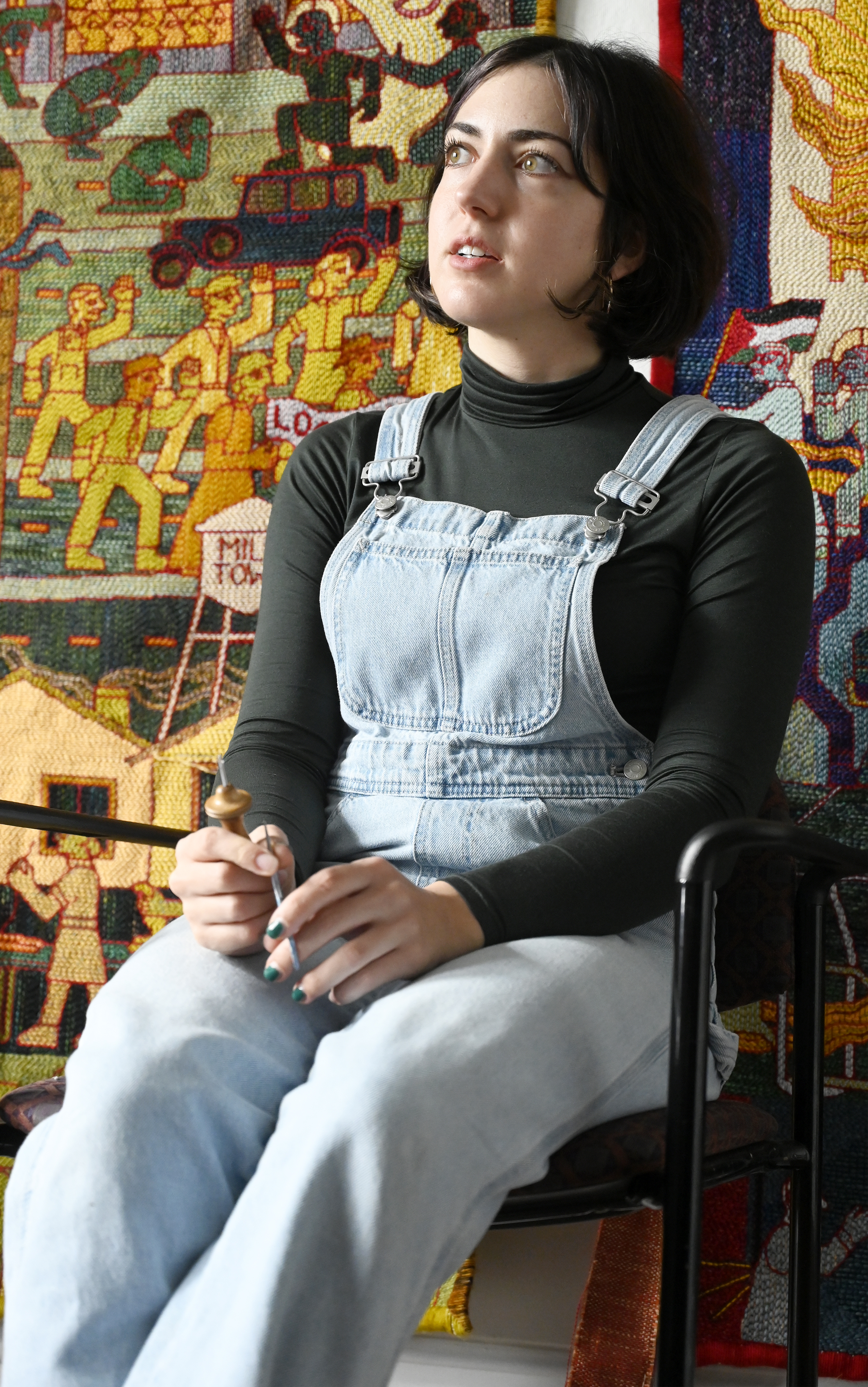
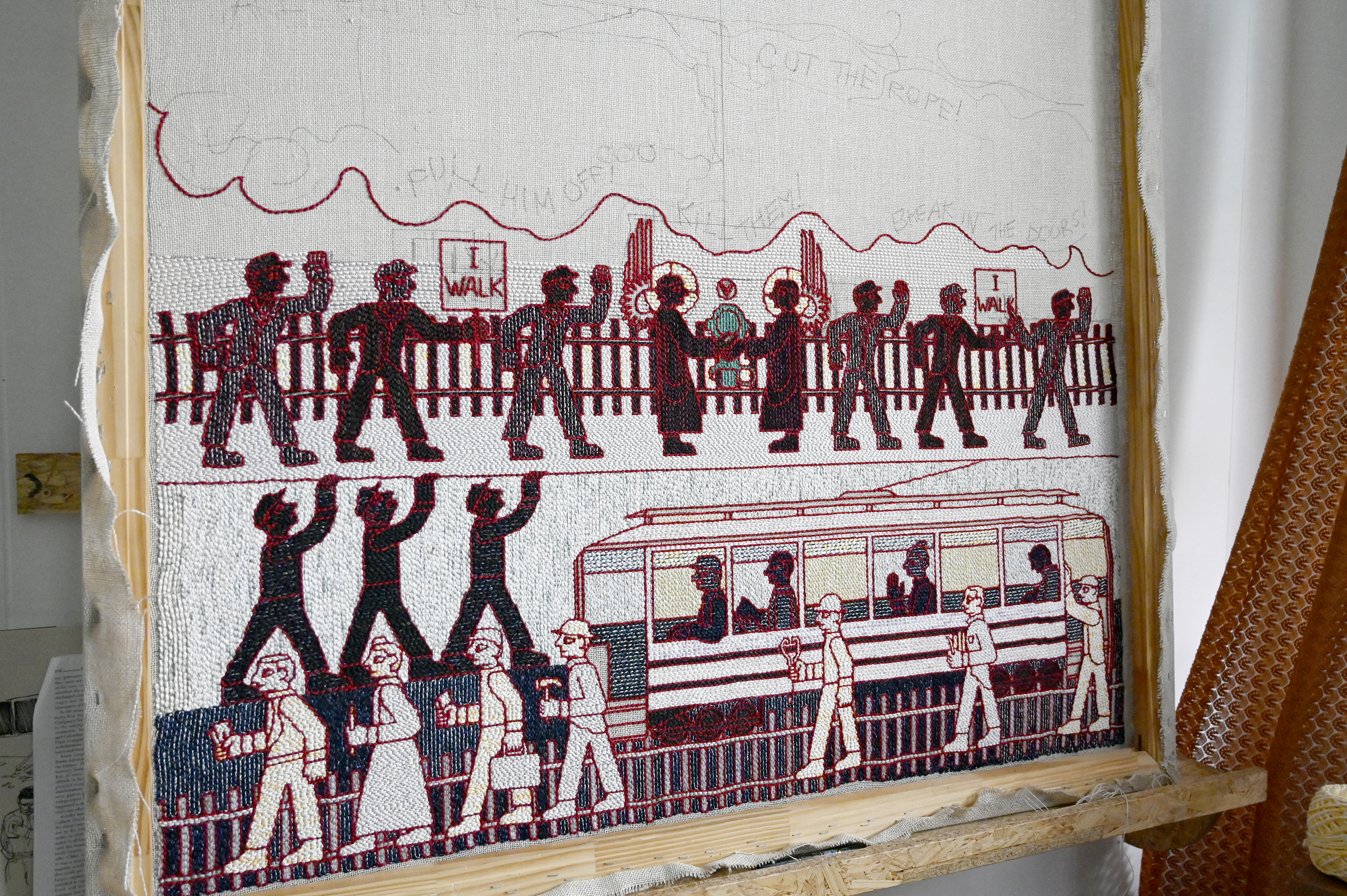
“I thought I’d be useful here, and I really like it here and care about this place and want to make it better,” Arnold said of Chattanooga.
Michael Gilliland, organizing director of the advocacy group CALEB, approached Arnold in 2023 with the idea of making tapestries about Chattanooga’s history.
Gilliland and CALEB operate the People’s History project, which seeks to “highlight the stories of activism and social movements that have played a massive role in Chattanooga’s development but that often go untold or unremembered,” Gilliland said by phone.
When the project started in 2016, it covered white supremacy and antiracism, and now it has expanded to cover the Civil War and labor history, Gilliland said.
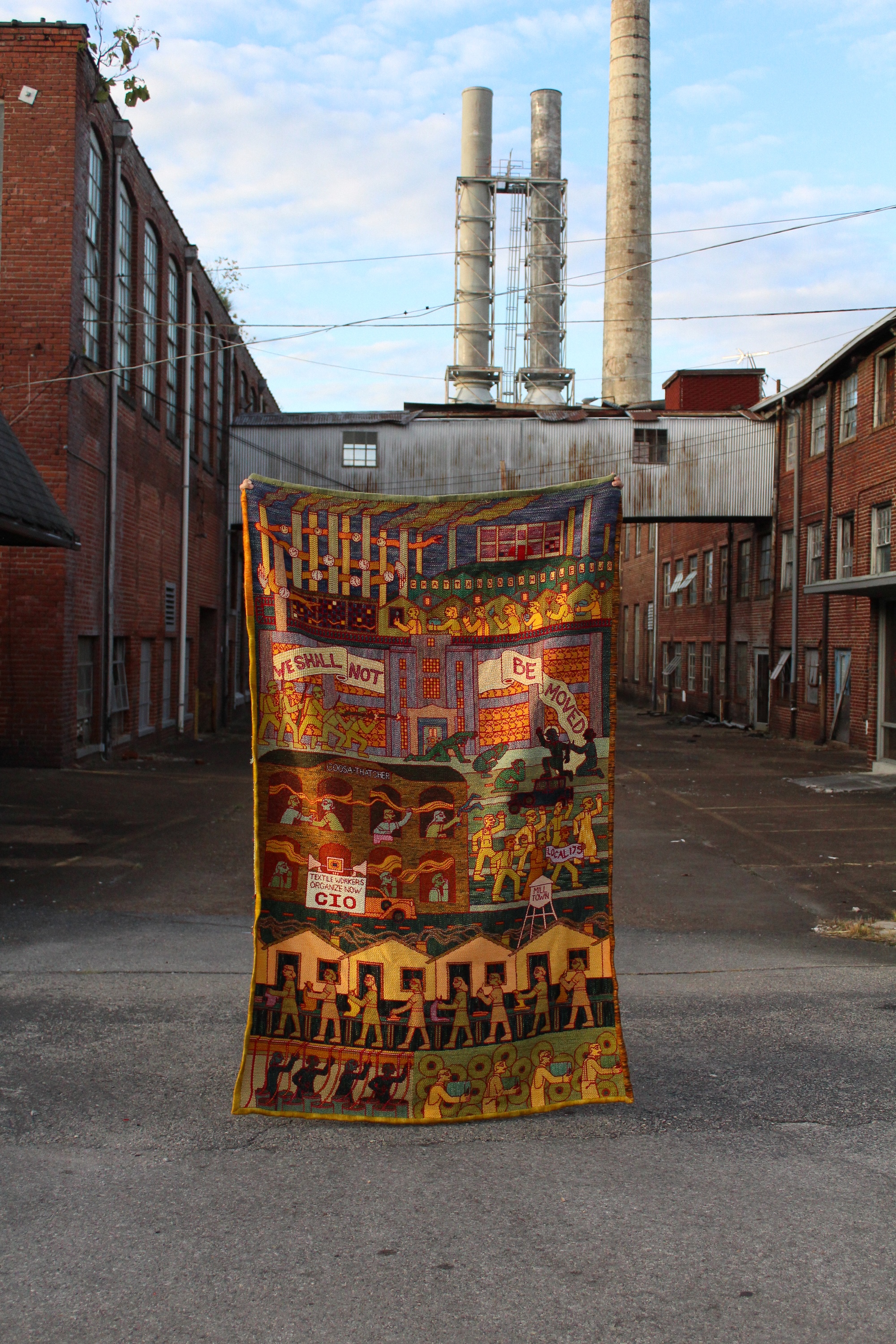
Using the material from the People’s History project, Arnold will present three other tapestries focused on Chattanooga’s labor history, in addition to the Volkswagen tapestry, at an exhibition beginning Jan. 17 at the University of Tennessee at Chattanooga’s Institute of Contemporary Art. The other tapestries highlight the textile strike of 1934, the trolley driver strike of the late 1910s and the Knights of Labor.
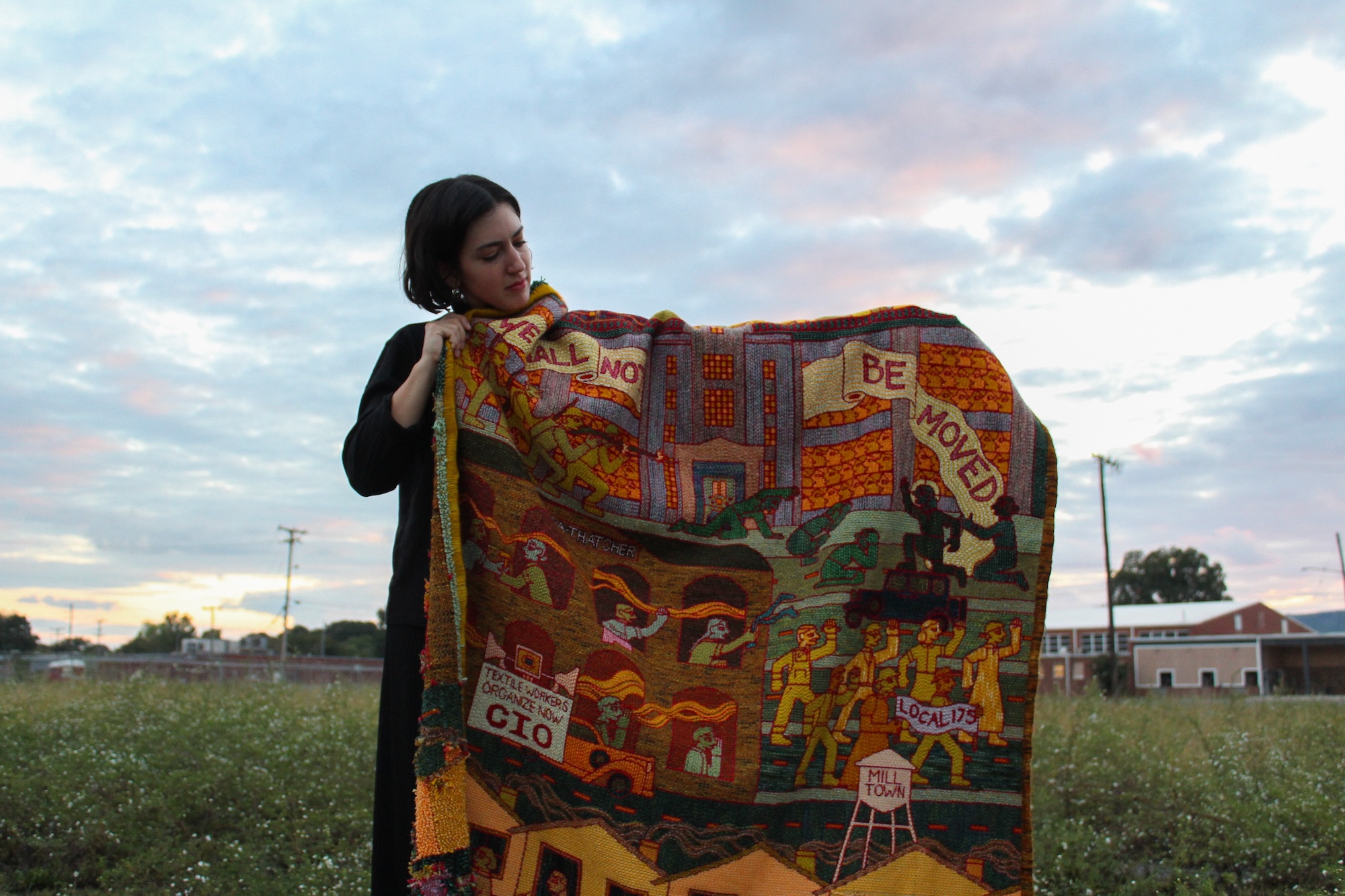
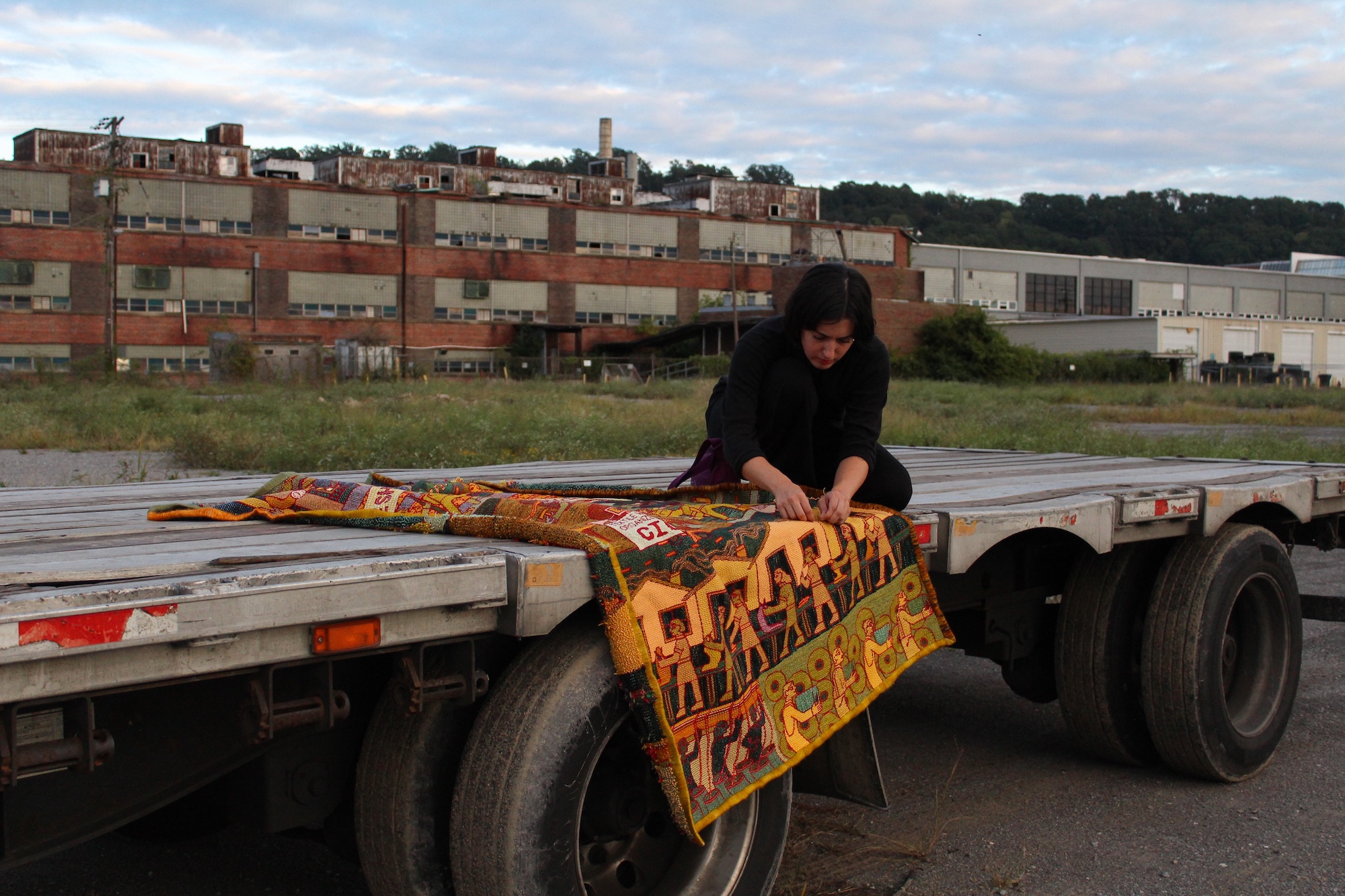
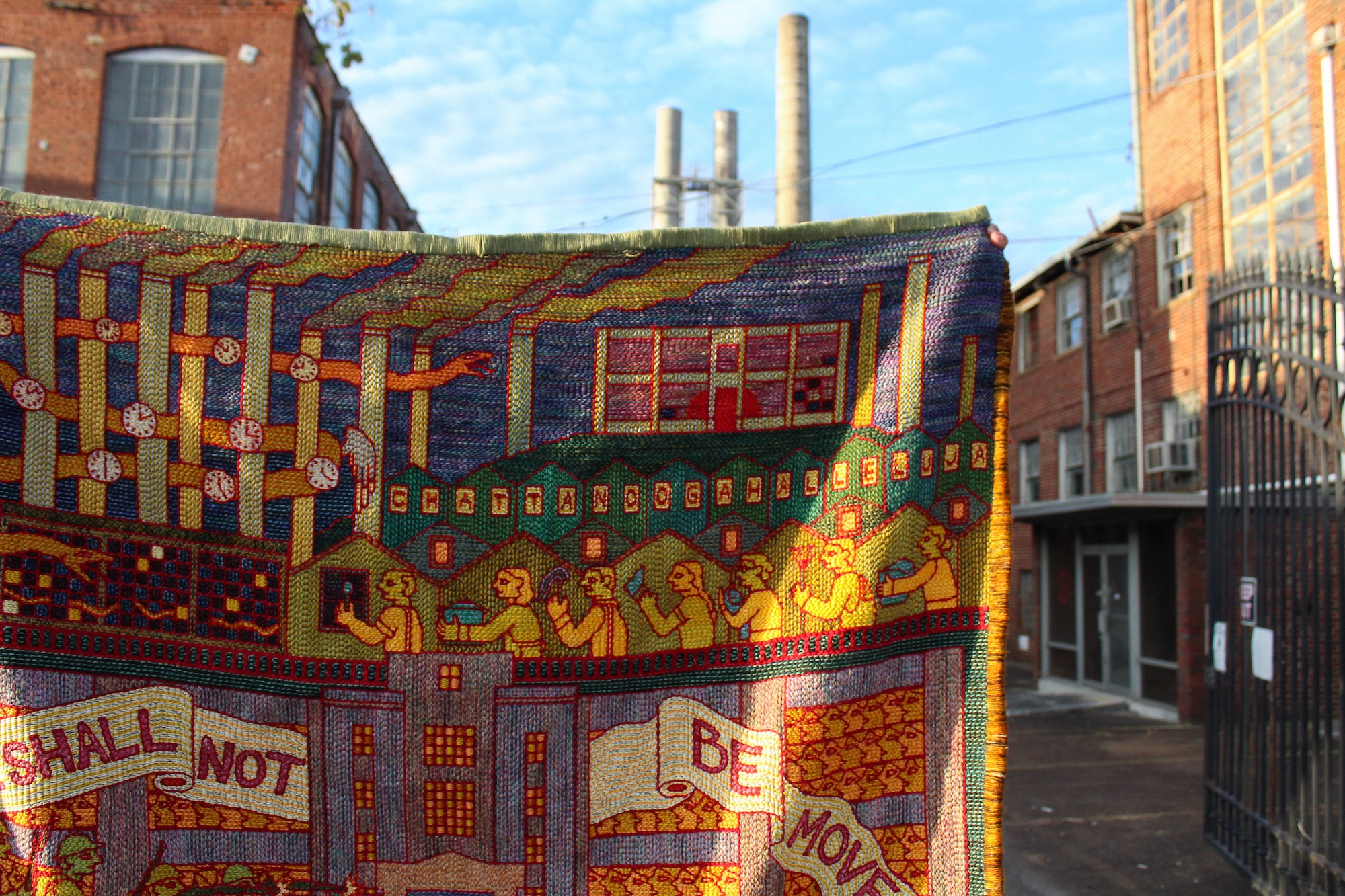 Contributed photo by Tori Vintzel / Tabitha Arnold holds “Mill Town,” a tapestry she made about Chattanooga’s textile strike, at Peerless Woolen Mill in Rossville, Georgia. Arnold is a local labor-intensive artist who uses tapestries to portray her beliefs on labor issues in the United States.
Recounting the first time he encountered Arnold’s work, Gilliland said he was blown away. Arnold’s work takes a historic art form and modernizes it and, in doing so, introduces people to a history they otherwise might not have known, he said.
“I think it gives people a sense of possibility,” he said. “Under difficult conditions, working people did band together and, through cooperation and coordination, were able to secure meaningful gains that resulted in material wins for them and their family and their community. I think we’re living in a time where that possibility is surely here again.”
When people view one of her tapestries, Arnold said she wants them to recognize that “the labor movement is not just about labor.” The movement is the vehicle through which social change happens, she said.
“Often, this place (Chattanooga) feels like it has no history after the Civil War, and I want people to realize that there’s a lot more precedent here for labor than we realize,” Arnold said of her work. “I hope it grows class consciousness. I hope people see themselves in the work and feel like they’re part of this ongoing timeline that’s not complete.”
Contact Sam Still at sstill@timesfreepress.com or 423-757-6579.