
NASHVILLE — The athletic director at a mid-sized school that made a splash this football season has a modest proposal for taming what many say is a transfer system run amok in college sports.
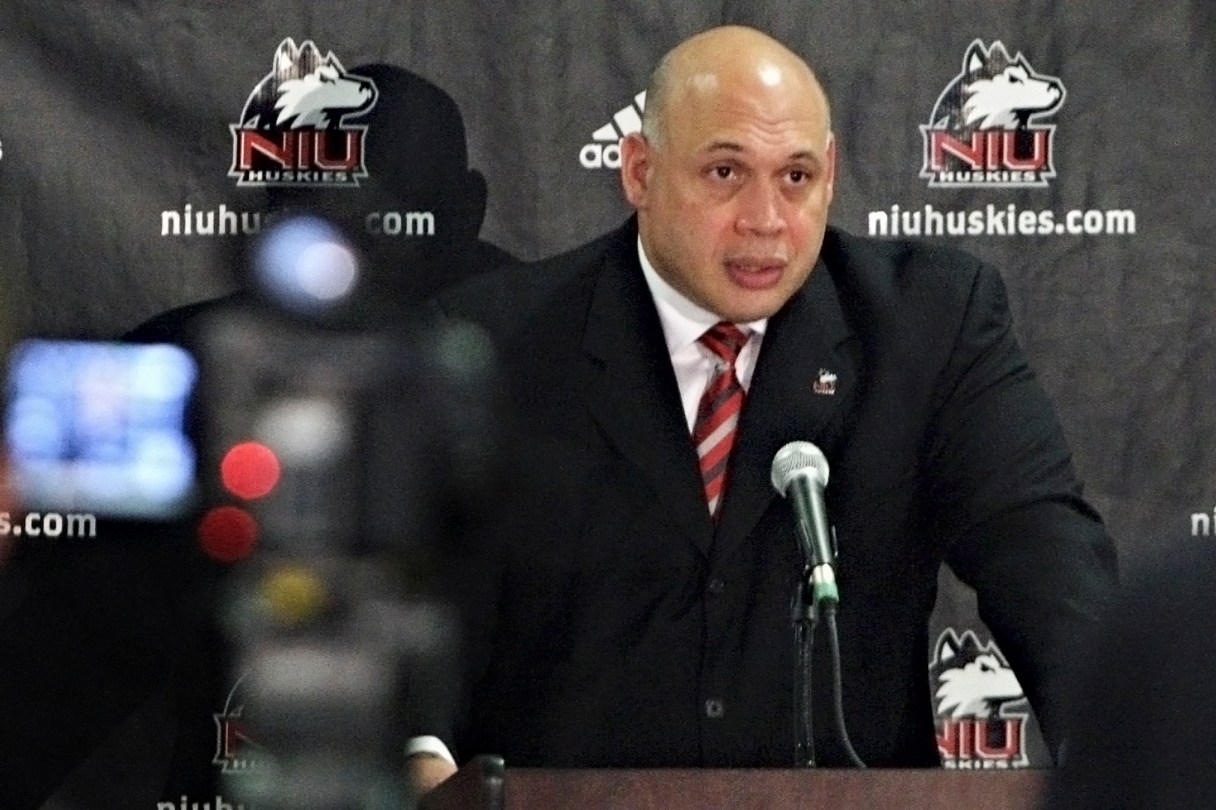
Sean Frazier of Northern Illinois — remember, that’s the Mid-American Conference school that beat College Football Playoff finalist Notre Dame earlier this season, the lone loss for the Fighting Irish — is talking about a “talent acquisition fee.”
When schools sign players from other teams, they would pay those teams a fee in exchange for the player. It’s not that different from the way transactions go down with what are known as “transfer fees” in European soccer.
It’s an idea that Frazier, admittedly, is still sketching out on cocktail napkins. But he thinks it might help the small guys sustain their programs while adding transparency to deals involving some of the 11,000-plus football players across all divisions who enter the NCAA transfer portal — the terms of some of those life-changing transactions themselves pecked out on cellphones in the middle of the night.
“At the end of the day, the kid deserves the compensation and support,” Frazier said in an interview with The Associated Press at the NCAA convention this week. “But the institution, to keep the cycle going, they deserve something as well. We’re not in the situation to continue to do that if we keep losing our best and brightest.”
Buoyed by that win over Notre Dame, and a steady string of success over the years, Frazier’s school recently announced it was moving its football program from the MAC into the Mountain West Conference starting in 2026.
The MWC, with champion Boise State in the College Football Playoff this season, is arguably the most formidable of the so-called Group of Five conferences, the lower tier of leagues (behind the well-known power conferences) in the Football Bowl Subdivision, which is the highest tier of NCAA Division I. There are also 129 schools in the Football Championship Subdivision, the lower tier of Division I.
With the House v. NCAA settlement set to reshape college athletics, allowing institutions to pay players directly while also reshaping roster sizes across all sports, smaller schools such as Northern Illinois have decisions to make. Namely, will they opt into the revenue-sharing agreements that allow the schools to directly pay the players for their name, image and likeness deals? Or will they stick with the model of having third-party collectives broker those deals?
The schools have until March 1 to decide. Neither choice avoids the stark realities of college football’s new age: It’s more expensive than it used to be, and big schools will always have the resources to draw in promising players who honed their skills at small schools.
Frazier used the example of 285-pound defensive tackle Skyler Gill-Howard, who came to Northern Illinois as a walk-on player, got better each year, had five sacks for the Huskies this season, then entered the transfer portal and will use his last year of eligibility at Texas Tech.
“He did a wonderful job. Our coaching staff did a great job developing him,” Frazier said. “The heartache of it is, he’s gone. From the G5 perspective, we’re fine with the developmental side of things. There’s a certain level of respect there. But this could help institutions like us, where there’s a flat fee, or dollar amount, that’s a show of appreciation for the development of the game.”
Any plan like this would face roadblocks aplenty. First off, even though things have moved more quickly in recent years, college sports is traditionally glacial in making big changes.
Secondly, as the recent takedowns of the NCAA in court that have led to today’s changes have reiterated, the U.S. court system generally doesn’t like things that restrict players’ ability to make money.
It happened to the NFL, too. In the 1970s, a judge declared illegal “The Rozelle Rule,” named after Pete Rozelle, who was the NFL’s commissioner from 1960-89. The rule is similar to Frazier’s idea in that it allowed the league to award draft picks (and sometimes players) from teams that signed players with expired contracts to the teams those players left.
In soccer, transfer fees have been the norm in Europe, where teams essentially pay other teams for players instead of trading for them. It’s an estimated $10 billion market, though a recent ruling from the European Union’s top court could lead to anything from tweaks to a full-scale overhaul of that system.
“I’d see very little chance for something like that to happen,” Gabe Feldman, a sports law expert at Tulane, said of Frazier’s fee idea. “There are lots of ideas out there, but that doesn’t mean they’ll go into effect.”
Though the House settlement brings college sports closer to a solution on how to pay players, the transfer portal remains a moving target.
The leadup to this year’s national title game between Notre Dame and Ohio State brought with it stories of massive movement of players, including from the 12 teams that made the College Football Playoff.
Among this season’s biggest headline grabbers were the September departure from UNLV of quarterback Matthew Sluka, who said promises to pay him $100,000 were not kept. Last year, former Florida signee Jaden Rashada sued Gators coach Billy Napier over an unpaid $13 million NIL deal. Rashada moved on to Arizona State for the 2023 season, having never made it to Florida, then left the Sun Devils after one season to join the Georgia Bulldogs.
More common are accusations of tampering that leads to programs standing by helplessly as players leave without much, if any, warning.
“I can’t believe we live in a world where people are making decisions and issuing offers in text messages,” NCAA president Charlie Baker said. “The number of kids who have told me terrible stories about misrepresentation — there’s no process, accountability, no transparency.”
Frazier, always in search of resources to recruit, develop and, now more frequently, replace players, doesn’t necessarily see his “talent acquisition” fee as a cure-all. But maybe, he said, it’s a start.
He points to the NBA, NFL and other pro leagues that have collective bargaining and drafts that set the framework for their sports.
“We don’t have that,” he said. “This is one of the guardrails that could get us to the point of acknowledging that, yes, you still can buy your team, but it shouldn’t be the wild, wild West.”