
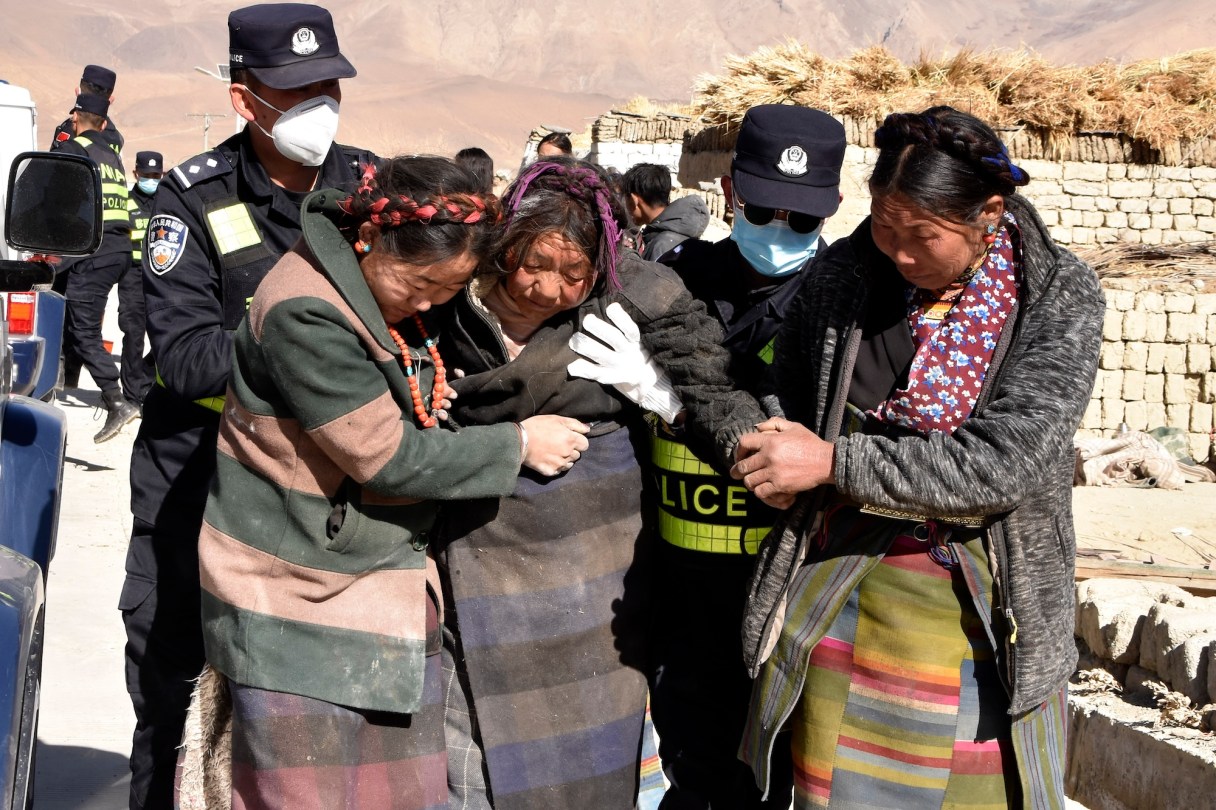
BEIJING (AP) — Rescuers in the freezing, high-altitude Tibet region in western China searched a second day for any remaining victims of a deadly earthquake that struck near a holy city for Tibetan Buddhists, before shifting their focus to resettling the survivors.
More tents, quilts, stoves and other relief items were being delivered Wednesday to people whose homes were uninhabitable or unsafe. Temperatures fall well below freezing overnight in an area with an average altitude of about 4,200 meters (13,800 feet).
In video aired by state broadcaster CCTV, workers could be seen erecting rows of tents with metal frames and stakes after nightfall Tuesday. Meant as temporary shelter, they were lined with quilted padding to keep out the cold. The workers distributed packaged food items to the shelter occupants, donning blue winter jackets over their orange uniforms.
The confirmed death toll stood at 126 with another 188 injured as of Tuesday evening, and no further updates were issued during the day on Wednesday. Hong Li, the director of Tibet’s Emergency Management Department, told a late afternoon news conference that the work had shifted from search and rescue to resettlement and reconstruction.
The earthquake struck an outlying county in the city of Shigatse, the traditional seat of the Panchen Lama, the second-highest figure in Tibetan Buddhism. It was not immediately known whether he was in his Tashi Lhunpo Monastery at the time or how much damage Tibet’s second largest city sustained. The epicenter was about 25 kilometers (15 miles) from the main part of the city, which is called Xigaze in Chinese and sprawls across a high altitude plain.