
During most of the 100 years of his life, and even in these first two weeks of his death, former President Jimmy Carter has been gifting us with the enduring example of how he chose to live his life.
We have heard eulogists — the famous, the friends, the family — reflect upon the examples most Americans sort of knew but mostly forgot. Now, as Carter has been laid to rest, we are turning back to our realities and crises. And we have a rare opportunity to reflect upon, and benefit from, the lessons we have just learned from the selfless way he went about making good things happen. They are, after all, Carter’s ultimate legacy.
I got to know Carter when I was Newsday’s Washington bureau chief, covering the 1976 presidential campaign. I then covered Carter’s tumultuous presidency for Newsday and, later, The Washington Post. And I chronicled Carter’s leadership shortcomings (which came to symbolize his presidency) as well as his many accomplishments (among them: forging a foreign policy based on human rights and creating the departments of energy and education).
Carter’s shortcomings and successes were both products of the flawed way Carter, a navy nuclear engineer, viewed his role as a president. He didn’t see himself as a traditional national and global leader. He saw himself as America’s engineer-in-chief — and set out to re-engineer the way Washington worked. He micromanaged from the start, even as inflation was soaring and gasoline was scarce. He immersed himself in details of crafting perfect plans he could then give Congress for quick enactment — plans to vastly shrink and redesign the federal bureaucracy; and so on.
And he wasn’t visibly leading by giving frequent speeches and events to reassure people that he was in command. In autumn, 1977, I went to talk with Carter’s White House speechwriters; the office had two large blackboard calendars to keep track of all upcoming speeches. But November’s squares had only three entries: one was a turkey, drawn in the Thanksgiving Day square; another had just a “$” drawn in the pay day square. Carter had given just 13 speeches by then — far fewer than recent predecessors.
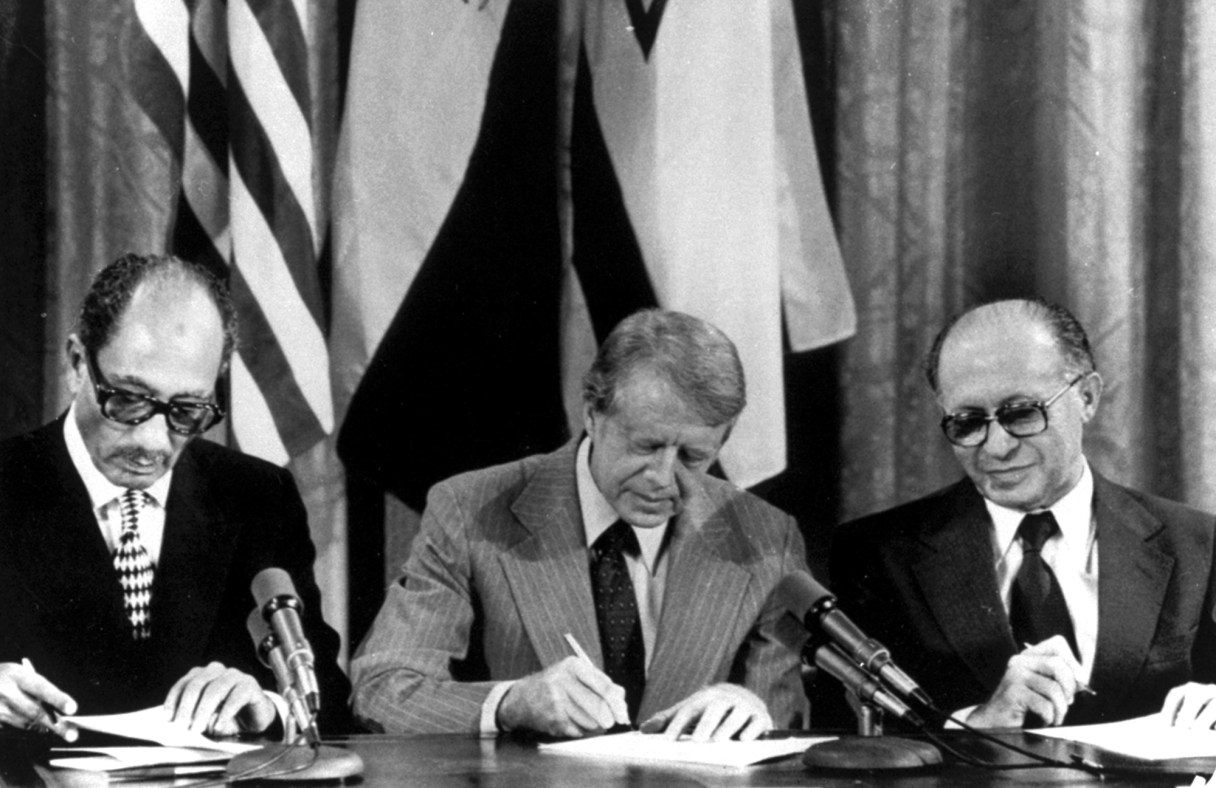
But Carter’s same total-immersion determination was what made his greatest international triumph possible. He invited Egypt’s Anwar Sadat and Israel’s Menachem Begin to Camp David and kept them in separate cabins because they couldn’t get along. Then he shuttled back and forth for 13 days between the two leaders’ cabins.
He successfully convinced each not to leave in frustration. Later, when the Camp David pact threatened to unravel after it was signed, Carter again ignored his advisers’ warnings that peace was impossible — and a failure would shatter his presidential image. He personally shuttled back and forth between Israel and Egypt to repair what had unraveled. For days, all seemed lost. But America’s president persevered — in the sort of summitry that had never happened before and has never happened since. And America’s unpresidential president made the impossible peace happen. It endures today, four decades later.
The Iran hostage crisis would prove to be the calamity Carter could not resolve. And when the precarious military rescue mission he approved failed, Carter’s presidency ended in a landslide defeat by Ronald Reagan.
But soon after, Carter’s selfless perseverance that Begin and Sadat witnessed led Jimmy Carter to create The Carter Center. And for decades he immersed himself into the world’s problems, large and small, solving many, one by one. Africa’s guinea worm disease, which once numbered more than three million cases, is now virtually extinct.
Jimmy Carter’s legacy now lives forever within all Africans who will never suffer its misery. Rest in peace, Mr. President.