
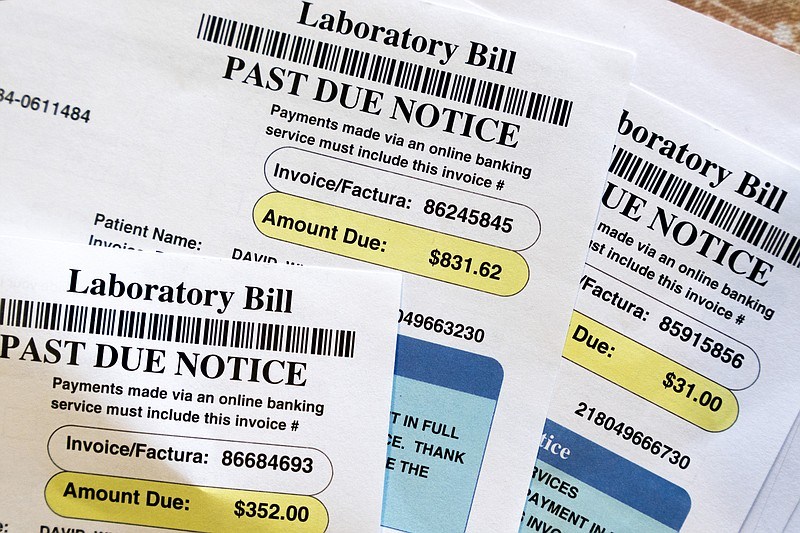
In an effort to address one of the biggest contributors to personal debt across the country, the federal government finalized a new consumer protection rule to remove unpaid medical bills as a factor on someone’s credit history.
According to the Consumer Financial Protection Bureau, the new rule, set to take effect in the coming months, is expected to increase credit scores by an average of 20 points among the 15 million Americans who collectively hold a whopping $49 million in medical debt.
The protection bureau estimates that one in five across the country have some type of medical debt. In particular, medical debt burdens minority communities the most. According to the bureau, 28% of Black people and 22% of Latinos have medical debt, while that rate is 17% for white people.
Locally in Hamilton County, the median amount of medical debt a person holds, according to a 2016 study from the nonpartisan Sycamore Institute in Nashville, was $769.
Among Hamilton’s entire population, 29% had some type of medical debt, above the 24% rate statewide.