
Thursday, November 5, 2026Nov 5

This story is exclusive to subscribers.

Near Chattanooga, a tiny (and monumental) glimpse into the origins of the written alphabet

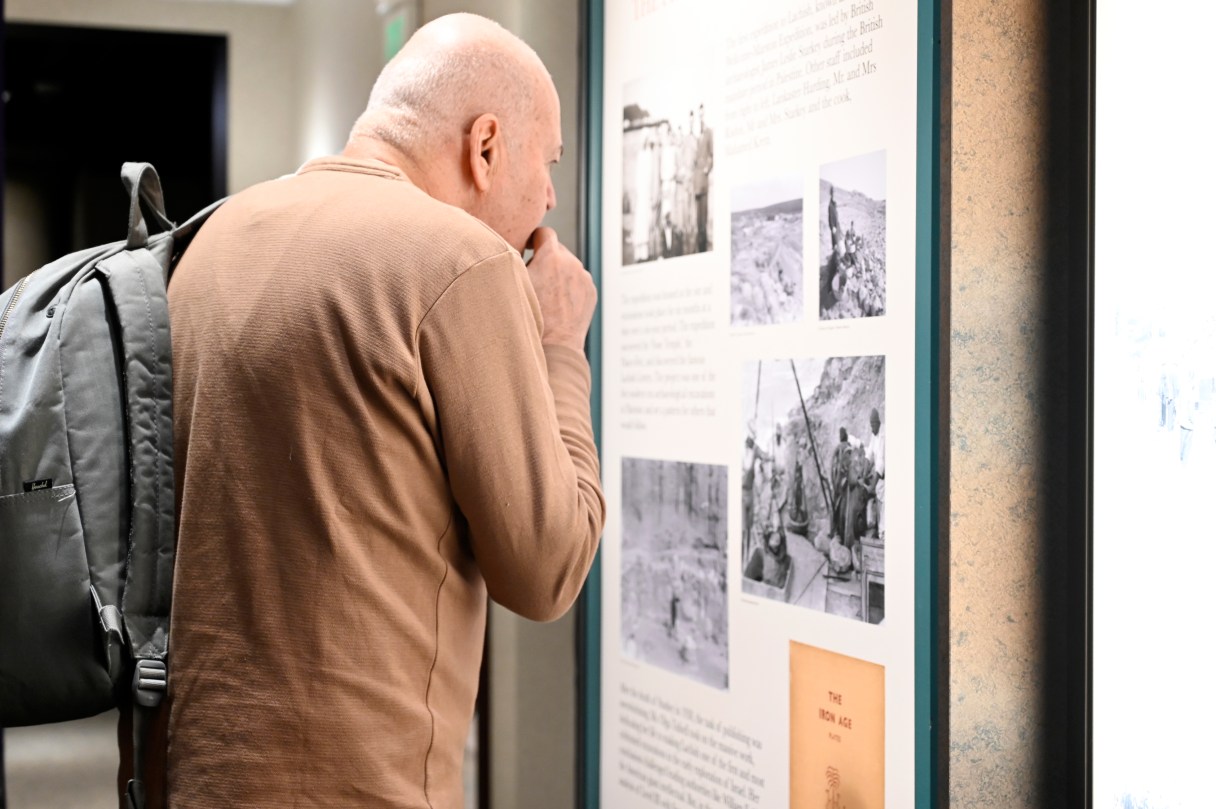
Staff photo by Abby White / On Jan. 24, 2025, Yosef Garfinklel reads a portion of the exhibit that honors the exhibition he took part in. Southern Adventist University will be holding the only U.S. exhibition of an ivory comb that was excavated in 2016 in Tel Lachish, Israel, with an inscription that was later discovered in 2022.
Staff photo by Abby White / On Jan. 24, 2025, Yosef Garfinklel reads a portion of the exhibit that honors the exhibition he took part in. Southern Adventist University will be holding the only U.S. exhibition of an ivory comb that was excavated in 2016 in Tel Lachish, Israel, with an inscription that was later discovered in 2022. Staff photo by Abby White / On Jan. 24, 2025, Yosef Garfinklel reads a portion of the exhibit that honors the exhibition he took part in. Southern Adventist University will be holding the only U.S. exhibition of an ivory comb that was excavated in 2016 in Tel Lachish, Israel, with an inscription that was later discovered in 2022.


COLLEGEDALE — Its journey spanned vast leaps of time and technology: From an animal’s tusk, it was worked into a small personal hygiene tool, inscribed with a modest wish, and eventually, covered over for millennia by soil.

Then it was unearthed, run through the hands and instruments of analysts, placed into storage, analyzed again, run through more tests, and then most recently, a very contemporary gauntlet of government bureaucracy.

Now, at last, the ivory comb of Tel Lachish, Israel, has arrived in East Tennessee.

To researchers, the artifact, and particularly the message it displays, represent an invaluable glimpse into the ancient past. The words do not seem so profound: “May this tusk root out the lice of the hair and the beard” is the translation on which researchers have settled.