
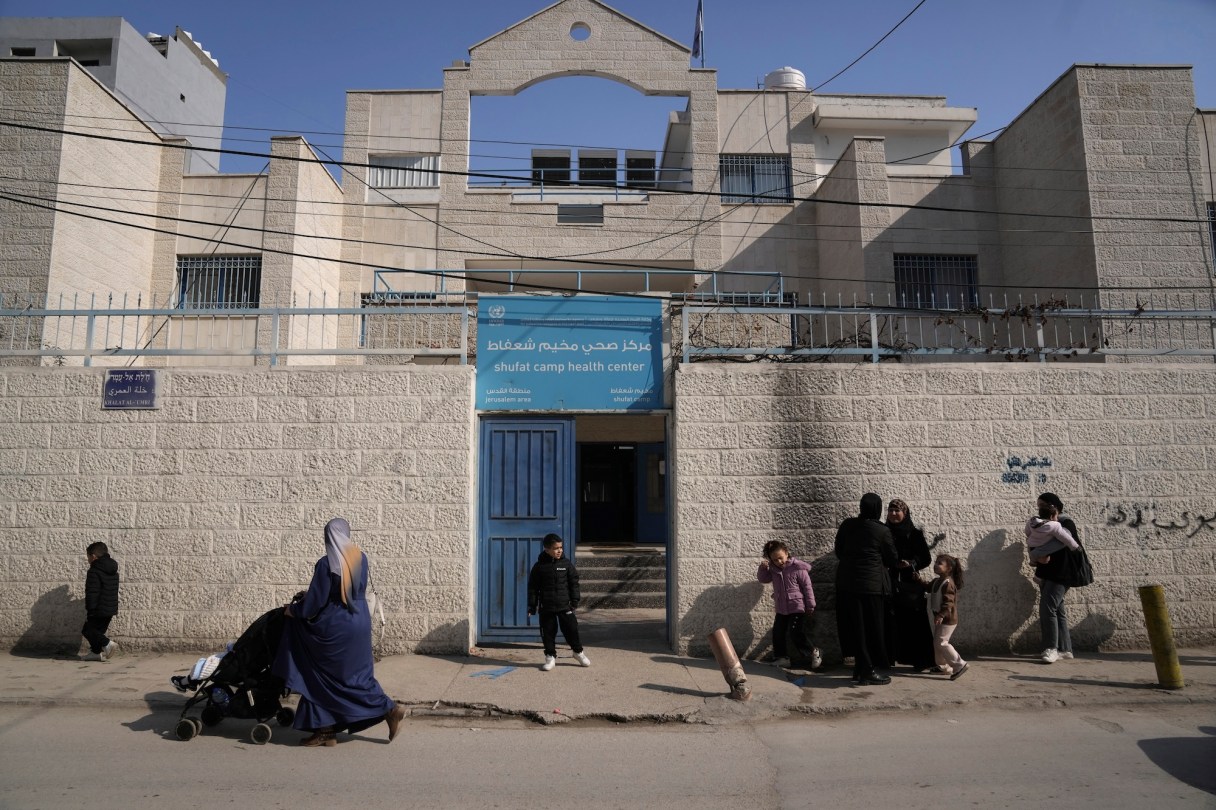
JERUSALEM (AP) — In the Shuafat refugee camp, a hardscrabble district in east Jerusalem surrounded by a concrete wall, cars inched their way toward an Israeli checkpoint.
Intense security makes venturing out of the camp exasperating. But 42-year-old Areej Taha didn’t need to leave for medical treatment Monday. She had her toothache treated and picked up her insulin shots at a U.N.-run neighborhood clinic a block from where her kids were finishing their day at a U.N.-run school.
In the absence of municipal services, the United Nations agency for Palestinian refugees, known as UNRWA, is the main provider of decent free healthcare and education to residents of Shuafat camp. If UNRWA left, Taha said, “I don’t want to have to think about what we would do.”
But those services and everything from garbage pickup to water-system maintenance may begin disappearing after a pair of Israeli laws come into effect Thursday banning UNRWA from operating on Israeli territory and prohibiting Israeli officials from any contact with the agency.
The most immediate impact will be in east Jerusalem, which Israel seized during the 1967 Mideast war and annexed in a move not recognized by most of the world. UNRWA’s headquarters there faces immediate shutdown. The bans passed by the Israeli legislature in October also threaten UNRWA’s operations across the occupied West Bank and Gaza Strip, where it is the lifeline for some 2 million Palestinians, most of whom are homeless from the 15-month Israel-Hamas war.