
Did you feel it? Chattanooga experienced a seismic event on Feb. 18, 2025, around 5:30 p.m. It occurred not because of an earthquake but because the City Council adopted written policies for its Payment-In-Lieu-Of-Tax (PILOT) program.
Since 1985, the city has used the PILOT program to lower property taxes for specific businesses, purportedly in exchange for promised jobs, investments and fair wages. However, until the recent council action, no one understood how these decisions were made and whether the businesses were being held accountable.
When property taxes are forgiven, the city’s general fund, which is the primary funding source for essential services like fire, police and parks, receives less revenue. Last year alone, PILOTs resulted in a $27 million combined hit to the city and county general funds. Many PILOT agreements last from 10 to 30 years.
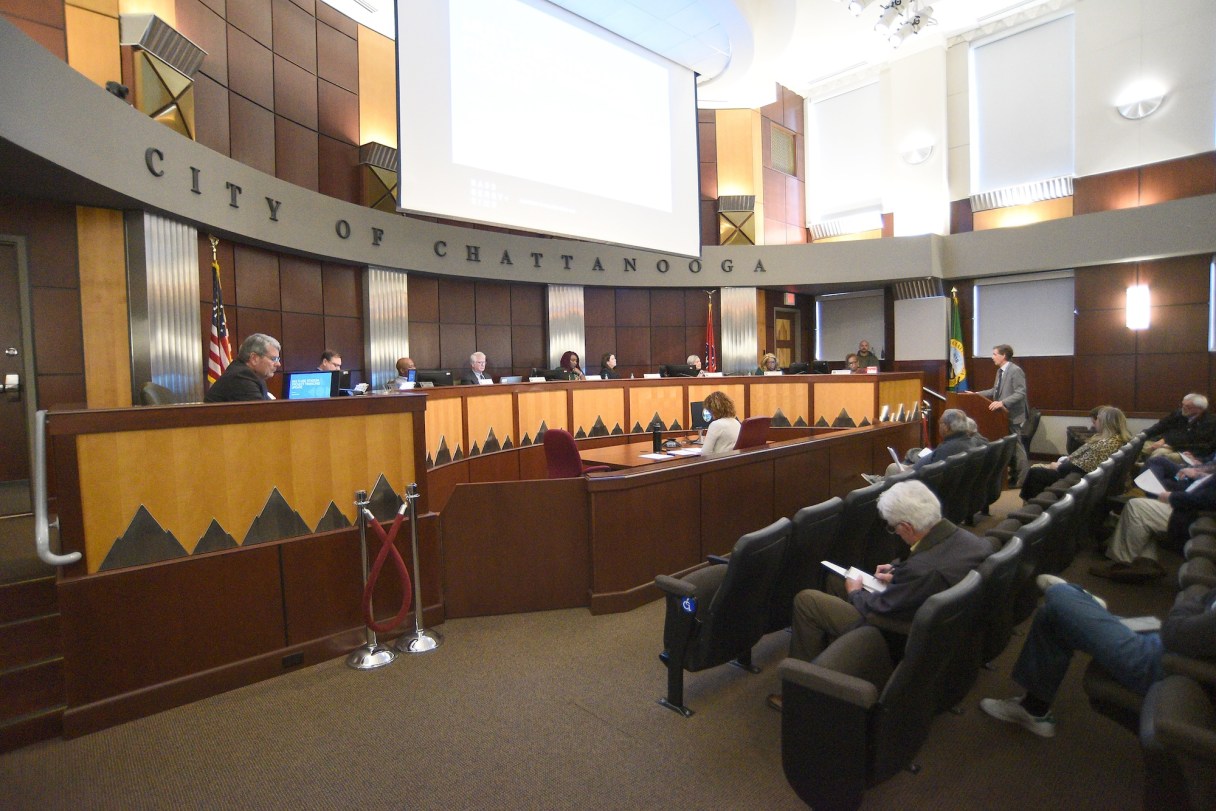
In seven recent Council meetings, members discussed and modified a proposed document. The legislative body gave a master class in deliberation and civility. If Chattanoogans were to watch these council meetings on the city’s YouTube channel, they would come away impressed with the time district representatives devoted to this complicated topic and realize the breadth and depth of the issues they deal with every week.
Council members rejected the original Chamber of Commerce proposal to remove the council from the approval process for most PILOTs. They included policies clarifying that school taxes must be paid in full and that companies must pay their annual stormwater fee.
The council recognized that some PILOT applications may require a more thorough analysis, so it added a policy allowing an independent third-party review.
The executive branch played a significant role in facilitating these PILOT policies. Mayor Tim Kelly is the first mayor in Chattanooga’s history to acknowledge the need for written policies. He asked the city’s economic development staff to collaborate with the chamber and community groups such as CALEB to create draft policies that would be submitted to the City Council and Industrial Development Board (IDB).
Thank you, mayor and council, for this major milestone in good government.
Here are some candidates for a “watch” list when these policies are amended:
› Revisit the Target Industry List, which seems very broad. Why not concentrate on Chattanooga-centric businesses that would be game-changers and catalysts for more business locations?
› Eligibility and subsidy amounts are based on the number of points an applicant scores on a matrix. Is it wise to put the PILOT program on “autopilot”? Instead, use the matrix as a tool, not as the sole “decider.” Third-party review can help with vetting complex projects.
› Improve the “but-for” language intended to determine whether a tax break is a determining factor in location decisions. Business basics like skilled labor force, location, transportation and utilities usually drive these decisions. State and local taxes make up only 1.2% of a typical company’s cost of doing business; PILOT applicants may try to convince our economic development team that their decisions will be based primarily on local property taxes.
› Define the role of the Chamber of Commerce. The city and county provide the chamber with $1.2 million each year, and the community benefits from its insights and expertise. However, an agreement should specify that the chamber’s role in PILOTs is to facilitate, not to create policy. The chamber’s overall mission focuses on business advocacy, so granting it a broader role in PILOTs would be like letting a fox guard the hen house.
Helen Burns Sharp founded Accountability for Taxpayer Money (ATM), a public interest advocacy group.