
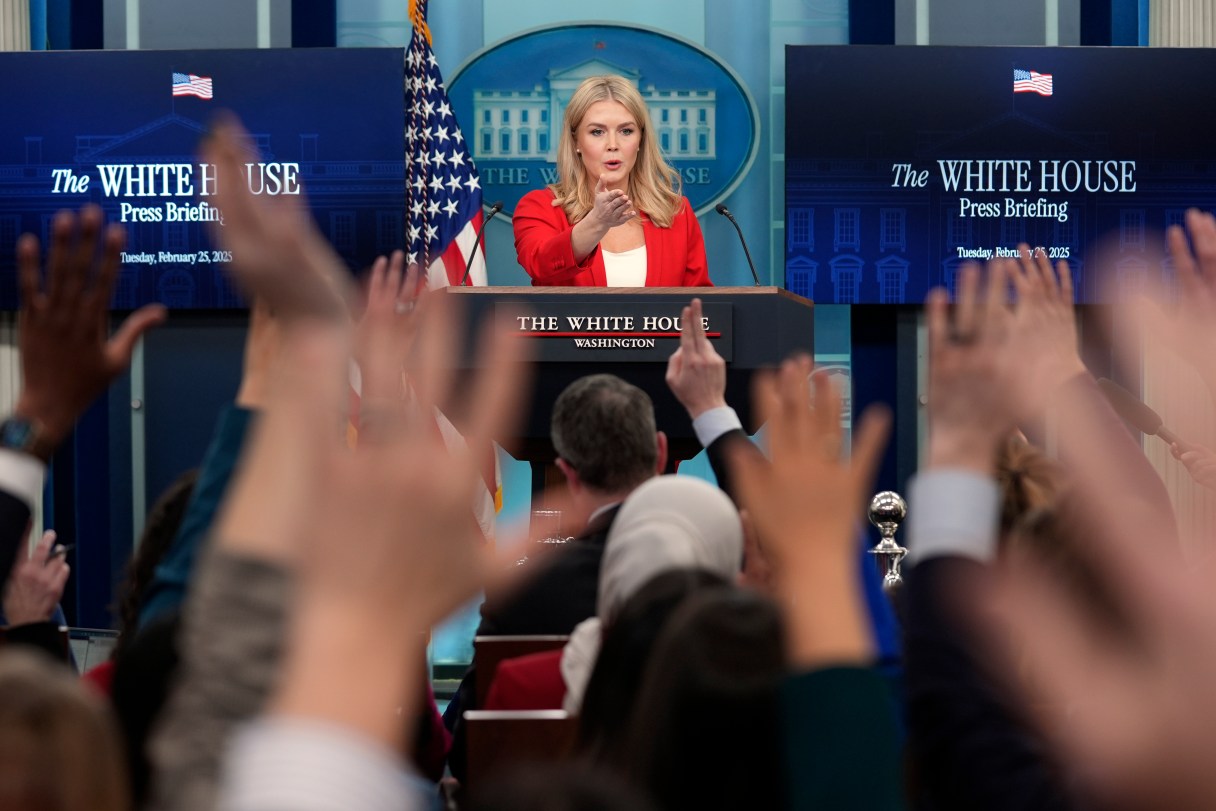
The White House said Tuesday that its officials “will determine” which news outlets can regularly cover President Donald Trump up close — a sharp break from a century of tradition in which a pool of independently chosen news organizations go where the chief executive does and hold him accountable on behalf of regular Americans.
The move, coupled with the government’s arguments this week in a federal lawsuit over access filed by The Associated Press, represented an unprecedented seizing of control over coverage of the American presidency by any administration. Free speech advocates expressed alarm.
White House press secretary Karoline Leavitt said the changes would rotate traditional outlets from the group and include some streaming services. Leavitt cast the change as a modernization of the press pool, saying the move would be more inclusive and restore “access back to the American people” who elected Trump. But media experts said the move raised troubling First Amendment issues because the president is choosing who covers him.
“The White House press team, in this administration, will determine who gets to enjoy the very privileged and limited access in spaces such as Air Force One and the Oval Office,” Leavitt said at a daily briefing. She added at another point: “A select group of D.C.-based journalists should no longer have a monopoly of press access at the White House.”
Leavitt said the White House will “double down” on its decision to bar the AP from many presidential events, a departure from the time-tested and sometimes contentious practice for more than a century of a pool of journalists from every platform sharing the presidents’ words and activities with news outlets and congressional offices that can’t attend the close-quarter events. Traditionally, the members of the pool decide who goes in small spaces such as the Oval Office and Air Force One.