
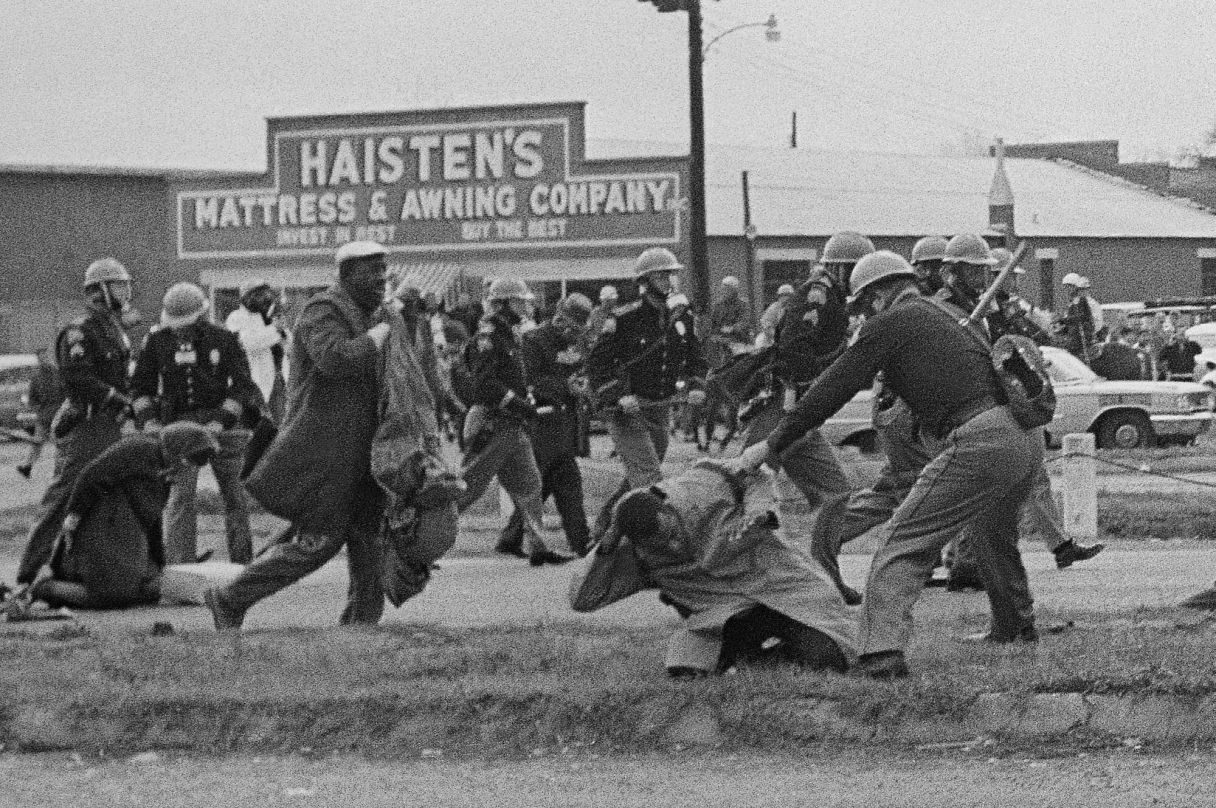
SELMA, Ala. (AP) — Charles Mauldin was near the front of a line of voting rights marchers walking in pairs across the Edmund Pettus Bridge in Selma, Alabama on March 7, 1965.
The marchers were protesting white officials’ refusal to allow Black Alabamians to register to vote, as well as the killing days earlier of Jimmie Lee Jackson, a minister and voting rights organizer who was shot by a state trooper in nearby Marion.
At the apex of the span over the Alabama River, they saw what awaited them: a line of state troopers, deputies and men on horseback. They kept going. After they approached, law enforcement gave a two-minute warning to disperse and then unleashed violence.
“Within about a minute or a half, they took their billy clubs, holding it on both ends, began to push us back to back us in, and then they began to beat men, women and children, and tear gas men, women and children, and cattle prod men, women and children viciously,” said Mauldin, who was 17 at the time.