
Recently, an ankle monitor began beeping in a Georgia church, local media reported, prompting a Honduran man seeking asylum in the U.S. to step outside, where immigration enforcement agents arrested him and placed him on a track to be deported.
A few days ago in Tennessee, a lawyer said, a father of six pleaded with a U.S. Immigration and Customs Enforcement official to pause his deportation given his wife’s serious illness, only to be told, “Yeah, I really don’t care.”
Before President Donald Trump took office Jan. 20, observers wondered if his second administration would resemble his first — characterized by strident rhetoric, a harsher bureaucracy and a willingness to arrest a broad array of people, even as deportation rates remained unremarkable overall.
Early indications, several legal experts say, are that Trump 2.0 is looking different than Trump 1.0 in certain ways, as the new administration moves to carry out a central campaign promise of historic mass deportations.
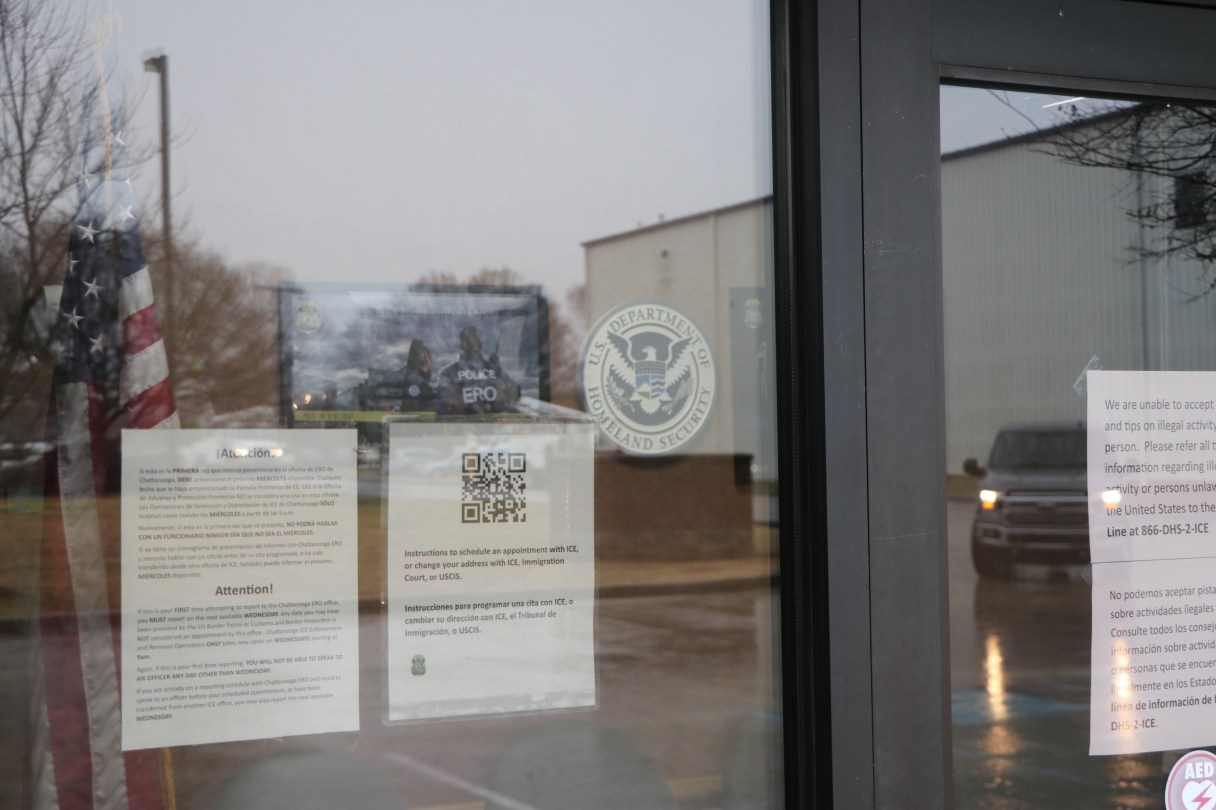
Exactly how different remains unclear, however. Funding and bandwidth for any large sustained operation are not assured. And even as the administration aggressively touts early enforcement operations around major cities, where it says it is going after “the worst, first,” it does not appear, for now, to have significantly ramped up activity in places like Chattanooga.