
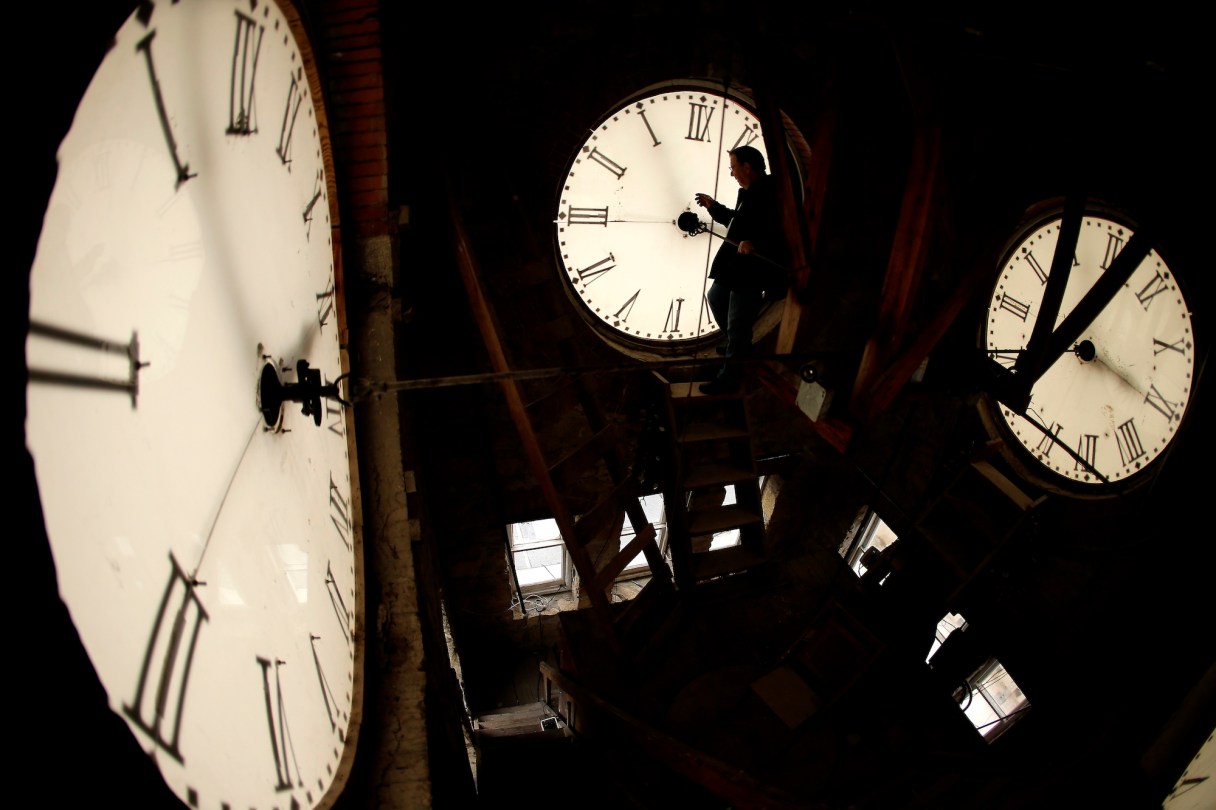
WASHINGTON (AP) — Most of America “springs forward” Sunday for daylight saving time and losing that hour of sleep can do more than leave you tired and cranky the next day. It also could harm your health.
Darker mornings and more evening light together knock your body clock out of whack — which means daylight saving time can usher in sleep trouble for weeks or longer. Studies have even found an uptick in heart attacks and strokes right after the March time change.
There are ways to ease the adjustment, including getting more sunshine to help reset your circadian rhythm for healthful sleep.
When does daylight saving time start?
Daylight saving time begins Sunday at 2 a.m., an hour of sleep vanishing in most of the U.S. The ritual will reverse on Nov. 2 when clocks “fall back” as daylight saving time ends.