
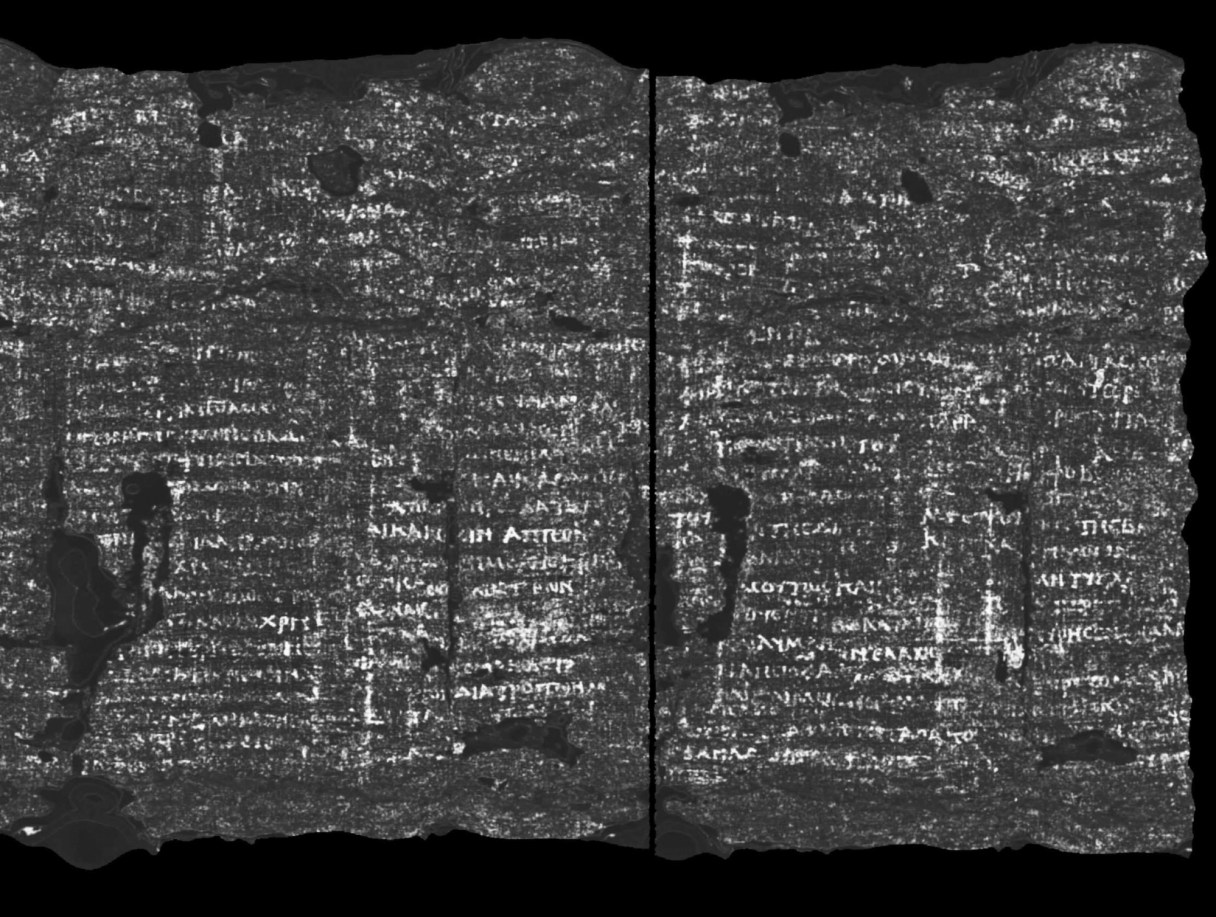
LONDON (AP) — Scientists hope a mix of artificial intelligence and human expertise will help decipher ancient scrolls carbonized by a volcanic eruption 2,000 years ago.
Hundreds of papyrus scrolls were found in the 1750s amid the remains of a lavish villa at the Roman town of Herculaneum, which along with neighboring Pompeii was destroyed when Mt. Vesuvius erupted in A.D. 79.
The library of what’s called the Villa of the Papyri has the potential to add immeasurably to knowledge of ancient thought if the scrolls, which have been rolled up into the size of a candy bar, could be read.
The heat and volcanic ash from Vesuvius destroyed the town and preserved the scrolls, but in an unreadable state, turning them into charred fragile blocks that disintegrate if unrolled physically.
Scholars and scientists have worked for more than 250 years on ways to decipher the scrolls, the vast majority of which are held in the National Library of Naples.