
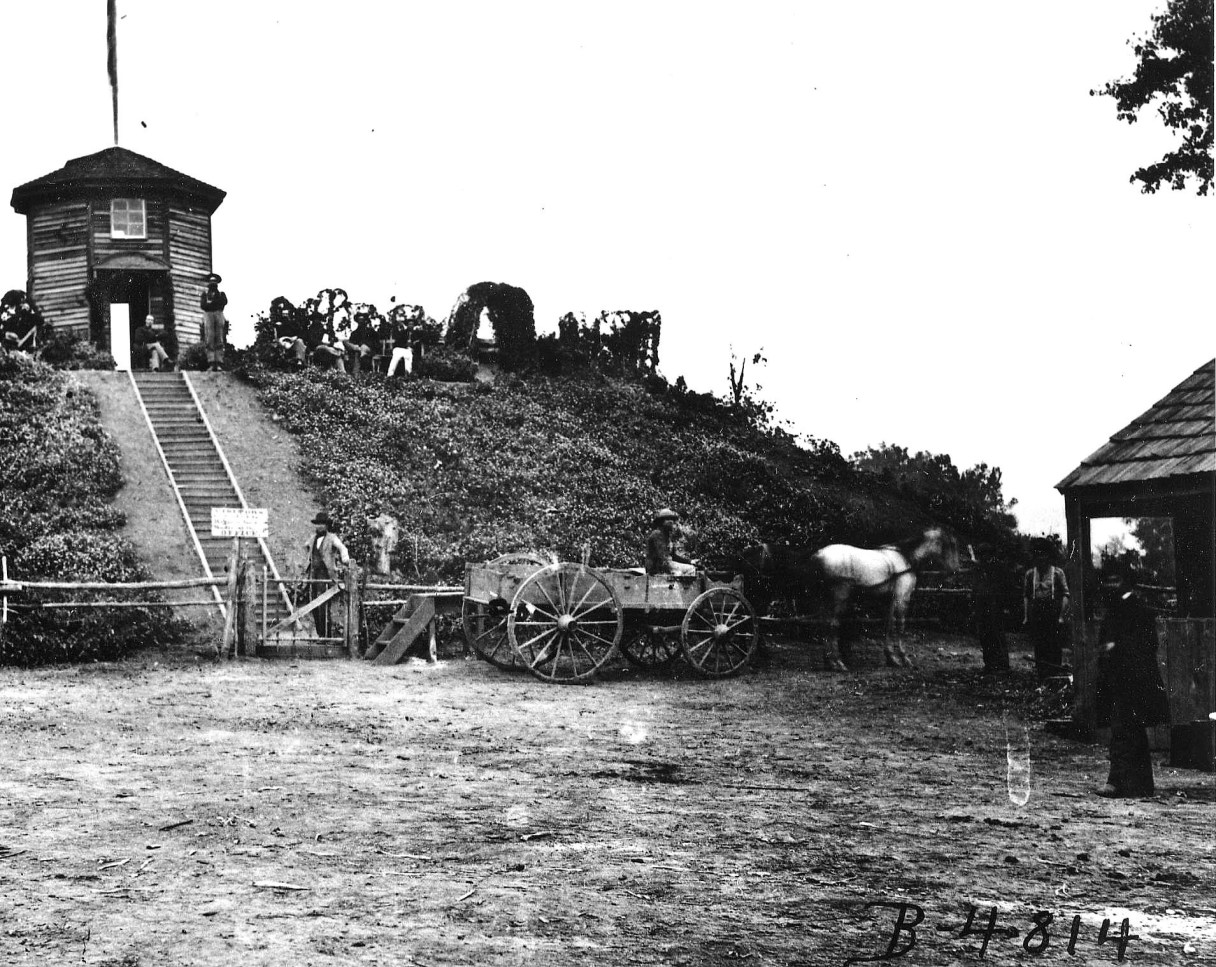
(Editor’s note: first of two parts)
A current map of Chattanooga features Citico Street and Citico Creek but omits mention of Citico Mound. What was once a geographic site prominently featured in local history has become a distant memory for all but the most “seasoned” citizens. And yet, in 1915, the Mound was a topic for debate as the landscape of the city was poised to change and accommodate a more modern era.
In May 1915, Chattanooga officials announced a proposed removal of the “old Citico Mound, landmark of the aborigines,” as they prepared to make way for Riverside Drive. Some had an immediate “sentiment against moving it,” while others reflected that progress always required change, and change often meant moving beyond “the past.” Various citizens commented that the prospect of finding “ancient artifacts” was “exciting,” triggering outrage from others who felt it would be a “shame and a disgrace if the county should thus ruthlessly thrust aside that grave.” Emotions ran high over a mound whose importance was also being debated by scholars and local officials.
Former Chattanooga Mayor John B. Nicklin shared that “we have today in Chattanooga the nucleus of the best cabinet of relics and curios in the United States with the exception of Washington City.” Explaining that artifacts from the Citico Mound and other sites related to the Cherokee and other peoples had been presented to Professor P.C. Wilson, University of Chattanooga, Nicklin urged the university to “provide suitable compartments for that splendid collection” so that the public has access.
At the same meeting, Daniel Soper, a former Michigan secretary of state and newly located Chattanooga archaeologist, announced his intent to inspect the Mound later that day. When questioned about the age of the mound, he hedged by replying that there was “great disagreement” among archaeologists, but most seem to believe it involved a “very primeval date” associated with the arrival of Europeans to the New World. Others speculated that the mound was “influenced by religious or superstitious awe,” and that it might contain the tomb of “some primeval American Native Pharaoh in the dawn of history,” or that it could very well have been in existence “when Abraham departed with his herds from the plains of Chaldea.”