
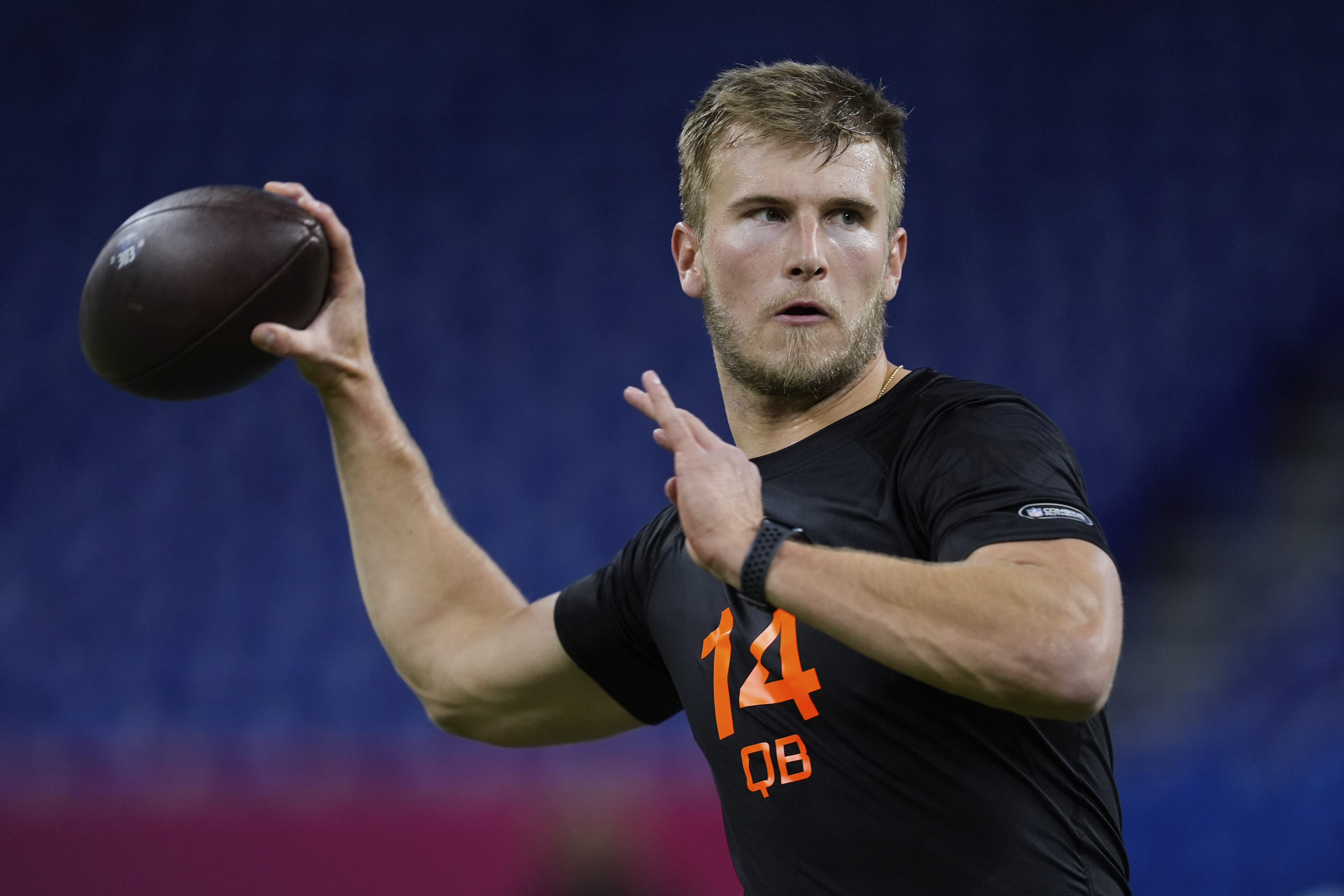
Bo Nix has already turned 25, and Michael Penix Jr. will get there next month.
Both quarterbacks were first-round picks in last year’s NFL draft — Nix went from Oregon to the Denver Broncos at No. 12, four spots after the Atlanta Falcons chose Penix out of Washington — when 56 players age 24 or older were selected in all. That number was up from 54 in 2023, 44 in 2022, 16 in 2021 and 19 in 2020.
There have been more older prospects drafted in recent years because the COVID-19 pandemic gave players an option to stay in school an extra year. Even though the window is ending, the money offered by NIL deals and the mobility offered by the transfer portal and more relaxed rules on immediate eligibility might continue to keep some players in school longer.
NFL teams used to shy away from older prospects. In some cases, scouts and general managers considered the age of 24 a red flag.
However, the success of players such as Nix and fellow quarterback Jayden Daniels — who turned 24 last December during an outstanding rookie season for the Washington Commanders after winning the Heisman Trophy at LSU a year earlier — shows that experience can help players make an immediate impact in the pro ranks.
“I came from BYU, where kids go on missions for a couple years, and so people go, ‘Well, they’re too old,'” Kansas City Chiefs coach Andy Reid said. “Well, then they come in and they do a pretty good job. So, and really, if you start taking averages of careers, career length, there’s maybe a cutoff somewhere, but the careers aren’t very long as it is. But we do look at (age), though.”
A majority of the older players selected in the draft last year were taken on the third and final day, going in the sixth or seventh round. That indicates teams are more likely to overlook age later in the draft, when contract values are lower and some players might not even make the roster.
“It’s just unique to where we’re at right now in kind of the football world,” Las Vegas Raiders general manager John Spytek said. “You’ve got guys with sixth and seventh years (in college) really, and so you’ve got to talk about a value of, ‘Are we going to have a problem with the 25- or 26-year-old?’ Some people have more problems with that. I’m just looking for good football players, and I’m trying to impress that upon our scouts, too. Let’s just find good football players. We’ll figure it out. So I will say it’s been really hard on the area scouts.
“You go into these schools like Georgia and Michigan, Ohio State, and they’ve got a list of 30 guys that can potentially come out. … I mean it used to just be like here’s these 10 juniors, maybe half of them come out. Now it’s like you’ve got a fourth-year, fifth-year senior, and he might take another year. So it adds a lot more names to it and uncertainty, and a lot more work that has to get done in a finite amount of time. And that’s why the scouts’ jobs are so critical to go through all that in an efficient way and present the players the right way. We’re relying on it. It’s critical to every organization.”
The number of older players drafted will decrease when the 2025 draft takes place next week at the Green Bay Packers’ Lambeau Field. There are only 46 players age 23 or older who are eligible for the draft, including 17 who are 24 or older.
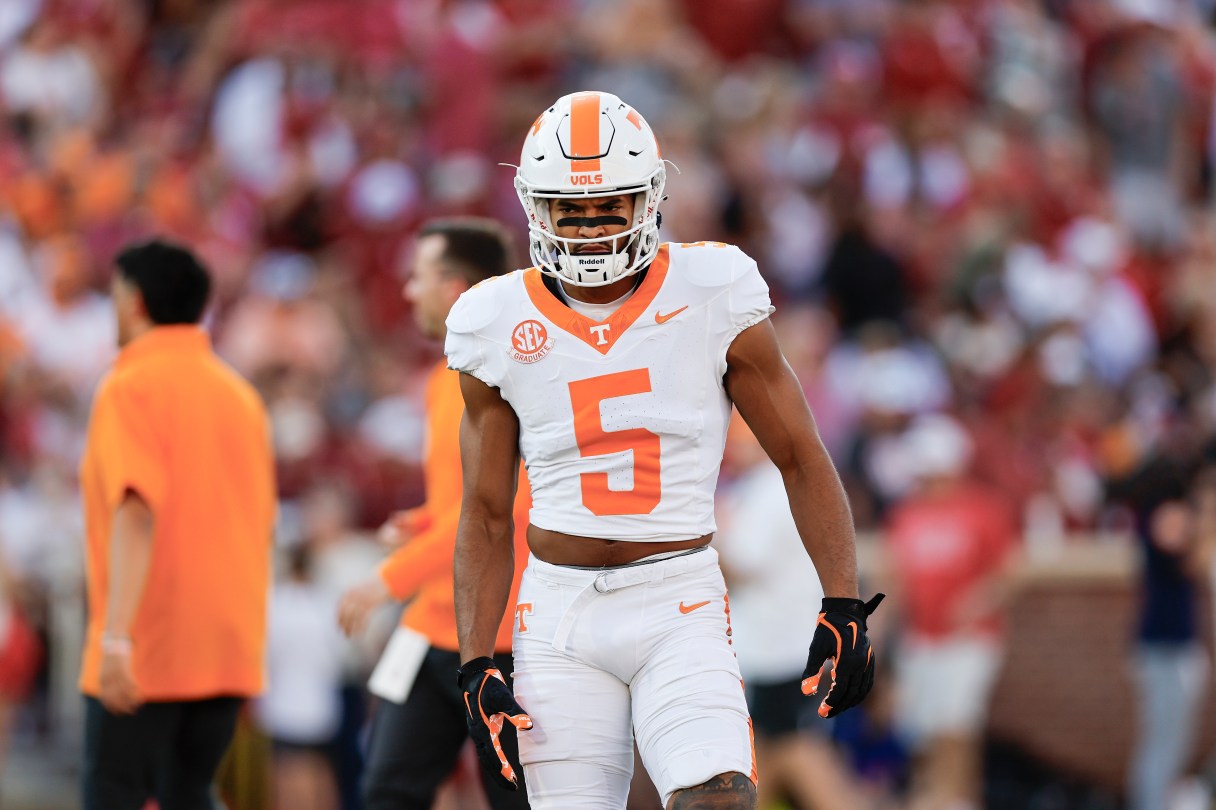
The 24-year-old prospects at the scouting combine this past winter included this trio of receivers: Andrew Armstrong (Arkansas), Bru McCoy (Tennessee) and Nick Nash (San Jose State).
Louisville quarterback Tyler Shough, who turns 26 in September, was the oldest player at this year’s combine. He spent seven years at three colleges, joining the Cardinals after time at Oregon (where he backed up Justin Herbert in 2019) and Texas Tech.
Teams that stick to the old philosophy of avoiding older players limit their talent pool.
“I think sometimes you have to ask yourself, are you trying to get this guy for 12 years? If you’re looking for that, it’s a small percentage. Or are you looking for one contract, and then hopefully more?” said San Francisco 49ers general manager John Lynch, a Pro Football Hall of Fame safety whose playing career covered 15 NFL seasons.
“It’s an interesting topic. It’s one we constantly discuss. There are pluses and minuses to both sides. Having a young guy that you think you can develop and is already a good player, and then a guy who’s a little more battle-tested … bent through a little more, it’s an interesting conversation.”
College experience is most valuable for quarterbacks. Daniels and Nix proved it last season when they led their NFL teams to the playoffs. Meanwhile, Anthony Richardson threw just 393 passes in college before the Indianapolis Colts drafted him No. 4 overall in 2023, and he has struggled to adjust to the NFL.
The oldest player ever selected in the draft was quarterback Chris Weinke, who was 28 years and 264 days old when the Carolina Panthers selected him in the fourth round of the 2000 draft. Weinke, who played minor league baseball before a college football career that included winning the Heisman Trophy and a national championship at Florida State, started just 20 games in the NFL, going 2-18.
Brandon Weeden, another quarterback who played minor league baseball first, was the oldest player ever drafted in the first round. He was 28 years and 195 days old when the Cleveland Browns chose him 22nd overall in 2012. Weeden made 25 starts, going 6-19.
Depending on the position of a player and the round, age can be a determining factor when a team is choosing between two guys.
“When two players are level, even, same grade, you start weighing what they have,” Los Angeles Chargers general manager Joe Hortiz said about age. “OK, he’s a three-year starter and he’s a four-year starter. Great leader, team captain, those little things give them a bump. It’s not intentional, but you talk through it and it shakes out that way.”