
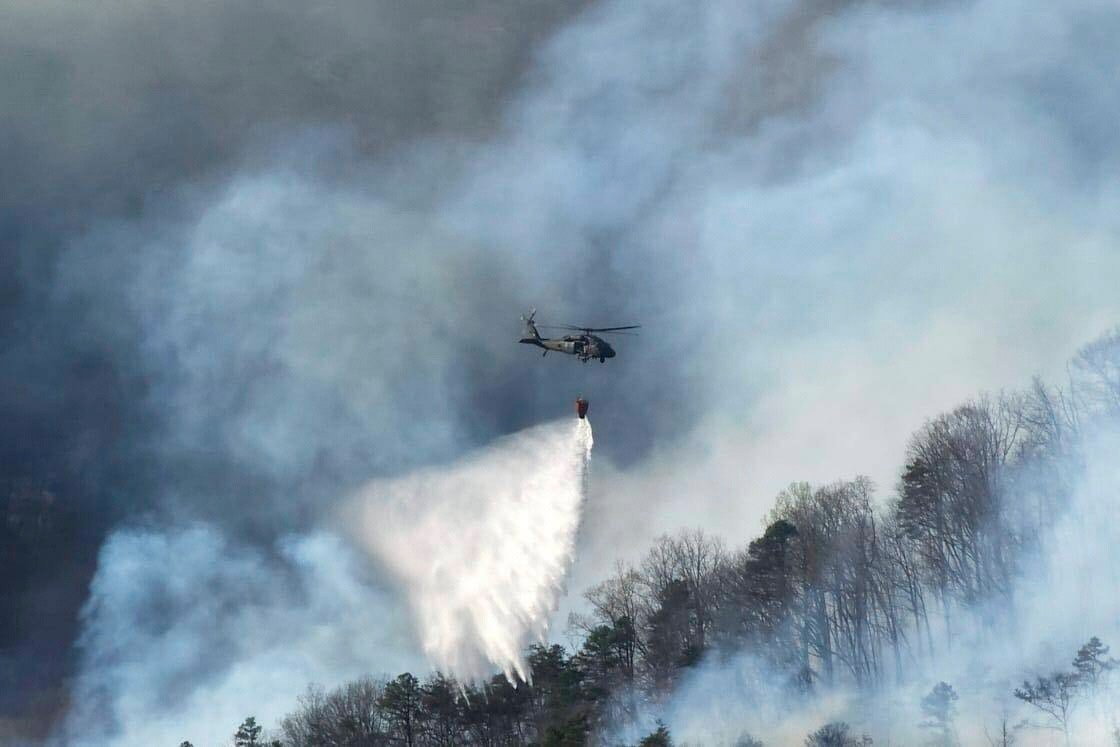
PRESCOTT, Ariz. (AP) — From the southwestern U.S. to Minnesota, Iowa and even parts of New Jersey, it seemed that winter never materialized.
Many communities marked their driest winters on record, snowpack was nearly nonexistent in some spots, and vegetation remains tinder dry — all ingredients for elevated wildfire risks.
More than 1,000 firefighters and fire managers recently participated in an annual wildfire academy in Arizona, where training covered everything from air operations to cutting back brush with chain saws and building fire lines. Academy officials say there’s consensus that crews will be busy as forecasts call for more warm and dry weather, particularly for the Southwest.
The lack of moisture and warm temperatures can combine to increase the rate of spread and intensity of fire, said Roy Hall, the prescribed fire officer for the Arizona Department of Forestry and Fire Management. He says it’s been dry in his state for months.
“We would be remiss to not acknowledge that changes how we might see fire behavior come out of the blocks at the beginning and through fire season,” he said.