
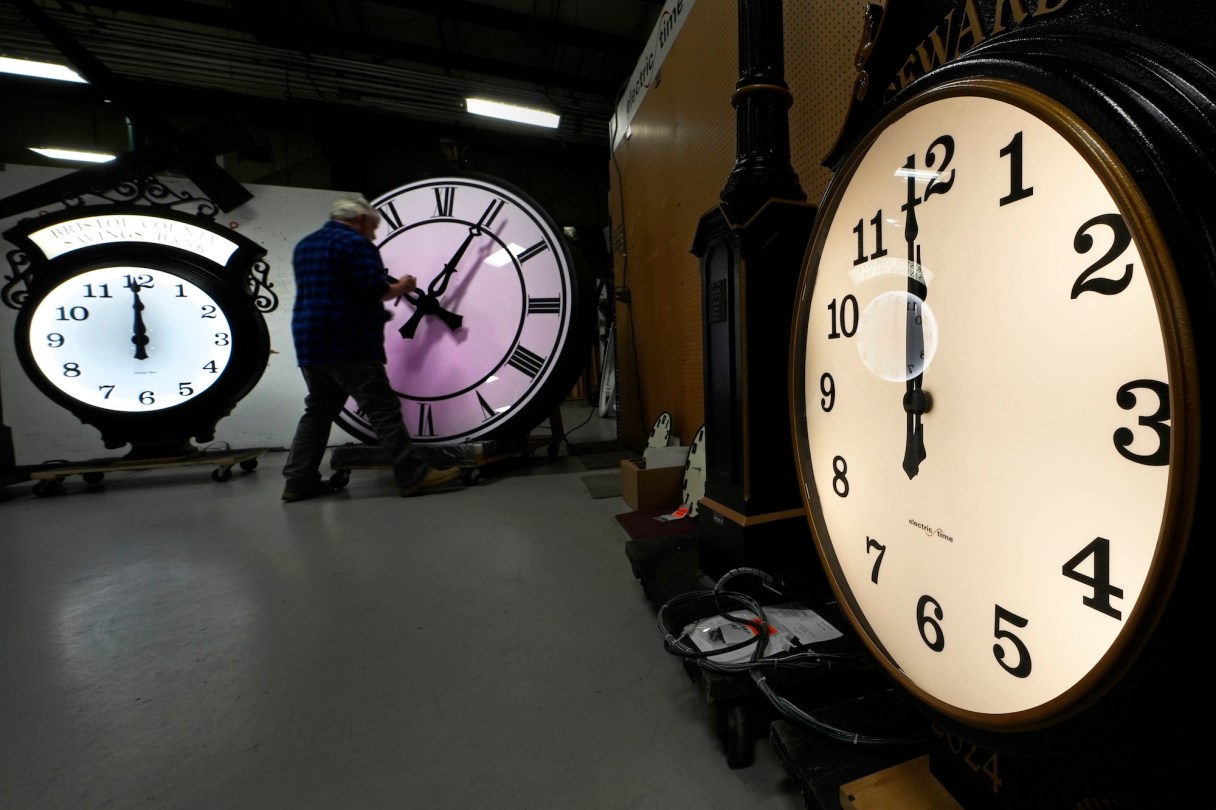
DALLAS (AP) — Once again, most Americans will set their clocks forward by one hour this weekend, losing perhaps a bit of sleep but gaining more glorious sunlight in the evenings as the days warm into summer.
Where did this all come from, though?
How we came to move the clock forward in the spring, and then push it back in the fall, is a tale that spans over more than a century — one that’s driven by two world wars, mass confusion at times and a human desire to bask in the sun for a long as possible.
There’s been plenty of debate over the practice, but about 70 countries — about 40% of those across the globe — currently use what Americans call daylight saving time.
While springing the clocks forward “kind of jolts our system,” the extra daylight gets people outdoors, exercising and having fun, says Anne Buckle, web editor at timeanddate.com, which features information on time, time zones and astronomy.