
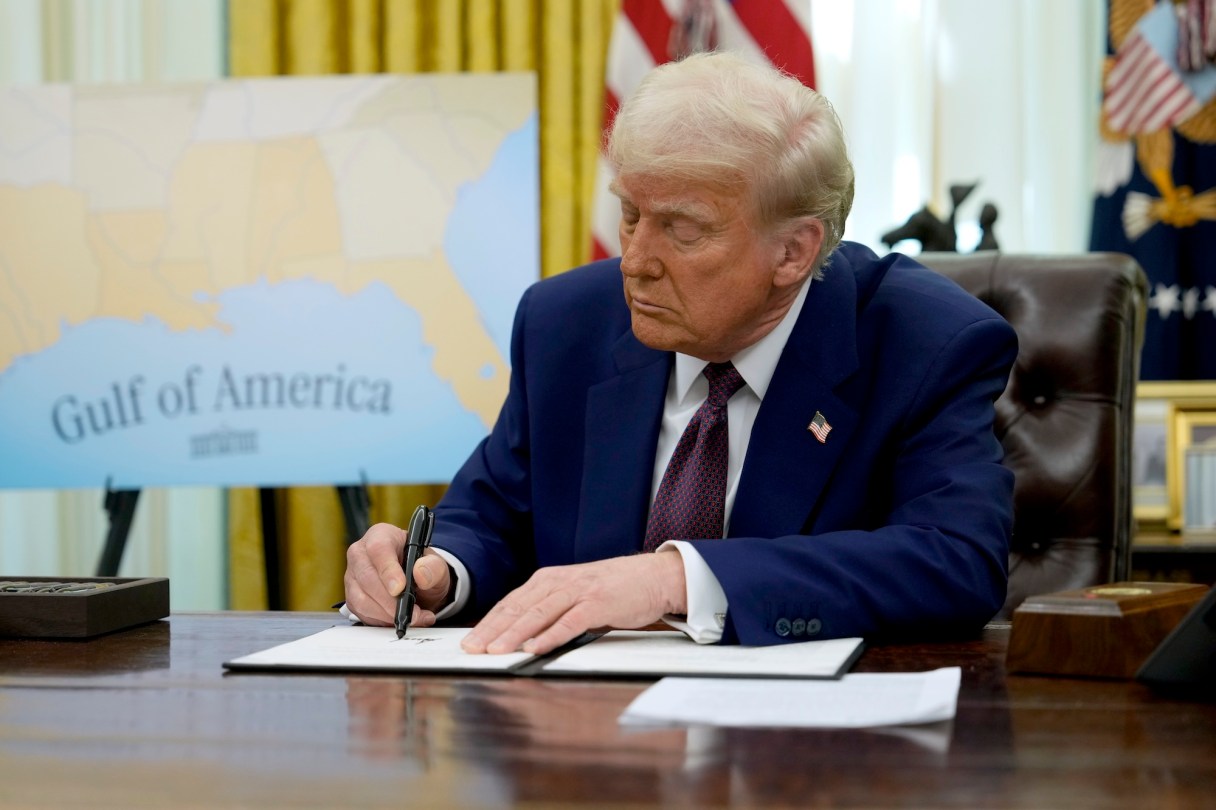
WASHINGTON (AP) — President Donald Trump on Thursday rolled out his plan to increase U.S. tariffs to match the tax rates that other countries charge on imports, possibly triggering a broader economic confrontation with allies and rivals alike as he hopes to eliminate any trade imbalances.
“I’ve decided for purposes of fairness that I will charge a reciprocal tariff,” Trump said in the Oval Office at the proclamation signing. “It’s fair to all. No other country can complain.”
Trump’s Republican administration has insisted that its new tariffs would equalize the ability of U.S. and foreign manufacturers to compete, though under current law these new taxes would likely be paid by American consumers and businesses either directly or in the form of higher prices. The rates to be charged would be studied over the weeks ahead, which could create the potential space to resolve challenges or prolong a degree of suspense and uncertainty.
The politics of tariffs could easily backfire on Trump if his agenda pushes up inflation and grinds down growth, making this a high stakes wager for a president eager to declare his authority over the U.S. economy.
The tariff increases would be customized for each country with the partial goal of starting new trade negotiations. But other nations might also feel the need to respond with their own tariff increases on American goods. As a result, Trump may need to find ways to reassure consumers and businesses to counteract any uncertainty caused by his tariffs.