
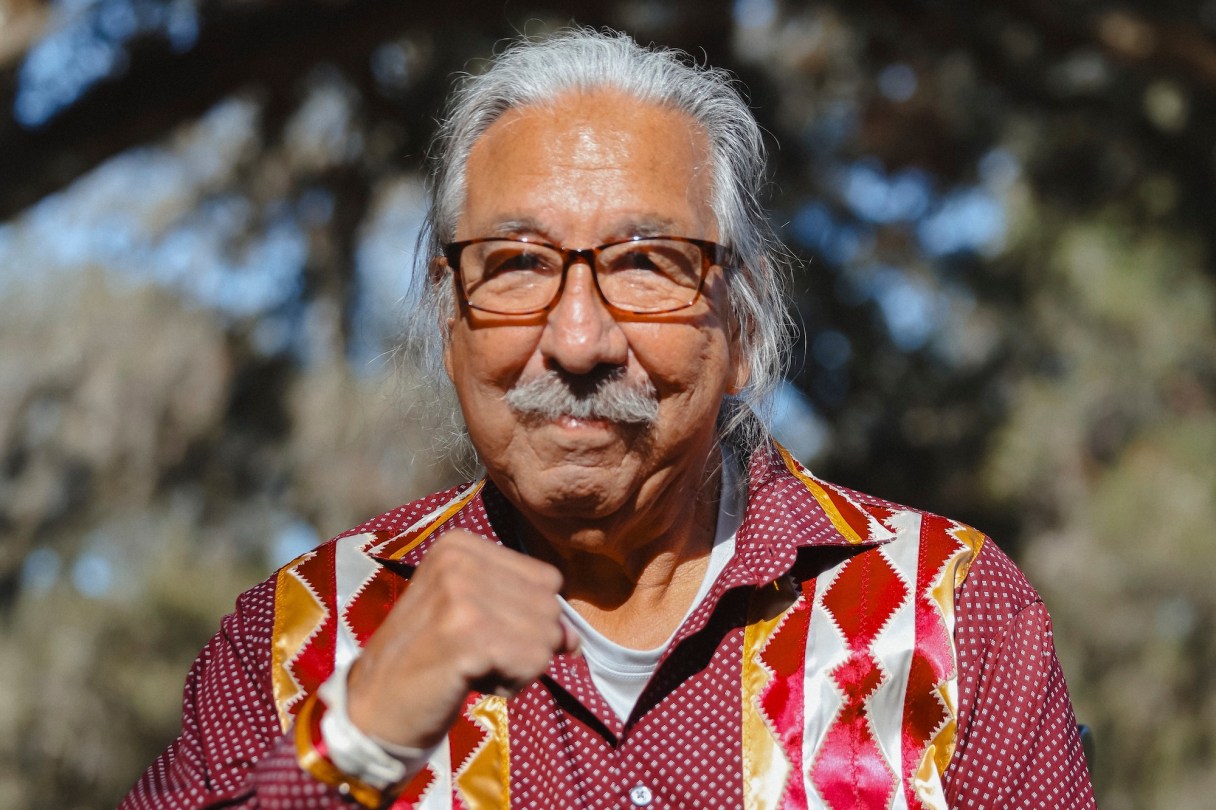
SUMTERVILLE, Fla. (AP) — Native American activist Leonard Peltier was released from a Florida prison on Tuesday, weeks after then-President Joe Biden angered law enforcement officials by commuting his life sentence to home confinement in the 1975 killings of two FBI agents.
Peltier, 80, left Coleman penitentiary in an SUV, according to a prison official. He didn’t stop to speak with reporters or the roughly two dozen supporters who gathered outside the gates to celebrate his release.
Peltier, a member of the Turtle Mountain Band of Chippewa Indians in North Dakota, was headed back to his reservation, where family and friends will celebrate his release with him on Wednesday and where the tribe arranged a house for him to live in while serving his home confinement.
Throughout his nearly half-century in prison, Peltier has maintained that he didn’t murder FBI agents Jack Coler and Ronald Williams during a confrontation that day on the Pine Ridge Indian Reservation in South Dakota. Native Americans widely believe he was a political prisoner who was wrongly convicted because he fought for tribal rights as a member of the American Indian Movement.
“He represents every person who’s been roughed up by a cop, profiled, had their children harassed at school,” said Nick Estes, a professor of American Indian Studies at the University of Minnesota and a member of the Lower Brule Sioux Tribe who advocated for Peltier’s release.