Last Summer, Michael Ray Dart — a 63-year-old native of Chesterfield, Virginia, drove his 2024 Nissan Rogue over the bulkhead in downtown Southport, North Carolina, and plunged into the brackish abyss where the Cape Fear River, Intracoastal Waterway and Atlantic Ocean converge and commingle.
Believe it or not, this wasn’t an isolated act of boneheaded bizarreness.
Four months later, a woman drove her Toyota Tundra over the same bulkhead. Even crazier, almost a year to the date prior, another driver had done the same exact thing, except in a 2006 Lexus ES350.
I said that to drive home a point (pun intended): Geographically speaking, there aren’t many places in the state of North Carolina farther east than my itty-bitty, seagull-infested-yet-charming hometown of Southport.
Which means that when it comes to barbecue, Eastern North Carolina’s vinegar-based whole hog is the style that I’m intensely loyal to.
Even right now as I’m writing this at my cousin’s house in Charlotte, about 60 miles south of Lexington, North Carolina, the mere thought of eating barbecue from the western half of the state feels like cultural treason. Also, to Charlotte’s credit, there’s so much Senegalese dibi, Chinese Xá xíu and Cuban lechon asado that Lexington-style barbecue is a tomato-based afterthought.
My father indoctrinated me at an early age with trips up Kerr Avenue to Jackson’s Big Oak Barbecue in Wilmington, North Carolina. Jackson’s, with its deliberate antiquated charm and slogan, “We ain’t fancy, but we sure are good,” was a part of the Skinner & Daniel’s dynasty, a barbecue spot that both my father and Uncle Darren worked at in the early ’90s.
Before I knew that Millard Filmore was the 13th president or that the square root of 81 was 9 or that Mars was the fourth planet from the sun, I knew that Jackson’s Big Oak meant barbecue: Styrofoam plates of whole hog, more chopped to smithereens than “pulled.” The barbecue was profoundly porky with an acidic tang and sparks of piquantness from the red pepper chili flakes. A puddle of neon-hued “glow-in-the-dark” slaw and a handful of hush puppies shaped like gnarled fingers completed the trinity.
However, no matter how “loyal to the soil” I am to Eastern North Carolina’s vinegar-based whole hog barbecue, no matter how strongly I feel that my slice of the state is the center of the barbecue universe, no matter how many times I pompously remind people that Anthony Bourdain dubbed Eastern North Carolina as the “cradle” of barbecue, it doesn’t mean that I’m not acutely cognizant of the other styles.
Boxing buffs like to throw around the motto “Styles make fights,” and it’s true. For example, there were fighters like the hard-scrambled Southpaw “Marvelous” Marvin Hagler, whose style turned bouts into relentless slugfests. Then there are fighters like Floyd Mayweather, whose style was a Ginsu-sharp master class in flamboyant violence.
One style made you appreciate the other and vice versa (the same could be said for pizza). Well, in barbecue, styles make fights as well — and sometimes, real fights, egged on by pride and machismo.
To all the barbecue snobs: I know somewhere out there in the rolling hills of Daviess County, Kentucky, they’re barbecuing mutton that’s as exalted as their bourbon. (I can’t vouch for the burgoo.) I know Rodney Scott catapulted the Pee Dee, South Carolina, style of barbecue from a humble family-run endeavor to a James Beard Award medallion, glossy cookbook and bona fide barbecue empire. I know there’s slow-smoked, spatchcocked chicken dripping with white sauce hailing from Northern Alabama. And in the East Flatbush neighborhood of Brooklyn, there’s jerk pork being chopped into succulent chunks, because yes! Jamaican jerk is technically “barbecue” and also my favorite style of barbecue after Eastern North Carolina.
There are even more styles, and more styles on top of that, and even more styles on top of those styles.
However, for the sake of word count here, I’ll give you my “Mount Rushmore” of barbecue styles.
Eastern North Carolina-Style
Everything-but-the-“oink” barbecue perfected by legendary pitmasters like Ed Mitchell, Steve Grady and Sam Jones. If you’re not privy, it comes off as primitive. However, if you understand the time-honored and punctilious nuances, you’ll appreciate the alchemy of a whole hog, splayed and cooked over the glowing, smoldering crackle of oak wood for almost an entire day (between 15 and 18 hours). The meat is pulled from the carcass, chopped with a cleaver and “dressed” with an apple cider vinegar-based sauce.
Memphis-Style
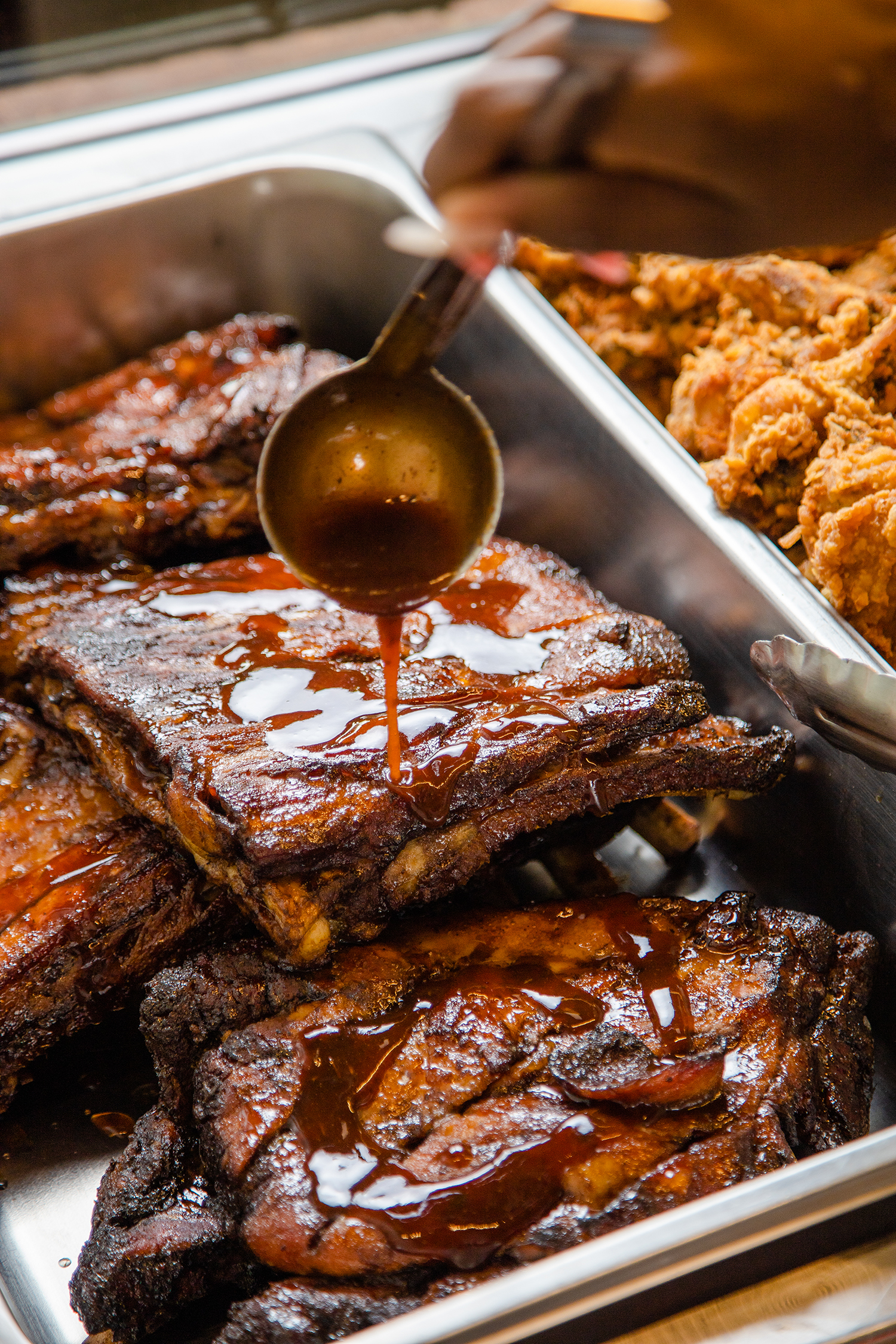
Yes, Cozy Corner has hunks of caramel cake and Cornish hens. Yes, The Bar-B-Q Shop and their “Dancing Pigs” have pulled pork sandwiches on Texas toast and barbecue spaghetti, a recipe inherited from Brady Vincent. Yes, Charlie Vergos’ Rendezvous has a mean sausage and cheese plate and a skillet of barbecue shrimp, which have to be ordered a day in advance. However, Memphis-style barbecue is lionized for its ribs — racks and racks and racks of floppy ribs, usually baby back and famously sprinkled heavy-handedly with a dry rub whose recipe fluctuates from place to place.
Central Texas-Style
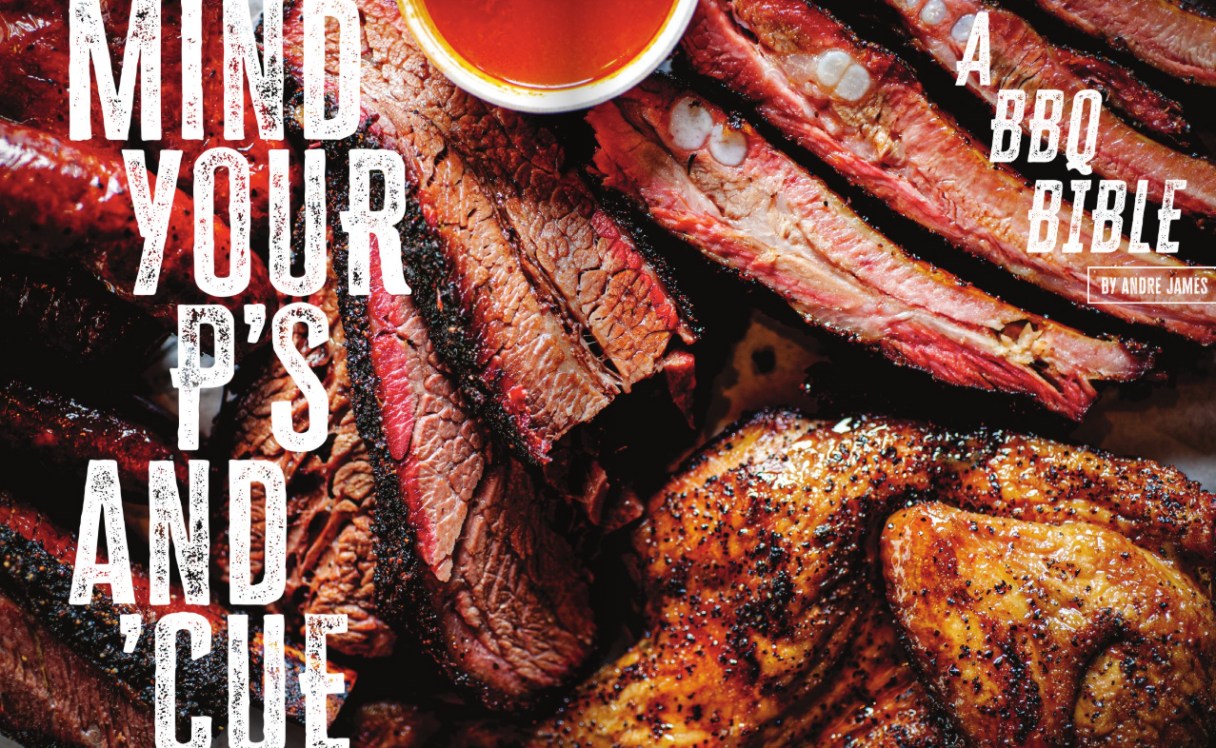
You shouldn’t be able to order a smoked brisket bowl from Chipotle. The same way Checker’s shouldn’t have a brisket melt on their menu. Both are blasphemy. Even if it’s not fair, I blame Austin-based pitmaster Aaron Franklin and the trio of buddies from Goldee’s for brisket’s new-found national fame and proliferation. Franklin’s briskets are vehemently smoked with post oak for around 12 hours at a temperature that floats between 275 and 285 degrees, followed by a super-duper crucial “resting” period of no less than an hour. The results: a juicy masterpiece with a bark as black as midnight, somewhat salmon-pink smoke ring and an otherworldly echelon of tenderness.
Kansas City-Style
When I close my eyes and think of Kansas City, I think of Satchel Paige on the bump hurling his signature “two-hump blooper” for the Monarchs, Charlie Parker blurting magic from his alto saxophone and scraps cut from “the point” of a brisket: burnt ends. Arthur Bryant, a branch from the Henry Perry tree (Perry is the undisputed godfather of Kansas City barbecue) offered the undesirable scraps as a complimentary gesture, until he realized that customers were willing to pay for them, especially when those burnt ends are covered in a thick, sweet and sticky sauce that restaurants like Gates Bar-B-Q are famous for from Kansas City, Missouri, to General Santos City, Philippines.
Confessions of a Pitmaster
Learn BBQ basics from an expert
Compiled by Andre James
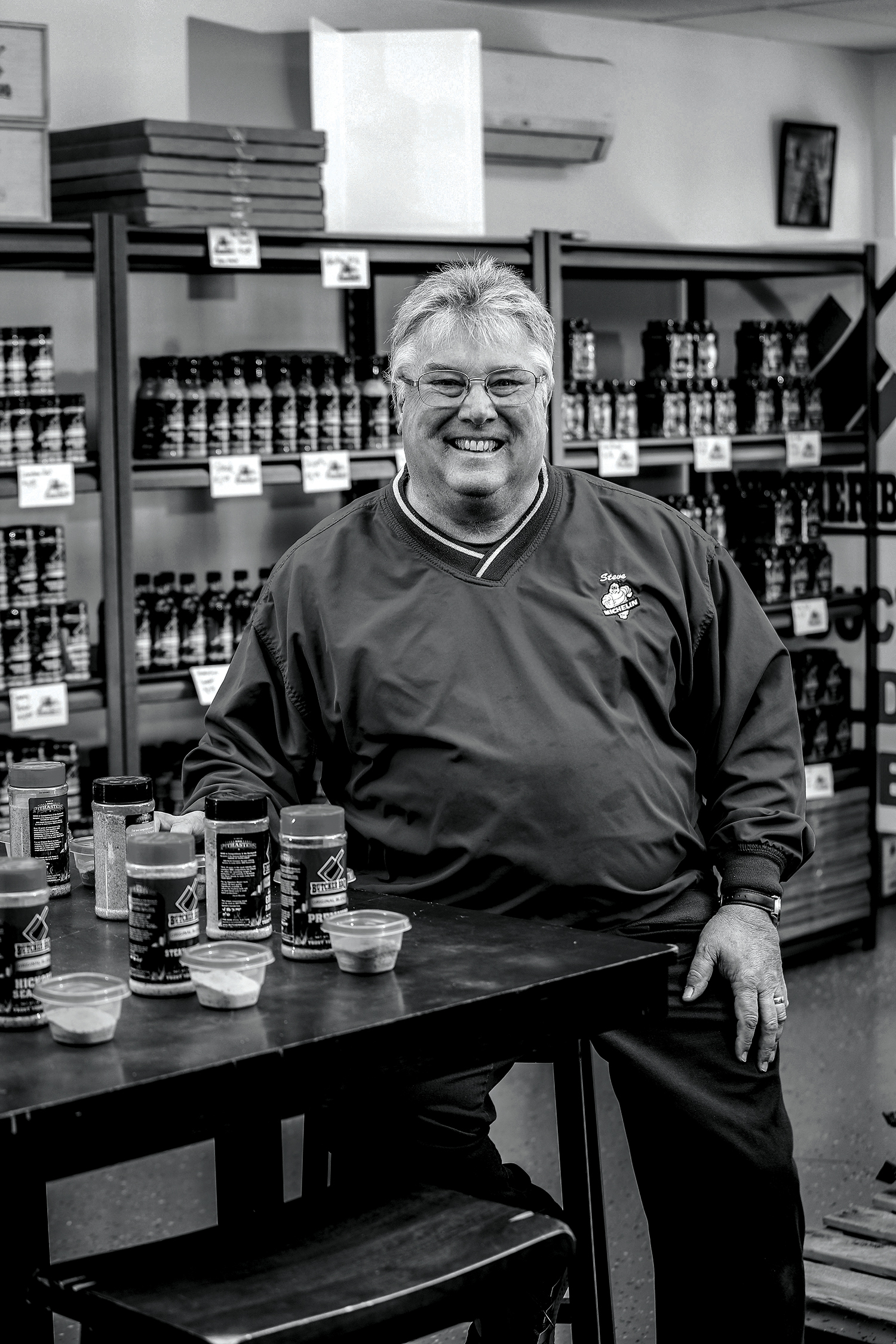
I dubbed Steve Ray, of Owl’s Nest Barbeque, “Barbecue Yoda” for a reason. Listening to him yap about things like the “money muscle” of a Boston butt is like hearing Neil deGrasse Tyson yap about galactic cannibalism or Pharrell Williams yap about chord progressions or Peyton Manning yap about wheel routes. Simply put, he knows more about barbecue and cares about barbecue more than anybody I know or care about.
Indeed, If you ever felt the urge to snag a bushel of Sea Cloud oysters, a case of Pabst Blue Ribbon and a bottle of Texas Pete hot sauce for an oyster roast, I’m your guy! However, when it comes to barbecuing, I’m not your guy. This is precisely why I reached out to the legendary Steve Ray, hoping he’d drop some gems about his idyllic barbecuing situation.
— Andre James
The Meats:
“I do the top four meats: brisket being the king, then pork butt, chicken thighs and pork spare ribs,” Ray says.
The Hardware:
“I use an offset pit — where the firebox is on one end and the pit is on the other. You can use other stuff to cook on, but if you want to do some classic barbecue cooking, you have to use an offset pit. Right now, I’m using the one from the Hiwassee Custom Pits right over there in Polk County. They make one called The Tradition. That’s what I’m cooking on. It’s a handmade smoker, and it’s beautiful.”
The Wood:
“I’m using oak wood. Oak has a very subtle taste. It’s not really strong, but it’ll give you the real taste of barbecue without being overpowering. Around here, people use hickory, but hickory has a very strong taste. I like hickory, but I usually use oak or pecan. But pecan wood is so hard to keep.
The Temperature:
“Everything is going to get cooked on the offset smoker at 250 degrees. That’s the sweet spot.”
Brisket: “I use salt, pepper and garlic [powder], and I do it Texas-style, which means I cook it fat-side-up for around 13 hours. Then I make sure I rest it in a controlled temperature apparatus, like another smoker or a holding oven for anywhere from 10 to 12 hours at 130 degrees. That’s the key to a good brisket.”
Pork Butt:
“Instead of using a flavored rub on the outside, I’m gonna use salt and pepper — because whatever you use on the outside of the pork butt does not penetrate the pork butt because it’s so thick.
I’m going to cook that pork butt up to 165 degrees internally. Then I’m going to wrap it up in aluminum foil and put it back on the smoker until it gets to around 210 degrees internally. You don’t have to rest a pork butt very long, maybe an hour or two.
Then you’re going to pull it. That’s when I add my seasoning. My personal favorite is the Savory Pecan seasoning [from Butcher BBQ]. I’ll add about five heaping tablespoons while I’m mixing up the pulled pork. That’s about the right amount. You don’t want the pecan rub to be the star; you want the meat to be the star.”
Chicken Thighs:
“I take bone-in chicken thighs and trim them up a little bit. They’re going to look like little pillows. I season them with Butcher BBQ brand’s Honey Rub before putting them in an aluminum pan. Then I’ll put a little pat of butter on each thigh. What that butter does is tenderize the skin, and it’ll attract the smoke to the chicken. I’ll smoke them until they get to an internal temperature of 165-170 degrees. On an offset smoker at 250 degrees, it’ll take about two hours. Last, you dunk those little pillows in a bowl of sauce. I’d probably use the apple habañero barbecue sauce from Head Country.”
Spare Ribs:
“Butcher BBQ makes a rub called Grilling Addiction, and I’m going to put that on the ribs first, because it’s a savory, salty type of rub. And then I’ll go back over it with a honey rub, something sweet [the same honey rub used for the chicken thighs]. I’m going to go heavy on both sides with the seasoning. I’m going to cook those ribs until they get to 165 degrees. Then I’ll add some brown sugar, butter and honey before wrapping them in aluminum foil real tight and putting them back on the smoker, meat-side-down for another two to three hours. They come out delicious.”
Find Steve Ray and Owl’s Nest BBQ Supply at owlsnestbbq.com.