
One reason why the public turned on diversity, equity, and inclusion (DEI) was its insistence that roughly 70% of the country was stereotyped as victimizers by virtue of their skin color.
In contrast, the other “diverse” 30% were de facto considered the victimized.
In such absurd binaries, the left returned to the old “one-drop” rule of the antebellum South, suggesting that anyone with any nonwhite ancestry was a minority victim.
And once that Marxist-inspired dichotomy was institutionalized, a corollary was established that the self-declared racially oppressed cannot themselves be racist oppressors.
But human nature is universal and transcends race.
One lamentable characteristic of our species is that we are all prone to excess and crudity if not deterred, especially once civilizational restraint is lost.
We are now witnessing examples of what follows when anti-white stereotyping and racism are given a pass — as long as the purveyors can claim their victimhood entitles them to bias.
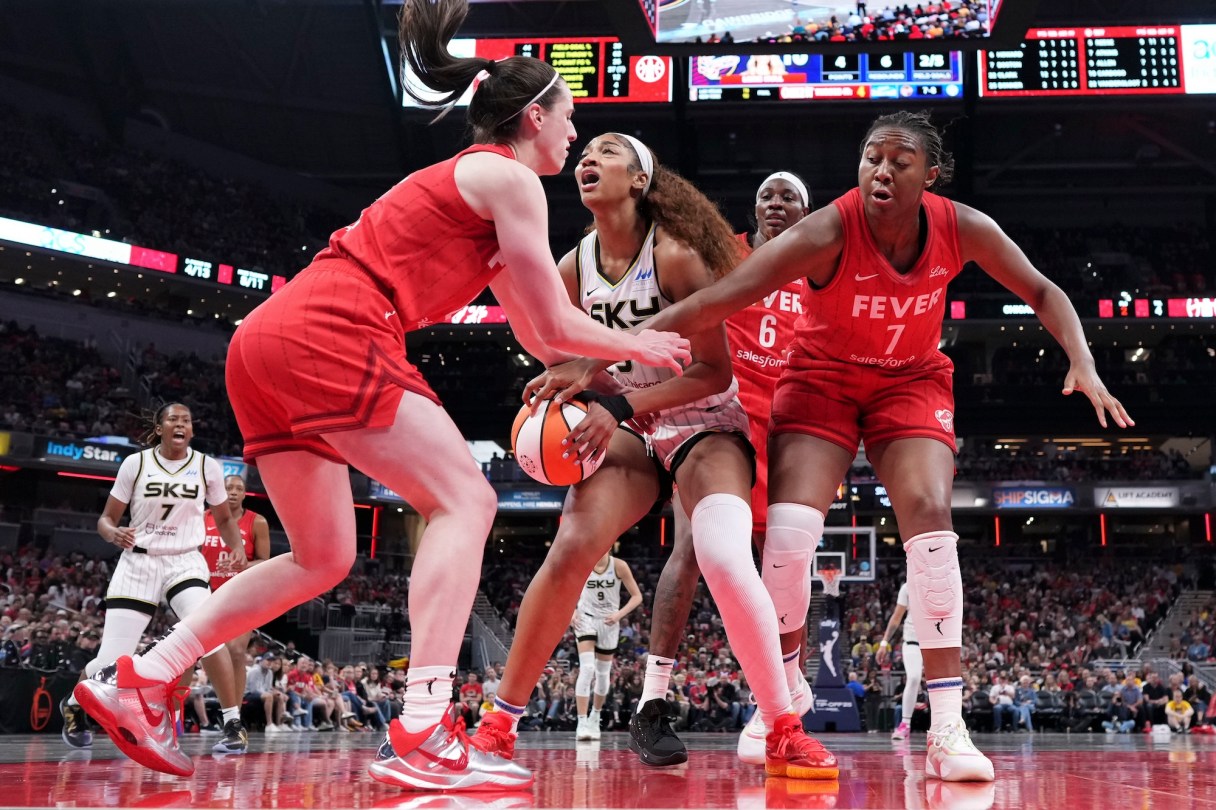
Recently, WNBA basketball stars Angel Reese and Caitlin Clark got into one of their now-characteristic on-court rivalries. But this time around, Reese mocked Clark as a “White gyal (sic) running from the fade.”
Reese assumes that her status as a Black star grants her immunity from backlash — a privilege unlikely to be extended if the roles were reversed.
Or is her crassness a simple reflection that 60 years after the Civil Rights Movement, it is deemed cool or deservedly acceptable to use the word “white” derogatorily?
After all, loose-cannon Rep. Jasmine Crockett, D-Texas, recently went after her party’s big Democratic donors, who raised a record amount of money for Kamala Harris’s short-lived campaign.
Crockett played the race card when claiming that Democratic insiders were already backing the next party nominee as the “safest white boy.”
It is easy to see why Crockett, who endlessly spouts off about race in congressional sessions, used the pejorative “white boy.” She knows that there are no repercussions given her race and, to a lesser extent, her gender and left-wing ideology.
During recent controversies over leaks at the Pentagon, former Obama UN Ambassador Susan Rice injected race by smearing Secretary of Defense Pete Hegseth. She leveled a trifecta race/gender/sexual orientation slur — all irrelevant to the issue at hand: “Well, if you’re a white male Christian cisgender macho MAGA man, you can be as dumb as a rock and be deemed qualified to serve as Secretary of Defense.”
Rice still chafes that as a sometimes-official Obama administration spokeswoman, she serially and deliberately misled the country about the fatal 2012 terrorist attacks on the American consulate in Benghazi.
In all these cases, there was no fallout from racial demonization. Again, we apparently accept the pernicious idea that those identifying as an oppressed group cannot themselves voice illiberal stereotypes.
But while our political elites and celebrities seem fixated on using racial putdowns for career advantage and personal notoriety, the people increasingly ignore their entrenched and off-putting racism.
One result of the 2024 campaign was that while Democrats seemed fixated on racial stereotypes, the public had moved on.
Voters increasingly see class considerations transcending race. That fact may explain why exasperated and flailing Democrats and leftists desperately seek to resurrect racial polarization instead of finding a popular middle-class agenda.
Historically, tribalism erodes a multiracial democracy.
It did when white leaders in the past expressed racist attitudes toward Blacks. And it will again if Black elites simply flip the paradigm and do the same.
Victor Davis Hanson is a historian at the Hoover Institution, Stanford University.