
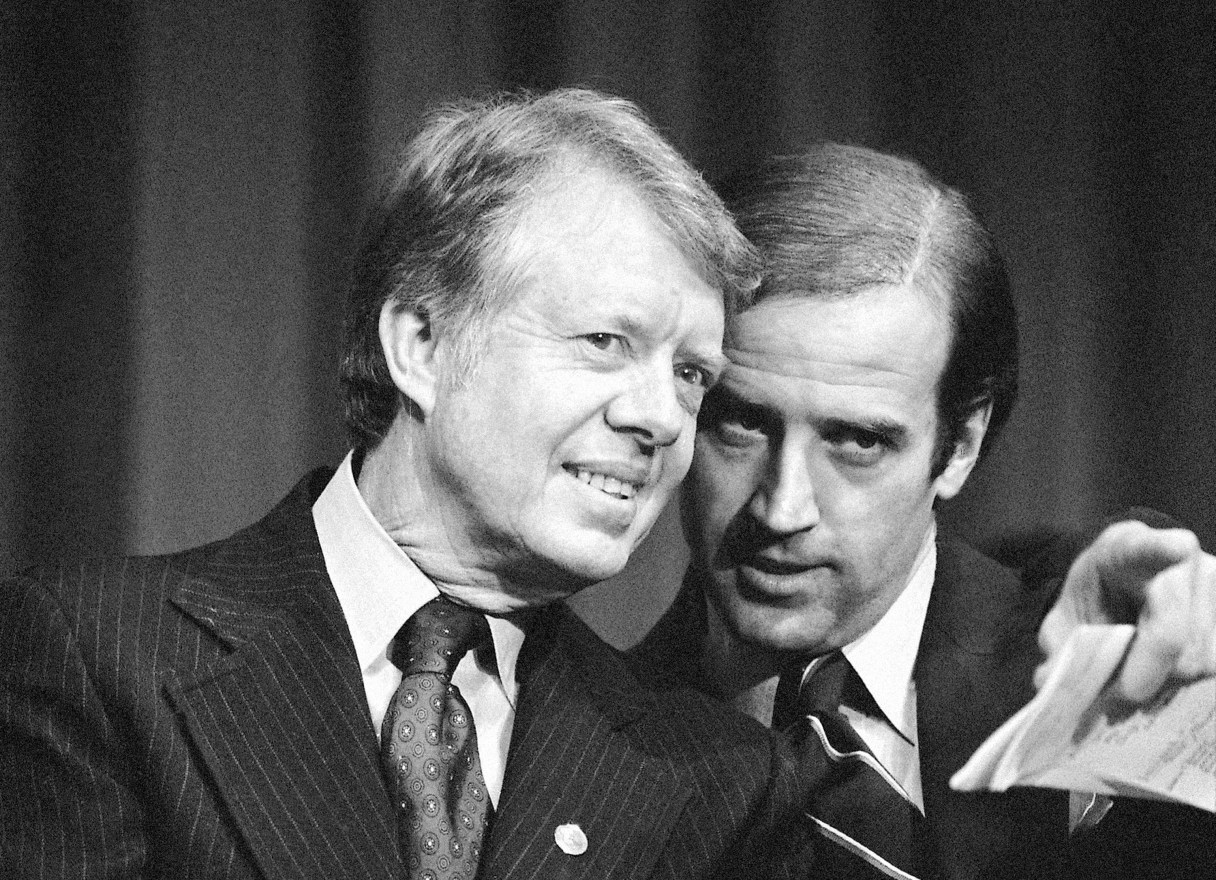

Here are some things you may not know about the federal Department of Education, which President Donald Trump signed documents this week to close:
› As a presidential candidate in 1976, Democrat Jimmy Carter promised the National Education Association (NEA), the country’s largest labor union, to push for a separate education department. (At that time, education was administered at the federal level under the Department of Health, Education and Welfare).
› In return for Carter’s promise, the NEA made its first presidential endorsement in its 177-year history. Any guess as to which candidate the organization endorsed? (Hint: It wasn’t Republican Gerald Ford.) It probably didn’t hurt, either, that the brother of vice presidential candidate Walter Mondale had been president of the NEA’s Minnesota organization.
› Once president, Carter hedged, writing in his personal diary on April 27, 1977, three months after taking office: “Met with the leaders of the NEA. They are quite interested in having a separate education department formed. If we can work out some independent agency just for education where the teachers don’t dominate it, then I would favor the idea.” (Of course, the department has been anything but independent and has been dominated by Democrats and the NEA.)
› Albert Shanker, the then-president of the American Federation of Teachers, the rival teachers’ union to the NEA, opposed a separate federal department because he believed – correctly, it turns out – that it would be dominated by the NEA and because there were strong political reasons to keep education in the Cabinet office it resided.