
Last September, vast sections of Appalachia were devastated by Hurricane Helene. The category 4 storm brought apocalyptic flooding to areas of Georgia, Tennessee, South Carolina and, most destructively, North Carolina. The final cost of the destruction is over $200 billion and, more importantly, 230 lives. Some places, like Chimney Rock, North Carolina, are almost unrecognizable still.
Happening so close to the 2024 election, and shortly followed by devastating wildfires in and around Los Angeles, the hurricane became a political football. While media coverage in California turned its focus on the incompetence of the state government, in North Carolina, the federal government was accused of withholding help or not showing up at all.
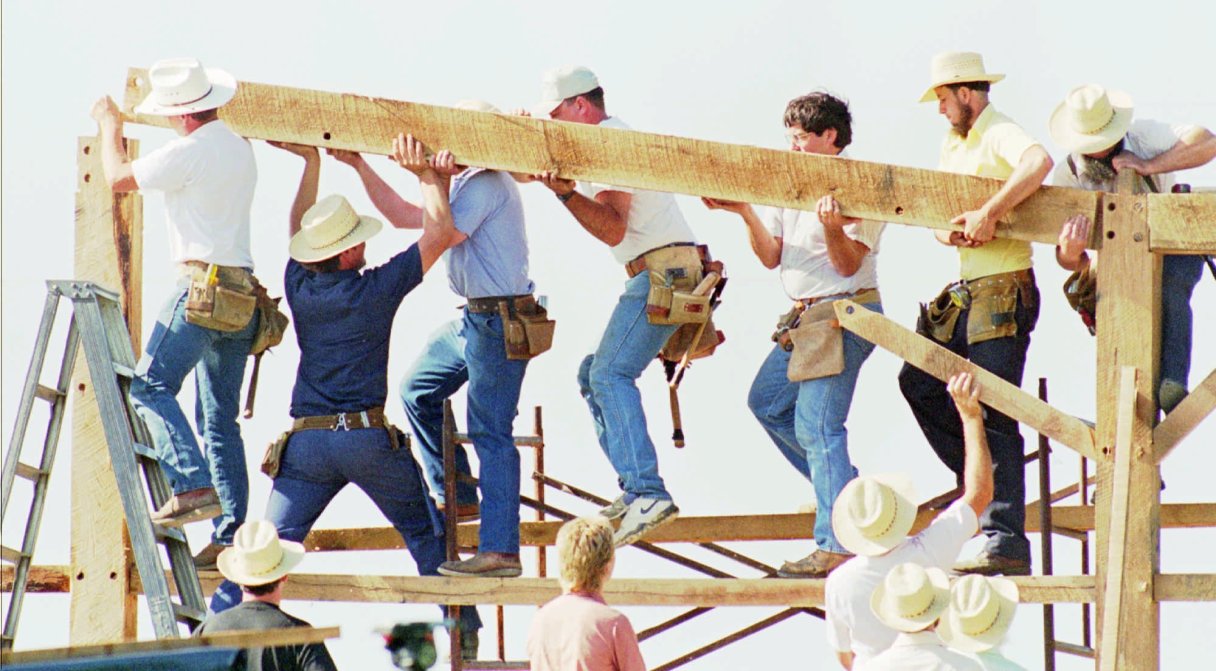
Somebody did show up, though. Over the last six months, over 2,000 volunteers from the Pennsylvania Amish community have been rebuilding homes and structures in places like Chimney Rock. Known for their ability to build a barn in a day and move a barn by hand, these faithful men and women are putting their considerable skills to work on behalf of another community. The Amish volunteers weren’t sent by the government, nor did they wait for government approval. They clearly weren’t there to curry political favor, as others were.
Their response to those in need comes from their way of looking at the world. First, the Amish believe that when someone is in need, that is a calling to help. Second, the Amish believe that a community, not a government, is best positioned to help. Obvious in this story (and so many others through the years) is that there are Amish versions of the doctrine of subsidiarity, the Roman Catholic idea that help is most effective when offered by those closest to the problem, and sphere sovereignty, the Reformed idea that not all problems are the State’s to solve.
Conservatives rightly complain about the government being in business that isn’t theirs. The best way to push the State out of those spaces is to be there first. Edmund Burke described this as creating “little platoons” of civil society, beginning with family and moving on to neighbors, communities, etc.