
Fluffy clouds and bright sunshine painted the sky as yarrow flowers, blackberries and carrots decorated the quarter-acre farm at the Bethlehem Center, where much of the organic produce and plants are grown in part by the nonprofit’s students. The children are on a mission to feed the surrounding community and aid in the fight against food insecurity in South Chattanooga and beyond.
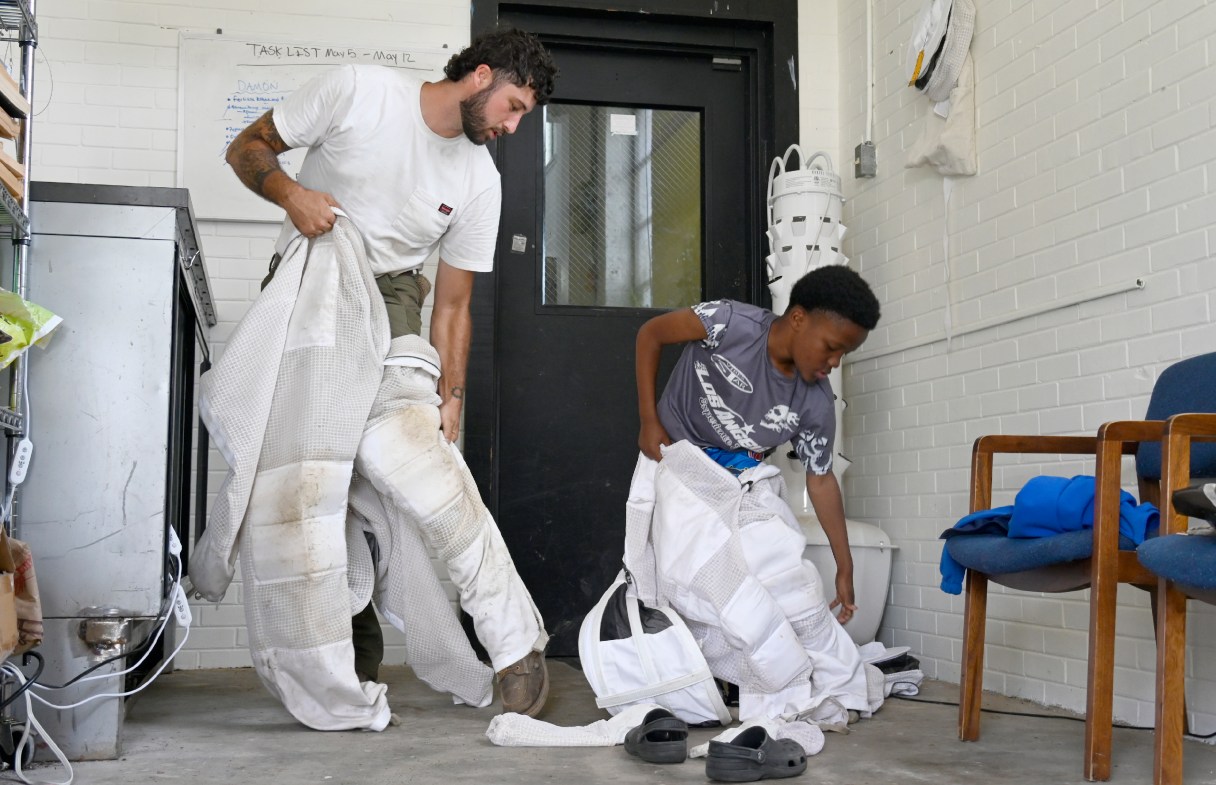
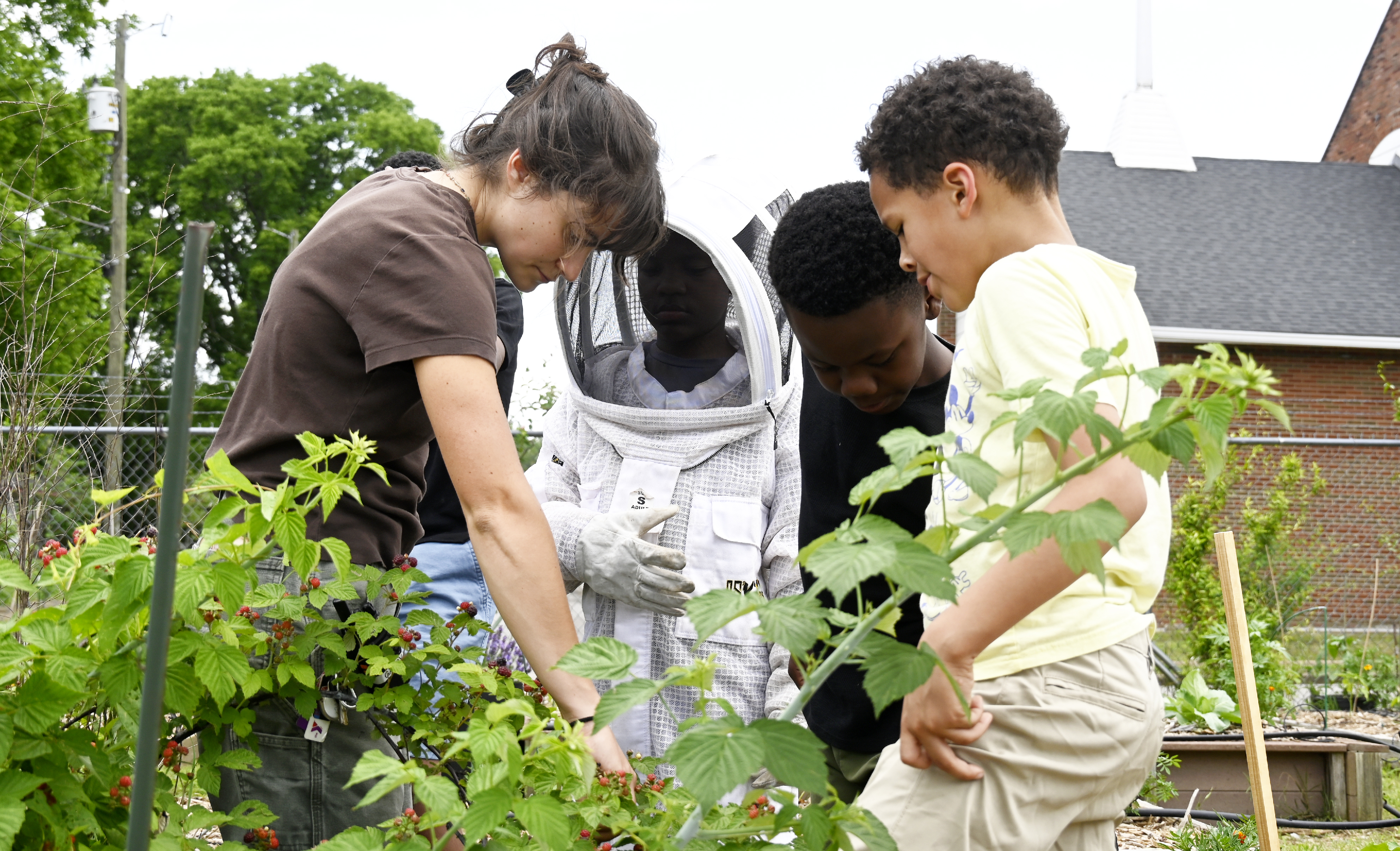
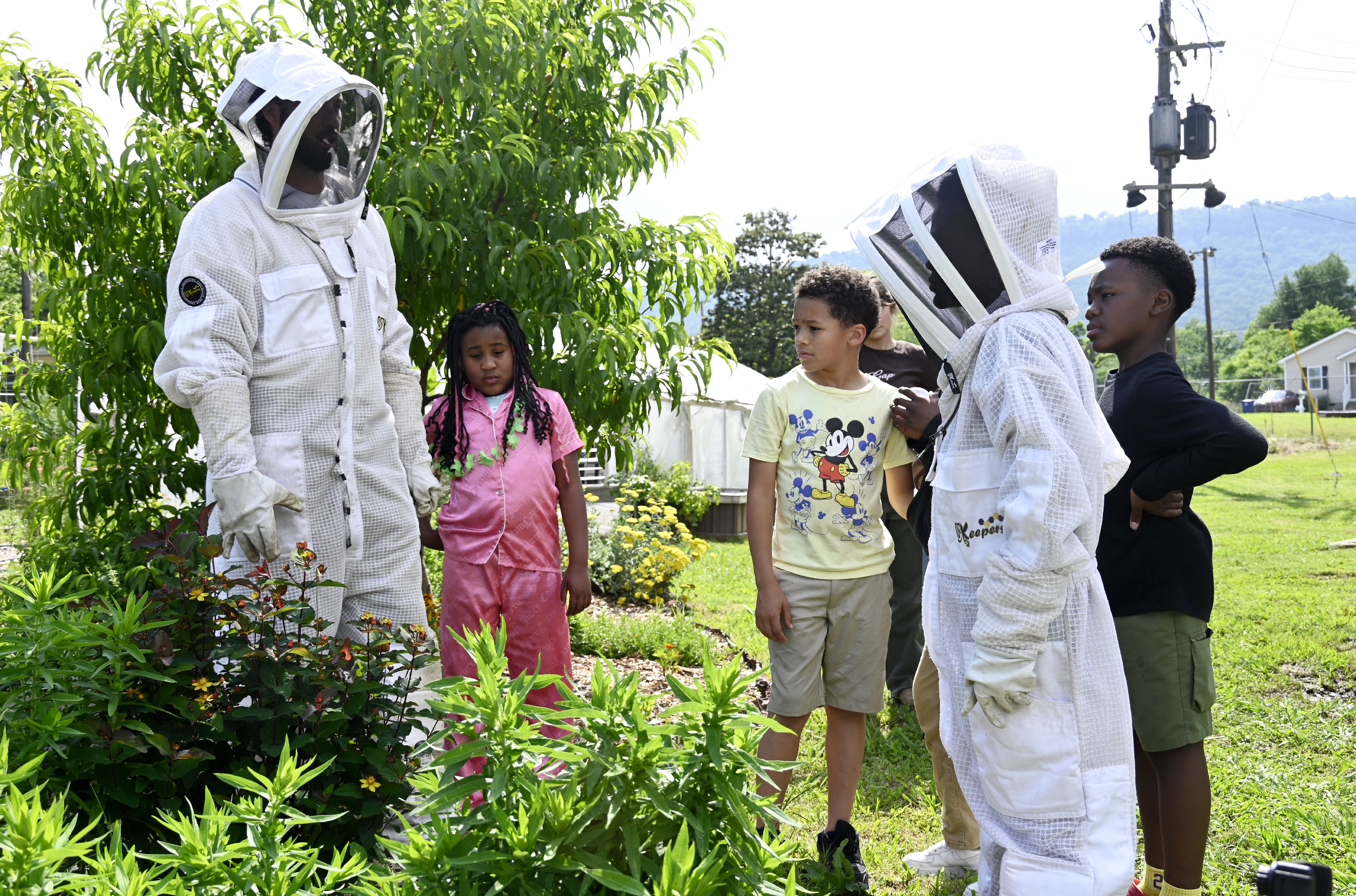
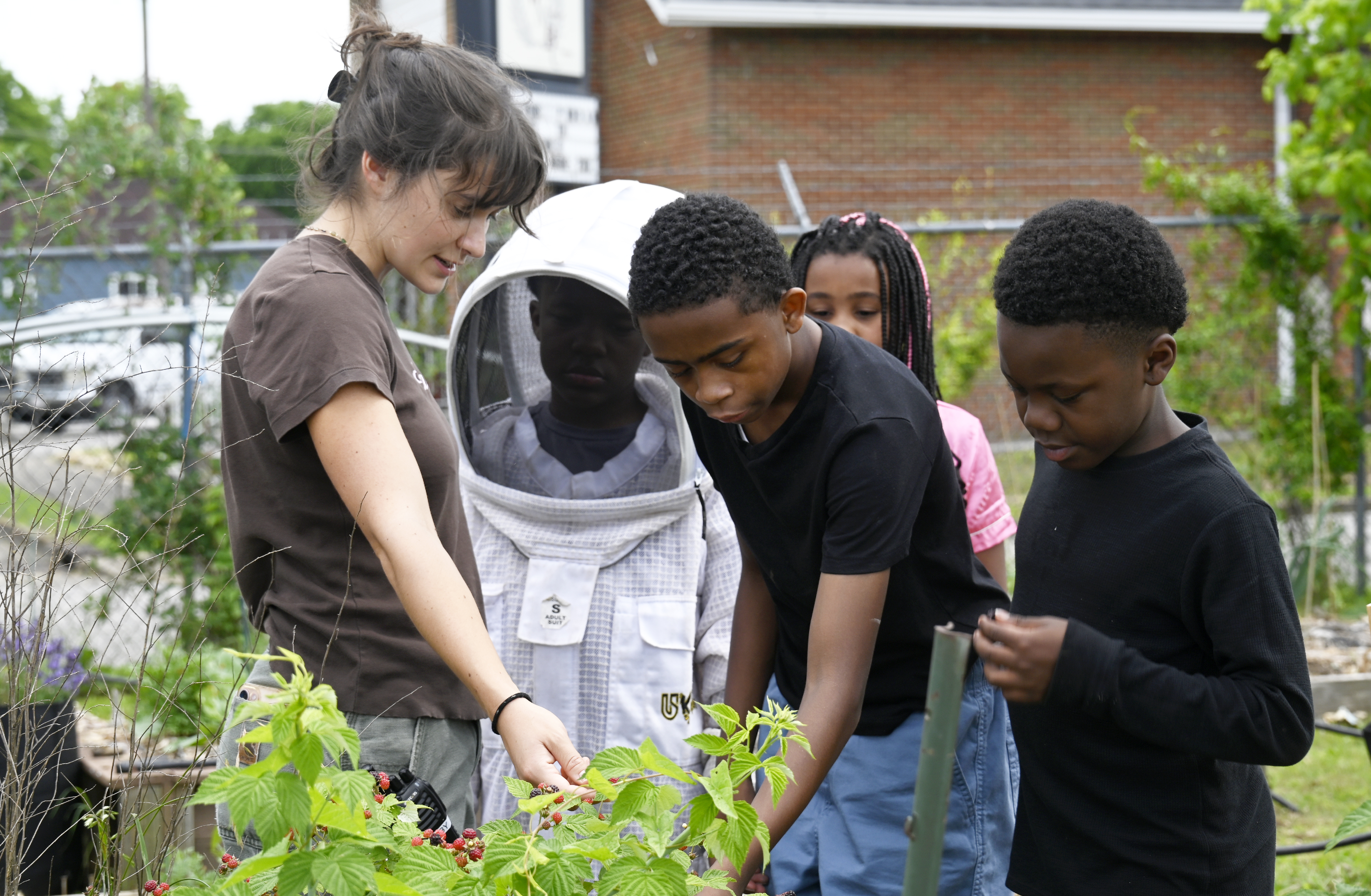
Children in Garden Club work hand-in-hand with Farm Manager Damon Bartos as he prepares for the farming season, begins crop seeding and even tends to the farm’s beehives.
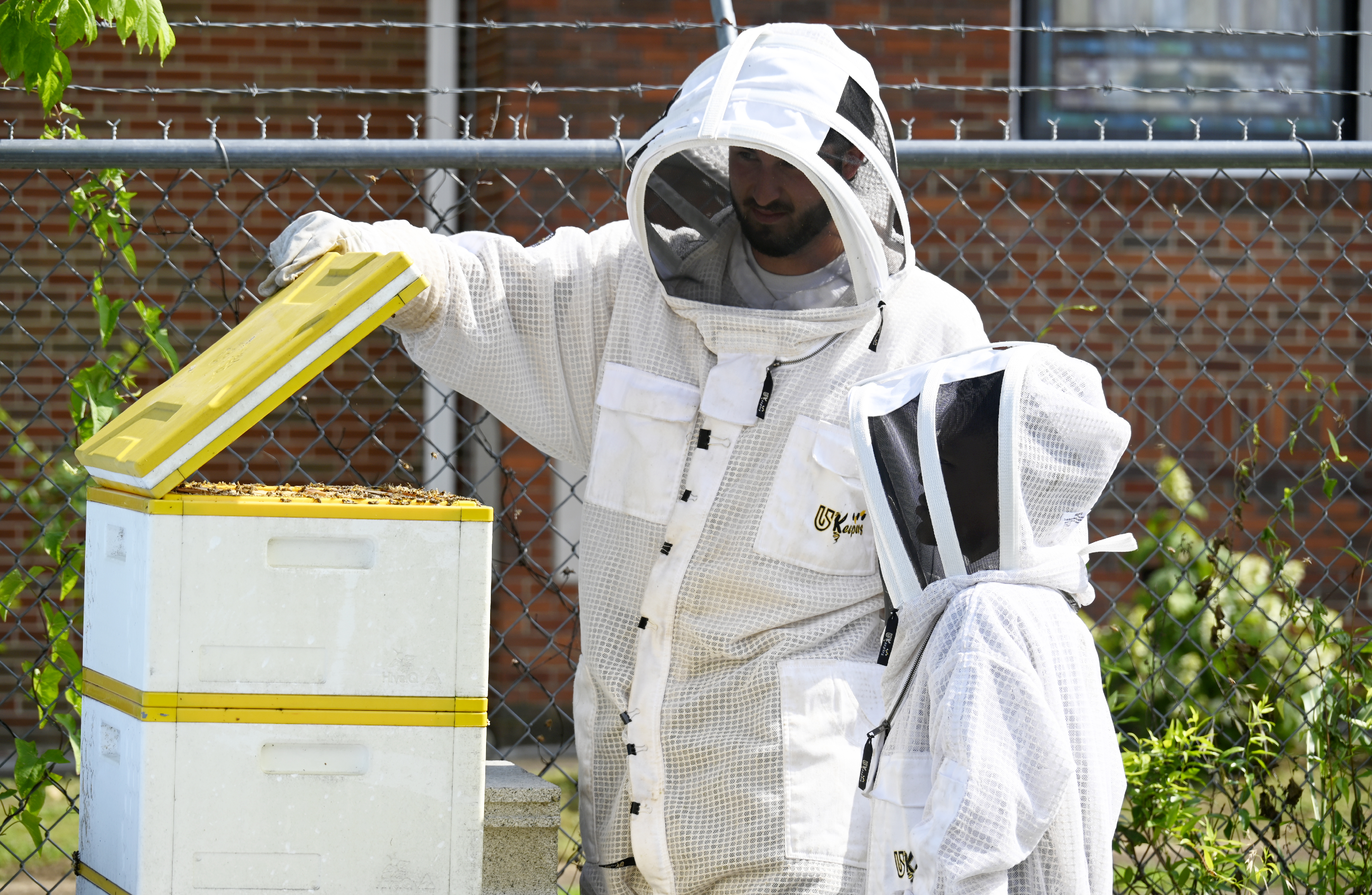
As it turns out, bees pollinate more than flowers, and Bartos said the two hives housing upwards of 15,000 have been a huge help in pollinating most of the farm’s produce. Depending on the weather, the bees are out pollinating each morning around 8 or 9 a.m., helping the farm to feed the surrounding community.
Students at the Bethlehem Center tend to its 15,000 bees, growing food for those without access
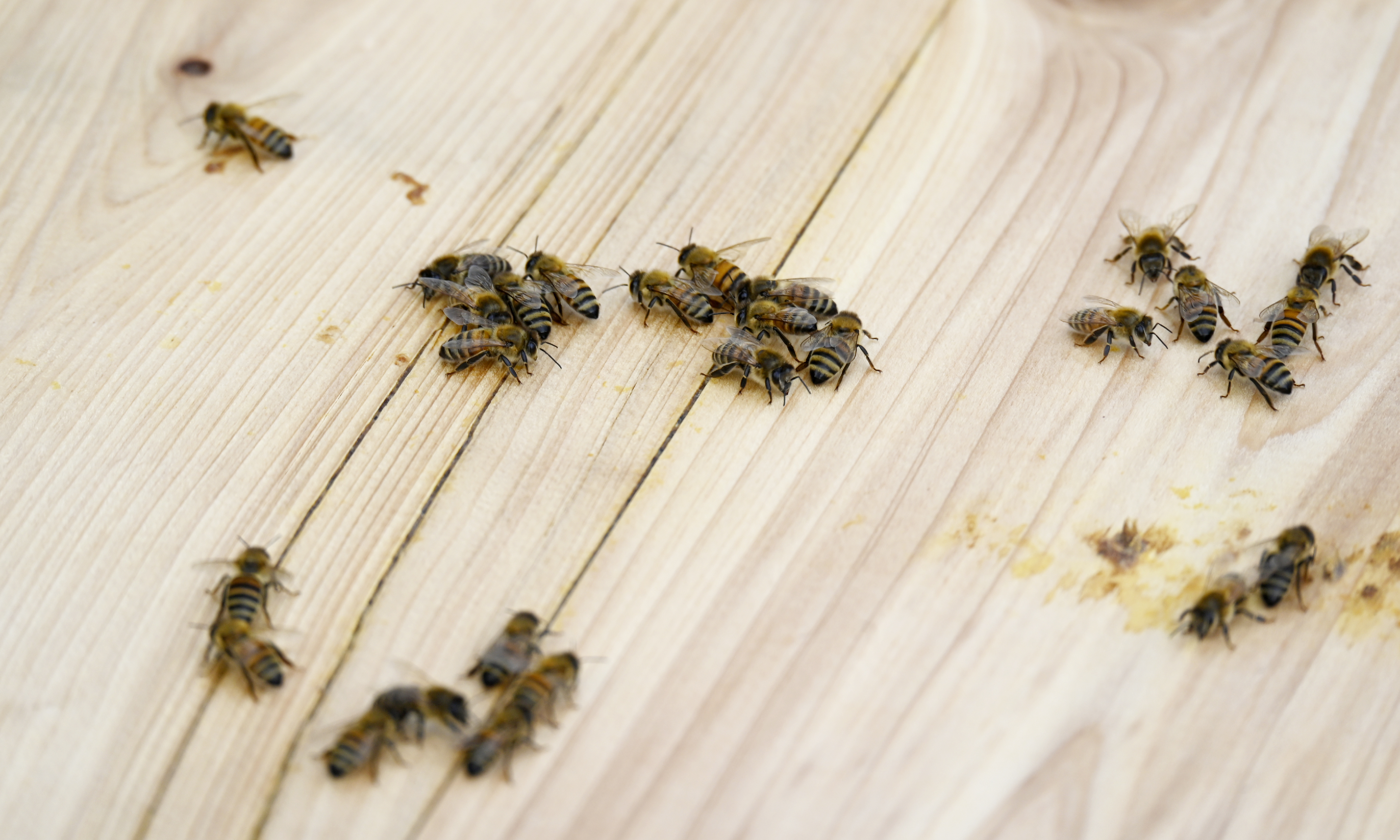
Many plants like watermelon and cantaloupe are not self-pollinating and sometimes need help from farmers, Bartos said.
“The bees took care of it,” he said in an interview.
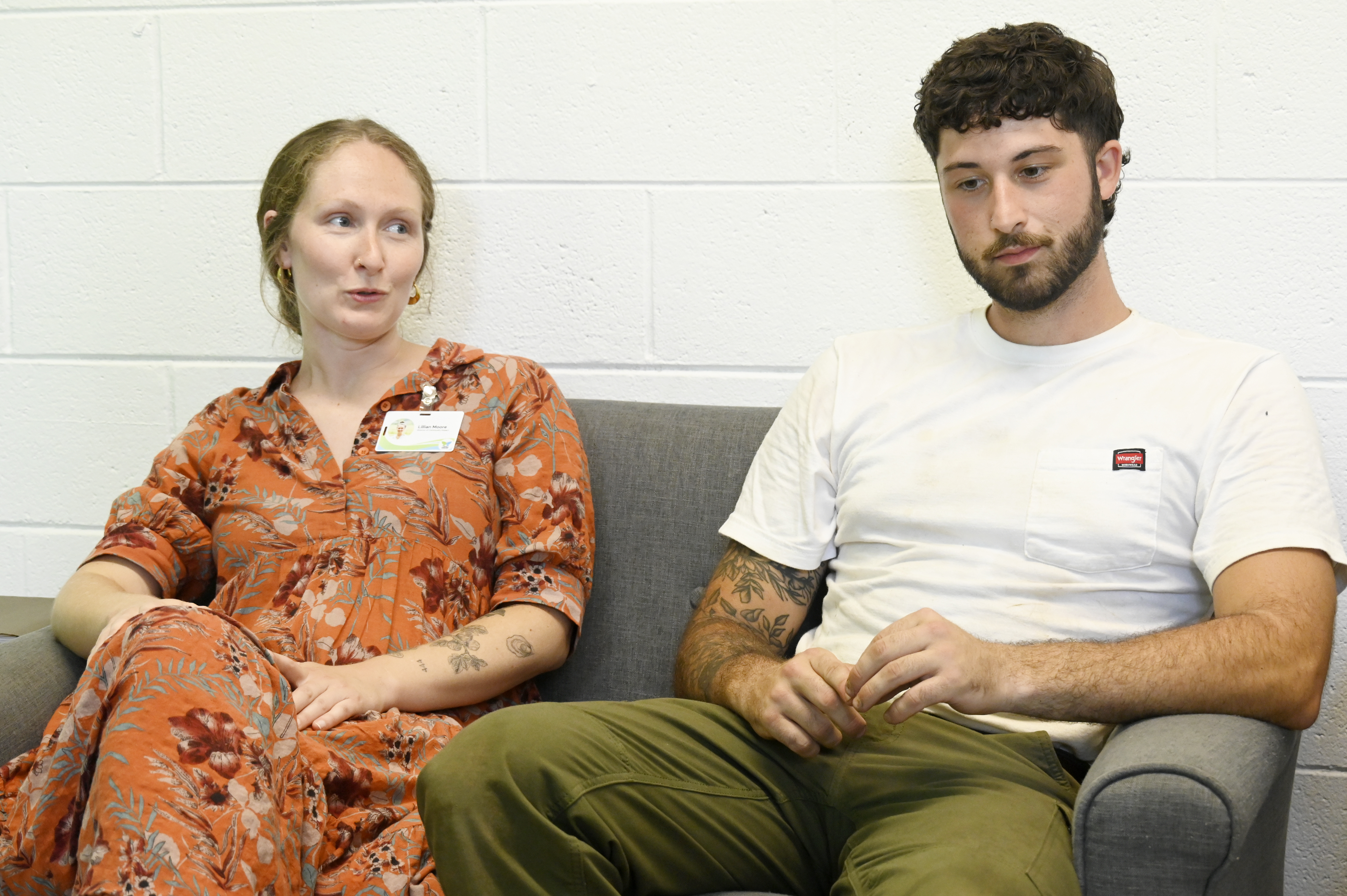
Nicknamed the Beth, the center is a 105-year-old Methodist ministry that began with the efforts of two women, Director of Community Impact Lillian Moore said in an interview. Inspired by the Gospel, employees work to create lasting relationships among youth and family while fostering discipleship, spiritual development and leadership.
In 1920, Sally Crenshaw and Miriam Brock noticed children running around after school in the summer, and the duo wanted a safe place for them, Moore said. The ministry sprouted in a St. Elmo tavern before spreading to South Chattanooga, and the effects can be seen today among students within the nonprofit’s programs.
THE BEES
The center has had raised beds outside its property for about a decade, Moore said. During the pandemic, the organization began a partnership with City Farms Grower Coalition, an urban farming initiative working to grow food locally to combat injustices.
Enough space existed at the Beth to cultivate a garden that would work with the climate and economy, providing nutrition and other benefits, Moore said. So, they decided to use it.
The center received a grant from Feeding America in 2022 through the Chattanooga Area Food Bank, Moore said. This helped the center’s food security measures blossom, as the facility hired Bartos full-time and developed its pantry.
Services at the Bethlehem Center
— After school and summer programs
— Youth and family services
— Resource access department with case management
— Client-choice food pantry
— The Farm
— Outdoor adventure program
— Male mentoring program
— Education
Source: Bethlehem Center
Bartos began his position in April 2024. In that same year, the farm produced 1,000 pounds of watermelon and cantaloupe and 200 pounds of tomatoes, despite the drought, to amount to 4,000 pounds of food, thanks to the bees.
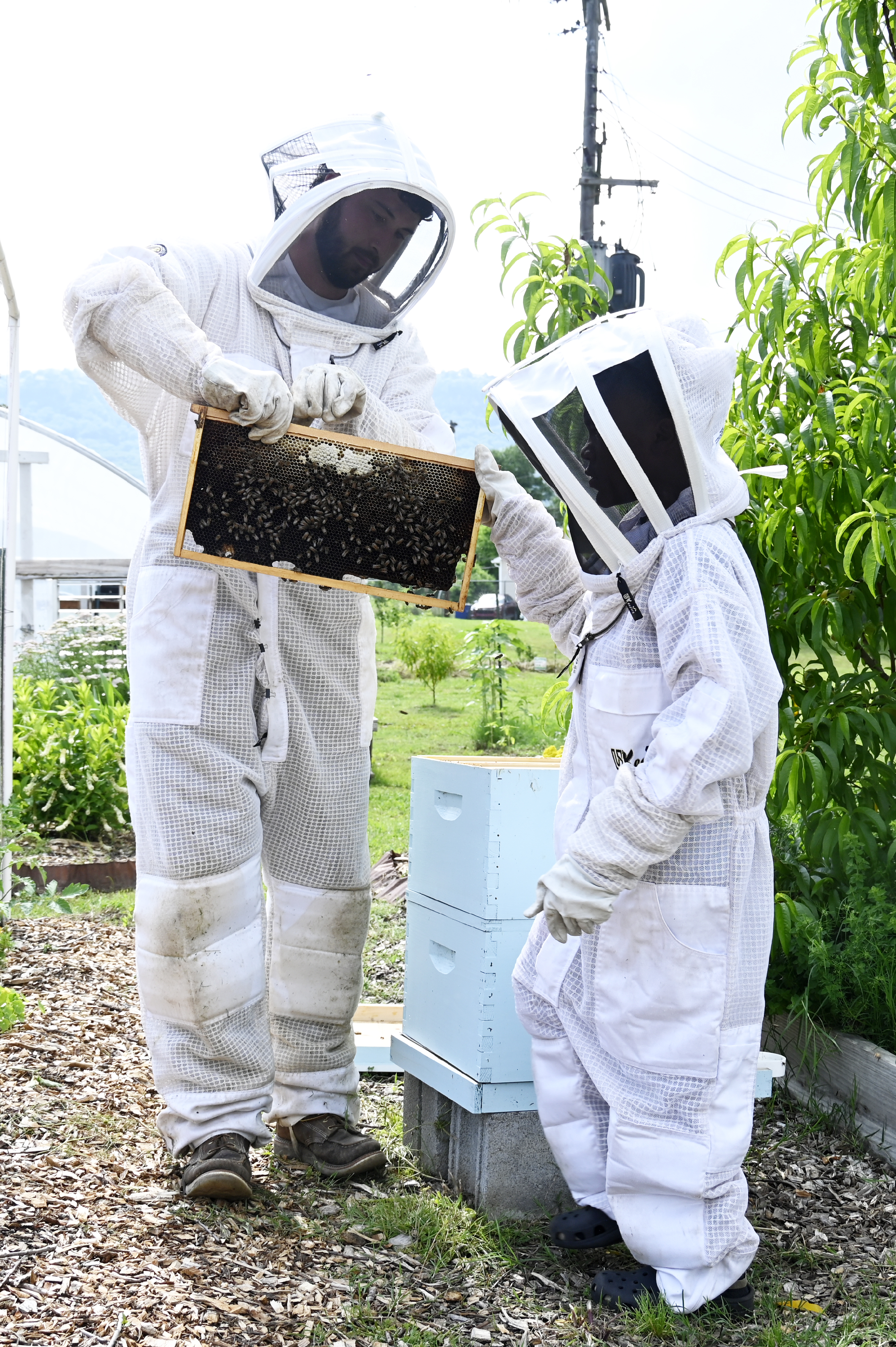
When the bees were initially donated to the center, Bartos said there was a strict policy preventing students from being within 20 feet of the hive as instructors monitored the insects. Instead, students stood behind Bartos as he showed them the bees’ regular schedule of entering and leaving the hive.
“I had one student specifically who became almost obsessed with the beehive, where every time he would come out for recess on the playground, he would run over to the garden and ask to see the bees,” Bartos said. “It kept happening.”
Students at the Bethlehem Center tend to its 15,000 bees, growing food for those without access
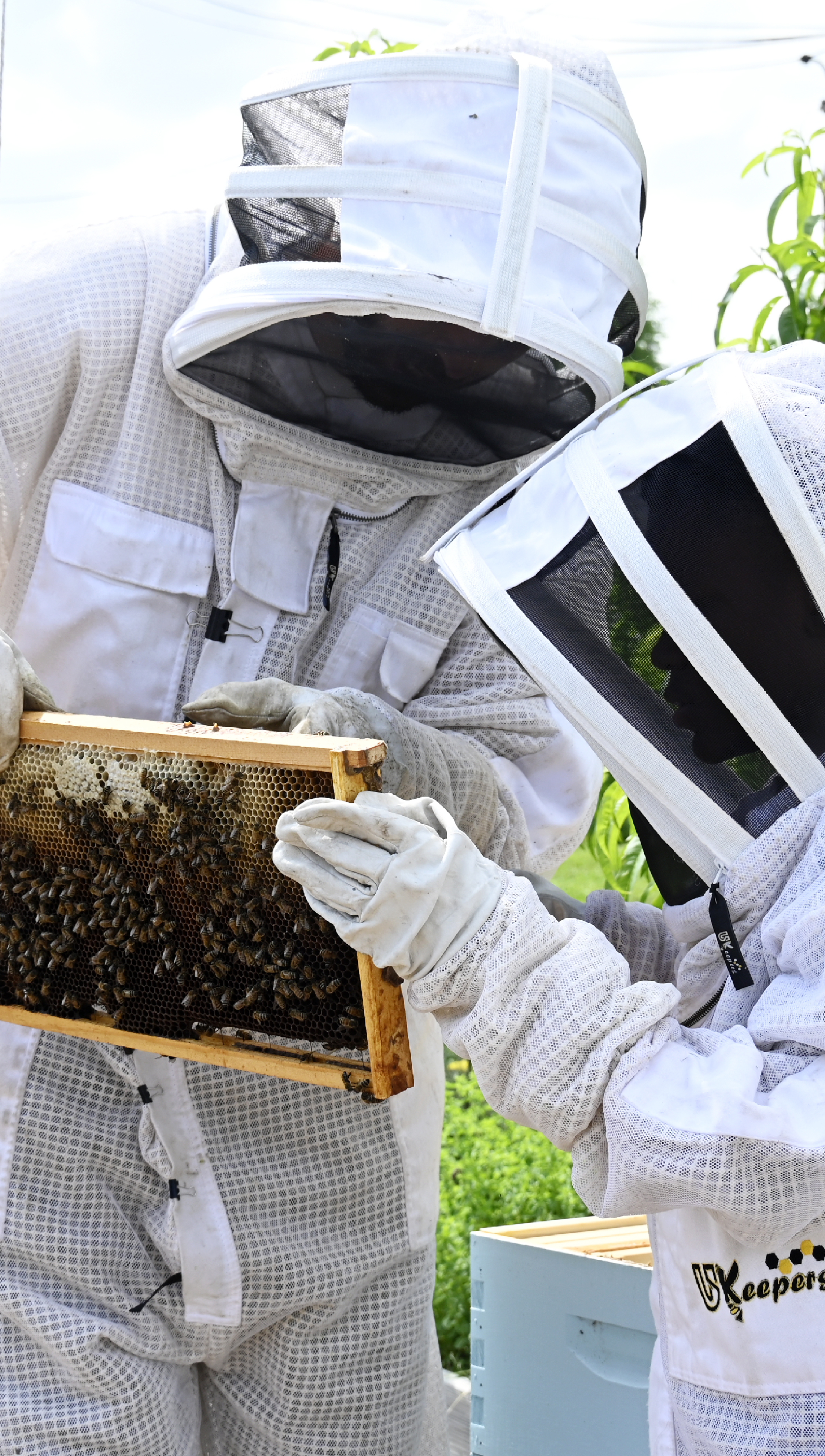
Eventually, Bartos thought to put the curious student in one of the center’s beekeeper suits, aiding in his bee investigation journey.
“He’s got the bees landing on him, and he’s showing all the students that the bees are just landing on his hand, and they’re not bothering him,” Bartos said of the student. “All the students naturally thought it was the coolest thing in the world.”
From there, two students per week suited up with Bartos as he opened the beehive to inspect it and replenish the sugar water supplementing the bees when there were limited flowers.
Farming with bees is a learning experience for Bartos, who is allergic. They naturally sting a person as they reach their hand into the hive, he said. Once, he and a student wore thick gloves while tending to the hive when the bees, protective of their queen, stung Bartos in the hand.
The student observed this, but Bartos assured him he was fine, and the bee was just stuck in the glove, he said. The student told his peers, who then believed Bartos was invincible while in the bee suit. The message stuck.
FOOD INSECURITY
The mission of the farm is to combat food insecurity. The term refers to when people don’t have enough to eat and are unsure where their next meal will come from, according to nonprofit Feeding America.
There are pockets within Chattanooga where limited food access is often paired with increased rates of poverty, low median household incomes and a lack of transportation among residents, Moore said.
“What we see in Alton Park, Piney Woods, South Chattanooga area, is we have grocery stores right down the road,” she said. “We’ve got Food City. We’ve got Publix. That doesn’t mean that they’re accessible if you don’t have a car. It’s really tough to get your family on the bus. It also costs money to get your family on the bus. Taking kids shopping is kind of a nightmare sometimes, and then getting your groceries home can be really difficult, too. So that’s a big reason why we have this pantry.”
The Beth sees a lot of food insecurity within the 150 households and families it serves each month, Moore said.
Fresh produce may be too expensive, causing families to need to travel further away, she said. There aren’t as many options in South Chattanooga as can be found in more populated places like the North Shore or Hamilton Place with increased economic power, she said.
“We’ve got corner stores, we’ve got restaurants,” she said. “Can you get stuff that is going to meet your nutritional needs?”
There’s no income restrictions or stipulations to accessing the food, Moore said. People are welcome to walk in at any time, but the center’s food pantry is open 10 a.m. to 1 p.m. on Tuesdays through Fridays. Identification — like a driver’s license — is needed, but people won’t be turned down without it or housing, she said. The Beth doesn’t want to discriminate.
Bartos said he values listening to people’s feedback as they grab produce. For example, this year he swapped unfavorable snap peas for cherry tomatoes.
Food grown on the farm supplies the Beth’s food pantry, Bartos said, and families pick as much food as they want. During the summer, the farm may put out a 500-pound produce table, especially when larger fruits are available.
“We’re just making sure that the folks that live in the villages and in Alton Park here, they just always have access to organic produce,” he said. “We’re kind of a garden for the community, not a community garden.”
THE SOIL
Moore said employees at the Beth are mindful of what they put into the soil and what is put into people’s bodies through the farm’s growing practices.
“We know that even if the farm does not last forever, someone could come back here, and the soil would be good,” she said. “We wouldn’t be leaving it trashed or destroyed, and that’s especially important in a neighborhood with extra high rates of cancer, with multiple Superfund sites. That’s something that we feel really, really strongly about.”
Moore said the center maintains pollinator spaces and a bioswale, a tool designed to collect rainwater, and does not use plastic to aid sustainability.
“We have a long legacy of environmental issues in the neighborhood, and if we can do our small part to do good on our campus, that’s super important,” she said. “Sustainability is tricky because we are grant-funded, and we’re a nonprofit. So, we don’t know if we’ll have our jobs next year, but we are going to be leaving the space better for everyone.”
Moore said there isn’t a community garden within the neighborhood, though some residents maintain private gardens in their backyards. However, around 70% of people living in the neighborhood are renters, causing difficulty in establishing something permanent.
She and others would like the farm to be a welcoming space, where residents holler at Bartos for produce as they see him garden. A cyclist recently witnessed him harvesting onions and requested to take one to eat with a hamburger, putting the farm’s purpose into action. He returned the next day to compliment the onion’s taste.
“I hope that this is a place where it shows the possibilities of what can be grown,” she said, “just really shows you can do this in a small space. You can do this sustainably, without pesticides, without herbicides, and it can be something that is really healthy, nutritionally dense and also really friendly and fun.”
Contact Leah Hunter at lhunter@timesfreepress.com or 423-757-6673.