
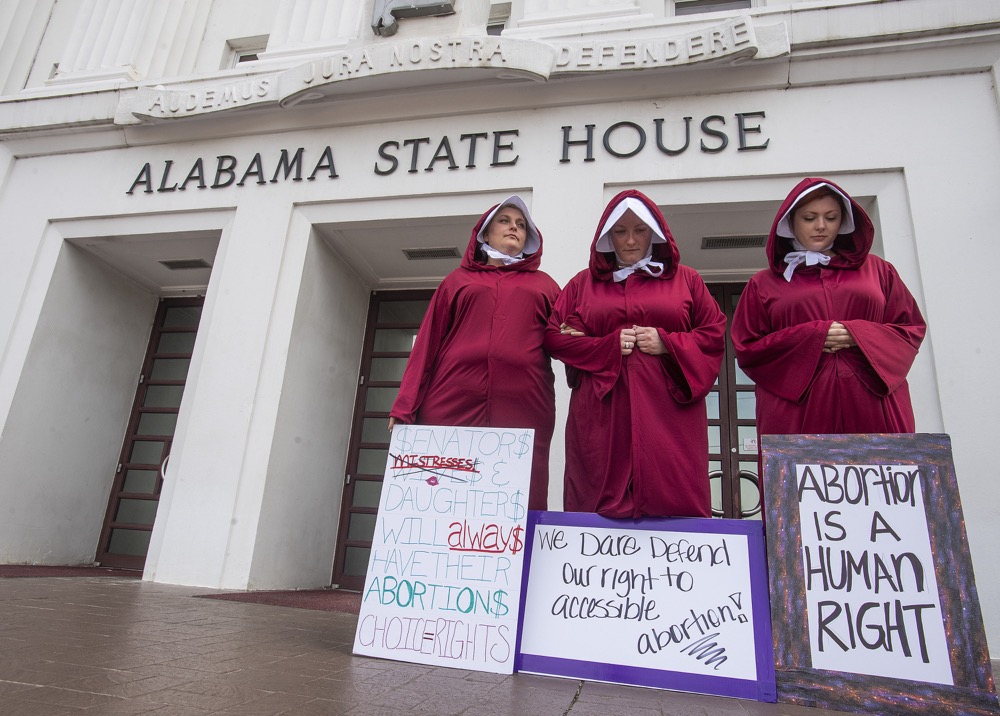
 Bianca Cameron-Schwiesow, from left,Kari Crowe and Margeaux Hardline, dressed as handmaids, take part in a protest against HB314, the abortion ban bill, at the Alabama State House in Montgomery, Ala., on Wednesday April 17, 2019. (Mickey Welsh/The Montgomery Advertiser via AP)
MONTGOMERY, Ala. (AP) – Alabama lawmakers on Wednesday advanced one of the most stringent abortion restrictions in the nation, a measure that would make performing an abortion a felony with almost no exceptions.
The House Health Committee voted to send the bill to the House of Representatives floor. The vote came after a sometimes emotional public hearing as women on both sides described their past decisions with abortion and opponents protested outside the Statehouse.
The legislation is in direct conflict with the landmark 1973 Roe v. Wade Supreme Court decision legalizing abortion, and almost certain to be enjoined by the lower courts if enacted. But proponents say their goal is to spark a court case that could lead the Supreme Court to revisit abortion rights.
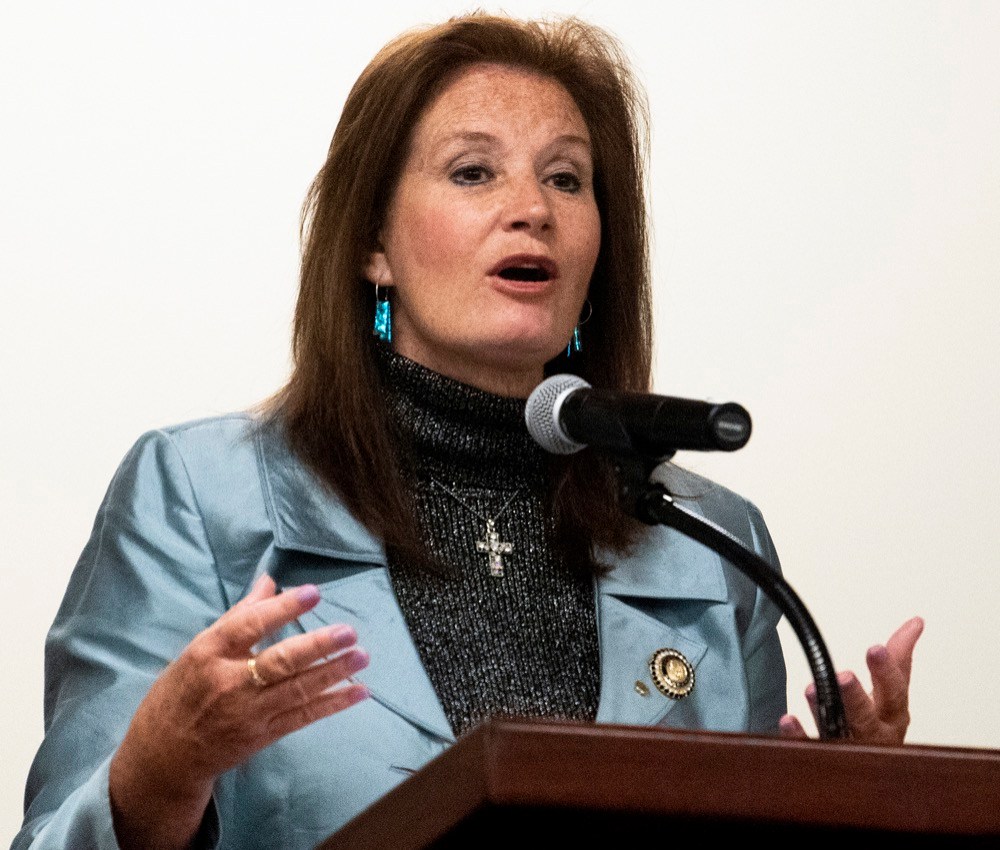
“In 1973, the Supreme Court made a decision that legalized abortion. In my mind, what that does is kills an unborn child,” Republican Rep. Terri Collins said. “I think fighting to overturn what I believe was a bad decision that allowed people to kill unborn children is worth a fight,” Collins said.
The bill would make performing an abortion a felony, punishable between 10 and 99 years in prison, although a woman would not be charged for having the procedure. The legislation contains an exemption when there is a serious risk to the mother’s health, but not for rape and incest.