
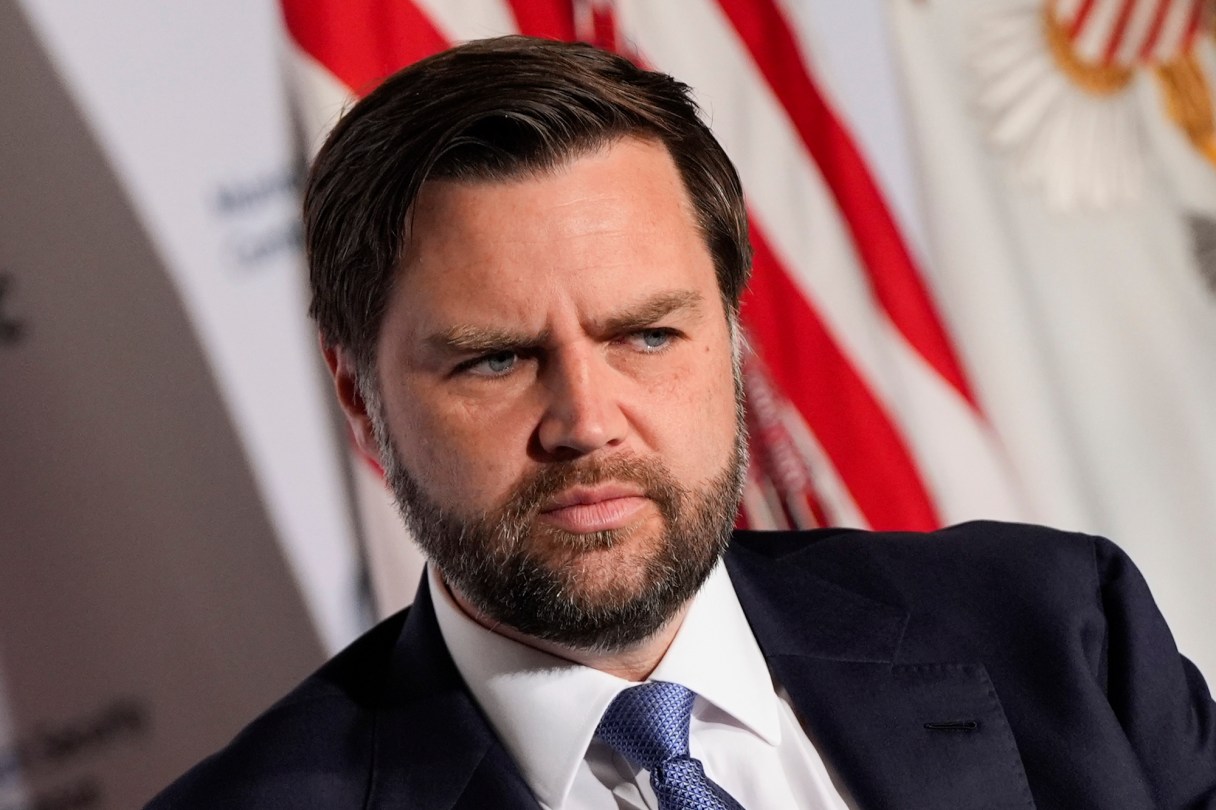
I’m going to break the boundaries of the prompt and say that the most important — or at least most predictive — day of Donald Trump’s second term came before it even began: It was July 15, 2024, the day he announced that JD Vance was his choice for vice president.
The runners-up were Marco Rubio and Doug Burgum — representatives of the Republican Party that existed before Trump’s 2016 campaign, choices Trump might have made to reassure voters who doubted or feared him. Vance was of the MAGA movement in a way Rubio and Burgum were not. Vance hated all the right people. Rubio and Burgum were seen as moderating forces; Vance pitched himself as an accelerationist who believed the biggest problem with Trump’s first term was that Trump was surrounded by people who, occasionally, said no to him. Vance was the only one of the three vice presidential contenders to say he would have done what Mike Pence would not: refuse to certify the 2020 election result.
There was little sense, in the days before Trump’s pick, that Vance held the pole position. Later reporting revealed a lobbying campaign: Rupert Murdoch and his allies tried to talk Trump out of Vance, as did Ken Griffin, the chief executive of Citadel, and even Kellyanne Conway. But Trump was swayed by other voices: Don Jr., Elon Musk and Tucker Carlson, who reportedly told Trump that if he picked Rubio or Burgum he was likelier to be assassinated by MAGA’s enemies.
This was the moment we could see the structure of Trump’s first term giving way to the structure of his second. Trump’s first administration was almost like a European coalition government: Trump governed in an uneasy alliance with a Republican Party he did not fully control or even like, with a business community in which many viewed him as a buffoon, with a staff that saw part of its role as curbing and containing the boss’s most destructive impulses, atop an administrative state that often resisted his demands. That friction frustrated Trump and many of his first-term allies.
But Trump’s second term was never going to follow the same script because it has a completely different structure. This isn’t a coalition government; it’s a royal court. When is the last time he heard the word “no,” or was told, “I’m sorry, sir, you can’t”? In his first term, Trump either sought or was steered toward advisers and appointments that would reassure many of his doubters; in his second, he has prized loyalists who will do what they’re told and enforcers who will ensure that others fall in line as well.