
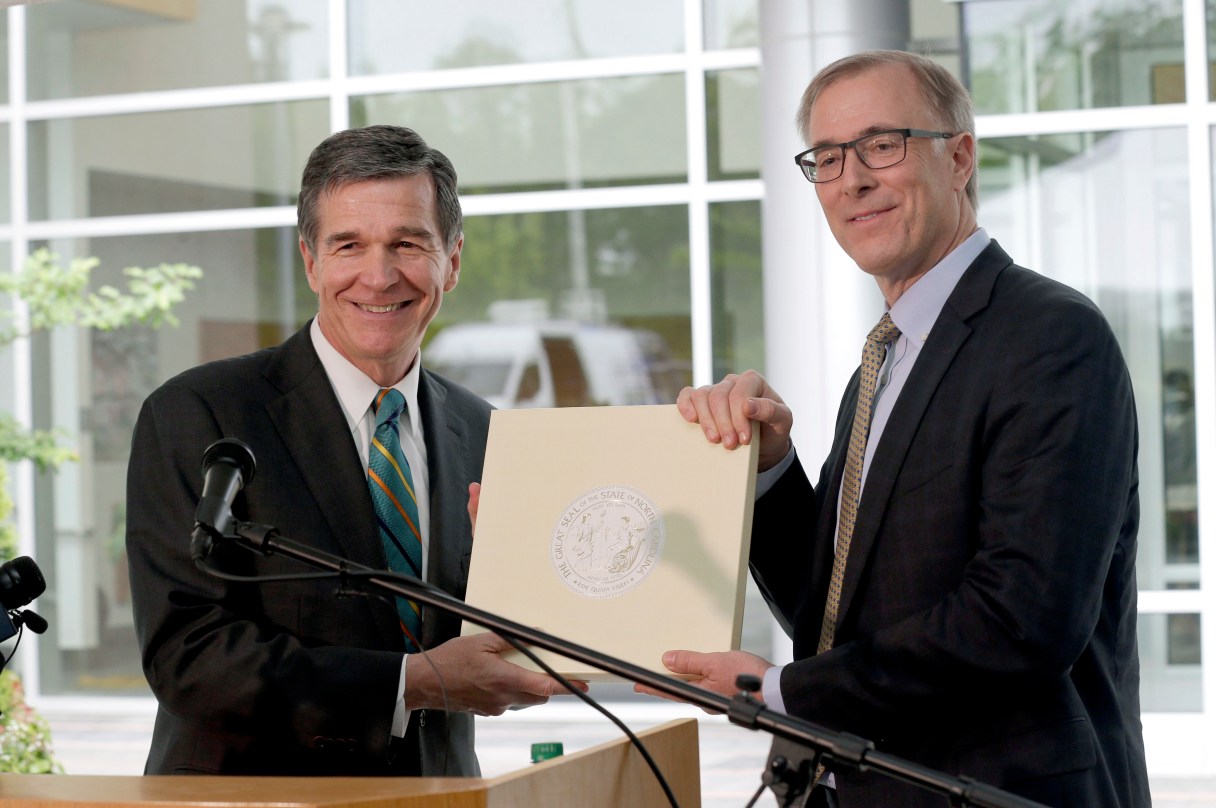
MORRISVILLE, N.C. (AP) – Credit Suisse announced 1,200 more jobs for its North Carolina technology hub on Tuesday, saying a partial repeal of the state’s law limiting the rights of gay and transgender people does just enough to satisfy its need to attract top workers.
North Carolina also approved more than $40 million in tax breaks Tuesday to lure the jobs away from the New York City area. But if House Bill 2 had still been in effect, the Swiss bank said it could not have committed to expanding in the state.
“We opposed that law. During the period that HB2 was on the books, we had to put our plans on hold. We did not think that expansion could be done in a way that was consistent with our core values,” Credit Suisse Vice Chairman Wilson Ervin said.
Financial firms Deutsche Bank and PayPal also canceled North Carolina expansion plans after House Bill 2 became law in March 2016. Other businesses and sporting events also shunned the state.
The compromise Democratic Gov. Roy Cooper reached with the state’s Republican-led legislature five weeks ago left many critics unsatisfied. Some called it a ploy to end the boycotts, because local governments still can’t protect people from discrimination over sexual orientation and gender identity. State lawmakers also put themselves firmly in charge of bathroom policies.