
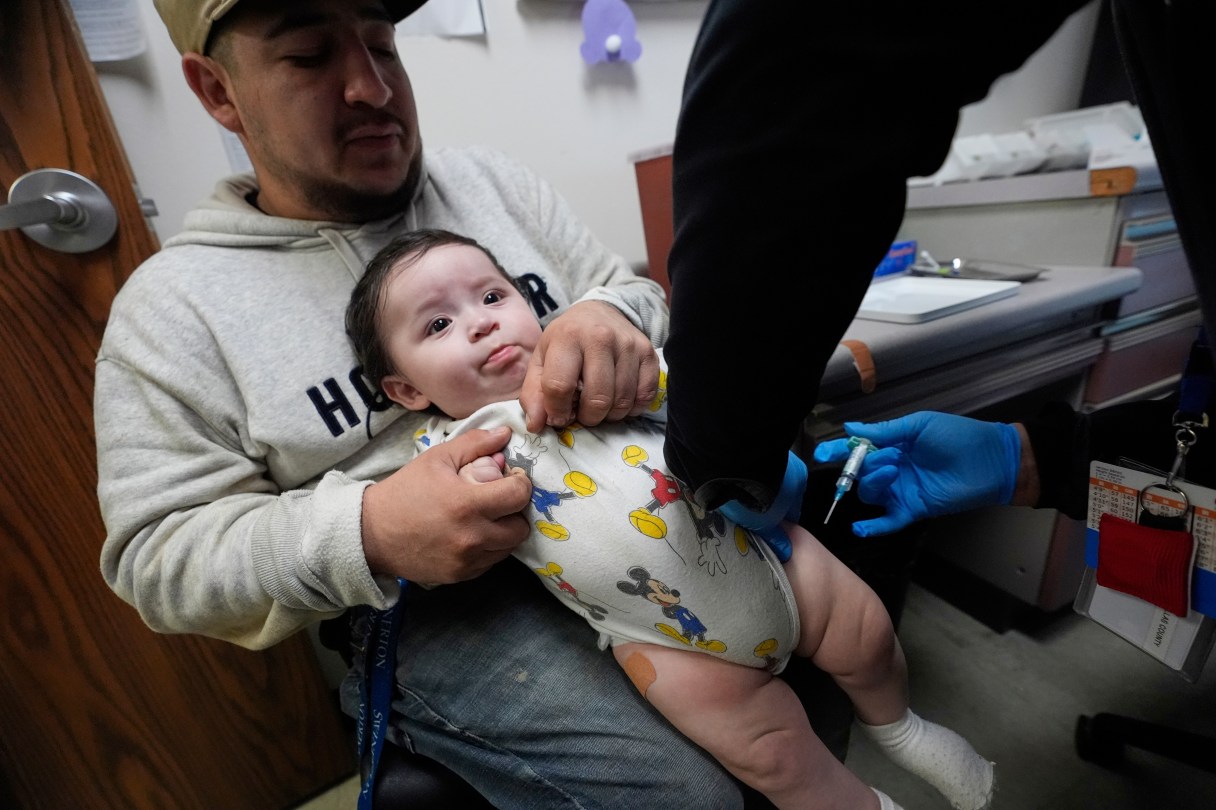
The measles outbreak in West Texas didn’t happen just by chance.
The easily preventable disease, declared eliminated in the U.S. in 2000, ripped through communities sprawling across more than 20 Texas counties in part because health departments were starved of the funding needed to run vaccine programs, officials say.
“We haven’t had a strong immunization program that can really do a lot of boots-on-the-ground work for years,” said Katherine Wells, the health director in Lubbock, a 90-minute drive from the outbreak’s epicenter.
Immunization programs nationwide have been left brittle by years of stagnant funding by federal, state and local governments. In Texas and elsewhere, this helped set the stage for the measles outbreak and fueled its spread. Now cuts to federal funding threaten efforts to prevent more cases and outbreaks.
Health departments got an influx of cash to deal with COVID-19, but it wasn’t enough to make up for years of neglect. On top of that, trust in vaccines has eroded. Health officials warn the situation is primed to get worse.