
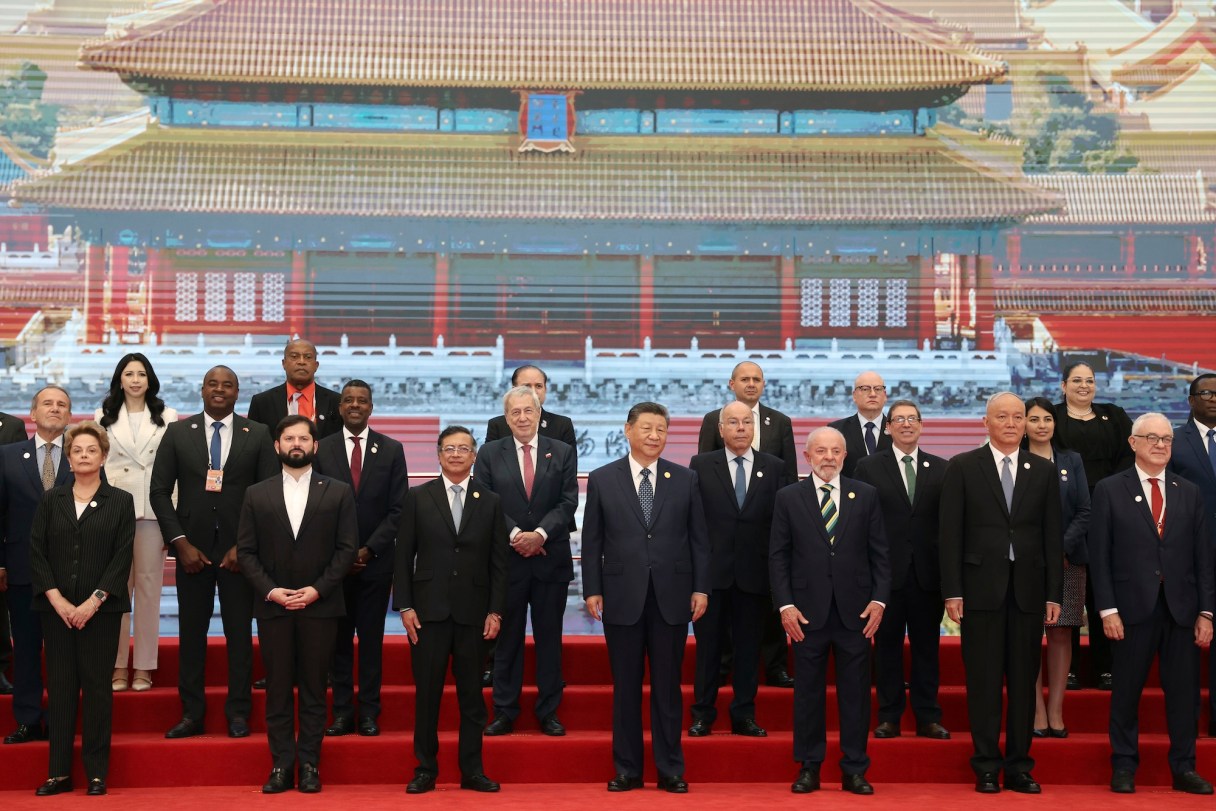
TAIPEI, Taiwan (AP) — China is moving to strengthen its alliances with other countries as a counterweight to President Donald Trump’s trade war, presenting a united front with Latin American leaders a day after China and the U.S. agreed to a 90-day truce in their tariffs stalemate.
China’s leaders have positioned the world’s second-largest economy as a reliable trade and development partner, in contrast to the uncertainty and instability from Trump’s tariff hikes and other policies.
On Monday, Beijing and Washington announced their breakthrough on tariffs after weekend talks in Geneva, Switzerland, where they agreed to cut sky-high import duties on both sides for 90 days to allow for negotiations.
Still, Beijing’s ire over the trade war remains apparent. Speaking to officials from China and Latin America on Tuesday, Chinese leader Xi Jinping reiterated Beijing’s stance that nobody wins a trade war and that “bullying or hegemonism only leads to self-isolation.”
Having moved to defuse antagonisms with the U.S., Xi said China stands ready to “join hands” with Latin countries “in the face of seething undercurrents of pure political and bloc confrontation and the surging tide of unilateralism and protectionism.”