
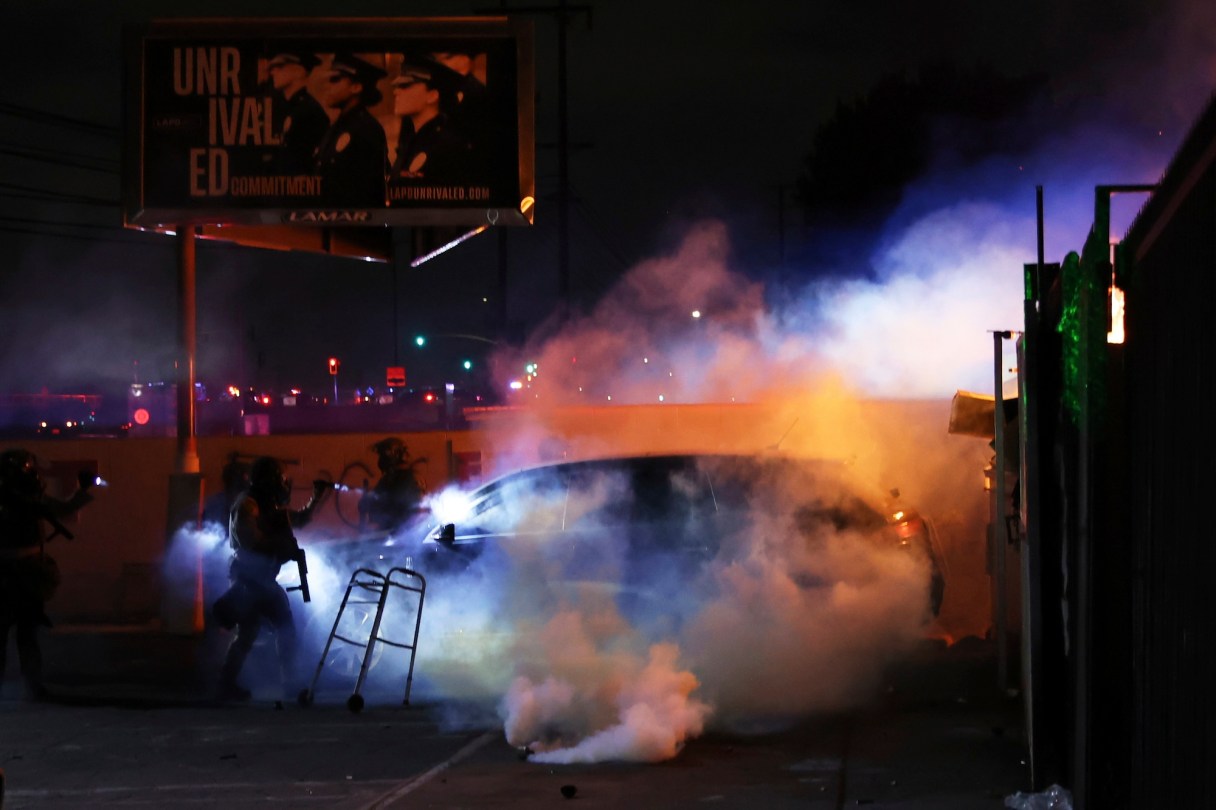
In June 2020, there was a vigorous debate among progressives about whether protests that turned violent would risk helping President Donald Trump win re-election. “Vigorous” is a euphemism here: What actually happened was that Democratic strategist David Shor was fired from a progressive data analytics firm after tweeting academic research suggesting that riots helped tip the 1968 election to Richard Nixon, because left-wing activists deemed that kind of analysis a form of aid and comfort to the enemy.
Shor was, of course, wise to give the warning, but in the end, 2020 did not look like 1968. Trump’s flailing response to the protests did not bring a Nixonian silent majority to the polls. The public had enough sympathy for the Black Lives Matter cause, enough confidence in Joe Biden’s moderate reputation or enough exhaustion with Trump to hand power to the Democrats, even after the fires in Minneapolis and Washington and Kenosha, Wisconsin.
For Democrats confronting the politics of protests and riots in 2025, there is potential comfort here – but only a little bit, because it was what happened after the George Floyd demonstrations that brought us to Trump’s triumphant restoration. To the extent that the 2020 protests won public sympathy or at least public understanding, it was because they seemed attached to a righteous but also limited proposition: That cops shouldn’t kill unarmed people, that Black Americans shouldn’t have to live in fear of police brutality.
But the ideological energy behind the protests, which built throughout Trump’s first term, ended up carrying progressivism well beyond the issue of police reform – into the antiracist cultural revolution in educational institutions, into the experiments in depolicing and drug legalization, and into the abandonment of serious efforts to secure the border. And today’s anti-Immigration and Customs Enforcement, pro-immigration demonstrators are dragging the burden of this larger progressive ascendancy, from which the mass public decisively recoiled.
American public opinion on immigration is always malleable; there are plenty of things that Trump has done or might do that could swing people back leftward. But it’s a lot harder for today’s protesters to present themselves as advocates of moderation and decency against Trumpian extremes than it was for protesters in 2020, because the country watched what happened when progressivism took power, and it just wasn’t moderate in any way.