
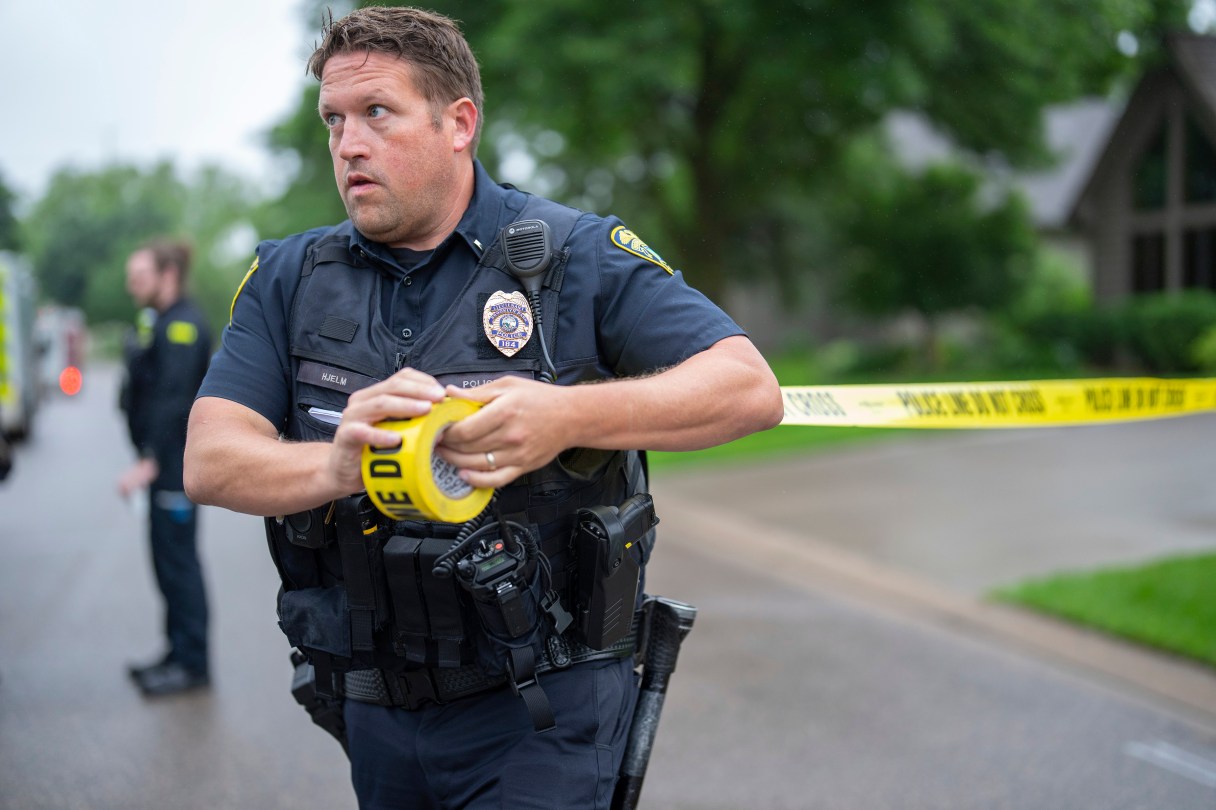
The assassination of a Democratic Minnesota state lawmaker and her husband and the shooting of another lawmaker and his wife at their homes are just the latest addition to a long and unsettling roll call of political violence in the United States.
The list, in the past two months alone: the killing of two Israeli embassy staffers in Washington, the firebombing of a Colorado march calling for the release of Israeli hostages, and the firebombing of the official residence of Pennsylvania’s governor — on a Jewish holiday while he and his family were inside.
And here’s just a sampling of some other attacks before that — the killing of a health care executive on the streets of New York late last year, the attempted assassination of Donald Trump in small-town Pennsylvania during his presidential campaign last year, the 2022 attack on the husband of former House Speaker Nancy Pelosi by a believer in right-wing conspiracy theories, and the 2017 shooting by a liberal gunman at a GOP practice for the congressional softball game.
“We’ve entered into this especially scary time in the country where it feels the sort of norms and rhetoric and rules that would tamp down on violence have been lifted,” said Matt Dallek, a political scientist at George Washington University who studies extremism. “A lot of people are receiving signals from the culture.”